


India
Modi launches Aadhaar-based BHIM AppNEW DELHI, Dec 30: Prime Minister Narendra Modi today launched an Aadhaar-based mobile payment application called BHIM (Bharat Interface for Money) - a rebranded version of UPI (Unified Payment Interface) and USSD (Unstructured Supplementary Service Data), at the Digi Dhan Mela event at Talkatora stadium here. At the event, the PM also felicitated the winners of Lucky Grahak Yojana. After launching BHIM, he also made payment to Khadi using the app. The new app is expected to minimise the role of plastic cards and the point of sale (PoS) machines once believed to be essential for a less-cash society. The app would eliminate fee payments for service providers like card companies such as Mastercard or Visa, which has been a stumbling block in merchants switching to digital payments. That will make it affordable even to merchants in remote villages, said people familiar with the development. All that the app needs to work is an Android phone with the merchant. How does it work? Merchants need to download the Aadhaar cashless merchant app on their smartphones connected to a biometric reader, which is currently available for Rs 2,000. The customer will then feed his or her Aadhar number into the app, select the bank through which the transaction will take place, and the biometric scan will work as a password for the transaction to be authenticated. Demonetisation forced black money into the open: ModiNEW DELHI, Dec 30: With just a day left for the 50-day deadline for demonetisation’s benefits to show, Prime Minister Narendra Modi has claimed that the move has forced black money, whether belonging to corrupt politicians or bureaucrats, out in the open. In an interview with India Today magazine, excerpts of which in text form were telecast by a news channel of the group, Modi said counterfeit Indian currency notes available with the enemies were instantly neutralised. “Black money has been forced out into the open, whomsoever it may belong to, whether it is corrupt politicians, bureaucrats, businessmen or professionals,” said Modi on the outcome of his November 8 sudden move to demonetise Rs 1000 and Rs 500 notes. “Counterfeit notes, which our intelligence agencies have reported to be available in big volumes with our enemies, have been instantly neutralised. “Similarly, cash held by terrorists, Maoists and other extremists has also been neutralised. There has been a crippling impact on dangerous and highly damaging illegal activities such as human trafficking and the narcotics trade as well,” he added. Pathankot attack: NIA names JeM chief Masood Azhar, his brother in chargesheetNEW DELHI, Dec 19: The National investigation Agency on Monday filed formal charges against Pakistan-based terrorist outfit Jaish-e-Mohammad (JeM) chief Maulana Masood Azhar, his brother Mufti Rauf Asghar and his two other key lieutenants — Shahid Latif and Kashif Jan — holding them responsible for the January 2 Pathankot airbase attack. The chargesheet also named four terrorists, who the NIA said crossed over from Pakistan after being trained in Jaish camps there, as accused. A statement issued by the NIA identified the dead terrorists as Nasir Hussain (resident of Vehari), Hafiz Abu Bakar (resident of Gujranwala), Umar Farooq (resident of Sanghar) and Abdul Qayum (resident of Sukkur) from Pakistan. The agency said the names of attackers have not been sent up for trial as they are dead. The NIA said a Red Corner Notice (RCN) has been issued by the Interpol for the arrest of the three accused Masood Azhar, Rauf Asghar and Shahid Latif and the RCN against Kashif Jan is in process. The NIA said Masood Azhar, Mufti Abdul Rauf Asghar, Kashif Jan and Shahid Latif, along with other Jaish terrorists set up training camps in Pakistan and the Pakistan-occupied-Kashmir area, for recruitment and training of terrorists, in order to carry out terror attacks on the Indian soil. The chargesheet states the attackers, after entering into India from Indo-Pak border near Simbal border outpost in Punjab, first hijacked a Toyota Innova taxi (PB06-G-0061), along with the driver, Ikagar Singh. The attackers snatched the mobile phone of Ikagar Singh and used it for calling their handler, Kashif Jan and other senior operatives of the Jaish-e-Mohammad in Pakistan, on three Pakistan mobile numbers 923453030479, 923213132786 and 923017775253. “Their vehicle met with an accident at the Dhusi turn near the Ravi River bridge. The terrorists brutally killed Ikagar Singh and dumped his body in the nearby bushes. Thereafter, the terrorists drove the damaged SUV and abandoned it at a service station at Kolian Morh in Pathankot district,” says the chargesheet. Later, the attackers hijacked a Mahindra XUV vehicle of a Punjab’s superintendent of police, Salvinder Singh, and moved towards the airbase. “They snatched the mobile phones of the occupants and used them to communicate with their handler, Kashif Jan, whom they referred as ‘Ustadji’ and other Jaish operatives of the JeM in Pakistan on the four Pakistan numbers — 923453030479, 923466746667, 923000957212 and 923024880619,” says the chargesheet. After some time, the terrorists dumped Salvinder Singh and his cook Madan Gopal, at an isolated place in a forest area near Gulpur Simli village in Pathankot district, on way to the airbase. However, they took the third occupant, friend of Salwinder named Rajesh Verma, along with them. When the terrorists learnt from Rajesh Verma that Salvinder Singh was a police officer, they informed their handler who directed them to go back and look for him but Salvinder Singh and Madan Gopal had already left the spot, therefore the terrorists resumed their journey to the airbase. The terrorist dumped the XUV near the airbase and left a slip in it on which it was written, “Jaish E Muhamad Zindabad Tanghdar se le kar Samba Kathua Rajbagh Aur delhi tak Afzal Guru Shadeed Kay Jan nisar Tum ko meltay rahege. Insha Allah. A.G.S. (Afzal Guru Shaheed) 25-12-15 (sic)”. The chargesheet says after getting inside the airbase, the terrorists hid themselves inside the ‘nallah’ and in the dilapidated shed till the time they launched the assault on the night of January 1 and 2. “While the terrorists were hiding inside the Air Force station, at about 8.40am on January 1, one of the terrorists, identified by the name “Nasir”, tried calling the Pakistan telephone number 923466746667 in Pakistan using the snatched Indian mobile number but could not converse,” says the chargesheet. The NIA found that the user of the Pakistan phone number 923466746667 is Khayam Bhatti @ Khayam Rasool @ Babar Bhatti. He runs a local merchandise shop (kirana) shop in Rum, Sialkot, Pakistan. “At about 9.20am on again on January 1, Nasir, called the Pakistan telephone number 923000957212. In this conversation, the terrorist, Nasir, disclosed the names of his other three associates as Major, Abu Bakar and Umar,” says the chargesheet. The NIA said in another conversation same day, he spoke to his mother for 18 minutes. Nasir told his mother that they had infiltrated into the Indian territory at ‘do baje’ on Wednesday (which was 30.12.2015). He further told her that he had killed two persons referring to the deceased Ikagar Singh and the injured victim (Rajesh Verma), whose throat was slit by the terrorist but he survived. He also spoke to another relative named Babar, and to another person who is referred to by the name Munna. Nasir also told his mother to to record his conversation on the mobile set. “During his conversation with her, Nasir mentioned about one “Ustad” who was supposed to come to her with his “Wasihat” after his death. Nasir also asked her to host a “dawat” (feast) for his “derawala friends” after his death,” says the chargesheet. By the time security forces managed to neutralised the terrorists, seven persons were killed and 37 persons were injured inside the airbase. Demonetisation is the first step to curb black money and corruption: ModiNEW DELHI, Dec 16: Prime Minister Narendra Modi attacked the Congress and Left parties on Friday for opposing his government’s move to demonetise Rs 500 and Rs 1000 banknotes, dubbing it as a war against black money. In an address to the party MPs at parliamentary meeting, Modi said, “we need to move ahead with those supporting us in our fight against corruption.” Below are the highlights of his address: •There are many people who are ideologically opposed to NDA and BJP, yet supported the drive against corruption, black money •Want to thank Odisha CM Naveen Patnaik and Bihar CM Nitish Kumar for their support to demonetisation •Demonetisation is a ‘step’ towards eradication of corruption and black money •Demonetisation is not the last step in our fight against corruption •We have to move ahead with those supporting us in our fight against black money •Indira Gandhi rejected suggestions for demonetisation in 1971, that has resulted in poor condition of the economy •Communist parties have uprooted themselves from their ideology •The Benami Property Act was passed by the Parliament in 1988 but it remained unimplemented for more than 25 years as it was not notified •For Congress, party is bigger than nation but for us nation is bigger than a party •We need to take ahead the fight against corruption and black money •Government launched some important schemes yesterday, I want you to take them forward •A time will come when loans will be granted in 6 minutes. This will be possible because of digital technology •Digital economy should be made way of life •Government is taking steps in the interest of the nation •We have taken 23 important decisions for digital promotion Jayalalithaa, 'Amma' To Millions, Passes AwayCHENNAI, Dec 5: Tamil Nadu Chief Minister J Jayalalithaa, one of India's most powerful and popular politicians, has died in a Chennai hospital, nearly three months after she was admitted there. She was 68. Ms Jayalalithaa had a cardiac arrest on Sunday evening and was rushed back to the Intensive Care Unit or ICU. Barely two weeks ago, after doctors and her party said she was fully recovered from a respiratory illness, she had been moved from the critical care unit to a private room kitted out with emergency equipment. "It is with indescribable grief, we announce the sad demise of our esteemed honourable chief minister of Tamil Nadu at 11:30 pm (local time) today (December 5)," Chennai's Apollo Hospital said in a statement released to the media after midnight. Prime Minister Narendra Modi tweeted, "Deeply saddened at the passing away of Selvi Jayalalithaa. Her demise has left a huge void in Indian politics. My thoughts and prayers are with the people of Tamil Nadu in this hour of grief. May the Almighty grant them the strength to bear this irreparable loss with courage and fortitude," adding, "Jayalalithaa ji's connect with citizens, concern for welfare of the poor, the women and marginalized will always be a source of inspiration." Ms Jayalalithaa was brought to Apollo Hospital on September 22 where she was admitted for dehydration and fever. Her condition soon deteriorated, and she was diagnosed with a severe respiratory infection. Specialists from Delhi's AIIMS hospital and a pulmonary expert from London were flown in for consults. On November 20, in the clearest sign that they bellowed she was no longer in danger, doctors said Ms Jayalalithaa had been relocated from the Intensive Care Unit. They also said she was speaking occasionally and was alert. Her party had throughout maintained that she was directing important decisions from hospital including on a water dispute with neighbouring Karnataka. For the centre and her own government, an over-riding concern apart from her health was the drafting of a contingency plan to prevent riots if her health deteriorated. Known as "Amma" or "mother" to lakhs of supporters, Ms Jayalalithaa's incredible popularity was often exhibited through dramatic fans prone to self-harm and violent attacks on public property when things went against her. Earlier this evening, when local channels wrongly declared her dead at about 6 pm, a brief riot erupted outside Apollo Hospital, receding only when officials declared she was still alive. The scenes that unfolded after her arrest in 2014 in a case of corruption included hundreds of supporters shaving their heads, a ritual associated with mourning. Outside jail, women stood wailing and clutching their heads and beating their chests. From within prison, the Chief Minister appealed for calm and restraint after people set buses on fire in anger. More than 200 people committed suicide to protest her imprisonment, according to her party at the time. In 2014, she was convicted for misusing an earlier term in office in the 1990s to accumulate cash and property that could not be accounted for with her declared income - she had claimed her salary at that time was a token one rupee. Her trial took place in neighbouring Karnataka, where the case, filed by rival party, the DMK, had been moved to ensure it was not influenced by her power. Nine months later, she was acquitted and she returned triumphant to her home state to be reinstated as Chief Minster. Modi wins reader’s poll for TIME ‘Person of the Year’NEW YORK, Dec 5: Prime Minister Narendra Modi has won the reader’s poll for TIME ‘Person of the Year 2016’. Modi won 18 per cent of the vote, significantly more than his closest rivals, including U.S. President Barack Obama, U.S. President-elect Donald Trump and Wikileaks Founder Julian Assange. The Prime Minister was also ahead of other prominent figures, including Facebook founder Mark Zuckerberg (2 per cent) and U.S. presidential nominee Hillary Clinton (4 per cent), TIME said. The editors of the magazine will decide the ‘Person of the Year’ later this week. Last year, German Chancellor Angela Merkel was awarded the title. The results, analysed by Apester, found that preferences differed across the world and the United States. Modi performed particularly well among Indian voters as well as those in California and New Jersey. Seven soldiers, including 2 officers, killed in militant attack on Nagrota army campJAMMU, Nov 29: Seven soldiers, including two Majors, were killed when militants dressed as policemen stormed a military camp in Jammu and Kashmir on Tuesday, triggering a fierce gun battle that raged for more than 12 hours. A defence statement said the bodies of three militants were recovered and “operations are in progress to sanitise the complete area”. The brazen attack was the second in as many months since the siege of another army base at Uri left 19 Indian soldiers dead, spiking tensions between India and Pakistan. In a separate gunfight, 70km from Nagrota, three infiltrators were killed and a senior BSF officer and five jawans were injured near the international border in Chamliyal area of Samba sector, officials said. While the operation in Chamliyal was over quickly, the gun battle at Nagrota, a town on the highway between Srinagar and Jammu, continued well after sundown. Defence spokesperson Lt Col Manish Mehta said a “hostage –like situation” arose after the militants entered two buildings housing officers and families of the army unit, located about three kms from the headquarters of the 16 Corps. “The situation was very quickly contained and thereafter, in a deliberate operation all were successfully rescued, which included 12 soldiers, two ladies and two children,” the statement added. The two rescued children are 18 months and two months old, an army officer said. An officer said the wives of the two army officers blocked the entry of their quarters with “all the household items, making it difficult for the terrorists to break into the houses”. Staccato bursts of gunfire and loud explosions continued in the cantonment as helicopter gunships and drones hovered overhead in fading light of the day. “The operation is going on, we have suspended it for the night, but the area has been placed under tight cordon, the army does not want to take any risk and we will resume the operations with the first light of the morning (on Wednesday),” the spokesperson said. The army said the group of heavily armed militants – believed to five-six in number -- arrived at the base in a Maruti car before opening fire and lobbing grenades at the sentries on the main gate. Prime Minister Narendra Modi was briefed on the attack by defence minister Manohar Parrikar and army chief General Dalbir Singh in Delhi. No civilians were targeted, Parrikar said. India blames Pakistan-based militants of targeting security personnel and civilians in the state, a charge Islamabad denies. The latest incidents came on a day Pakistan saw a change of guard in its powerful military with General Qamar Javed Bajwa taking over as the army chief from General Raheel Sharif. In his farewell address, the outgoing military chief warned India not to mistake his country’s “restraint” over recent tensions in disputed Kashmir for weakness. The violence followed a brief lull in fighting between Indian and Pakistani troops, who have been exchanging heavy mortar and artillery fire for months across the de facto border that divides Kashmir between the two nations. Relations at the government level have worsened, with the two nations expelling diplomats from their capitals as each side accuses the other of starting the fight. Following the attack, the administration shut all schools in the cantonment, located close to the National Highway 1A. Kartar Singh, 55, who has a grocery shop next to the encounter site, said he heard gun shots early in the morning. “Since there is a firing range, I took it as a routine practice but then I heard big explosions, indiscriminate firing followed by distress whistling inside the army unit.” He herded his wife, four sons and a daughter in a room when he realised it was a militant strike. Fugitive Sikh militant Mintoo arrestedNEW DELHI, Nov 29: Sikh militant leader Harminder Singh Mintoo was recaptured from a railway station in New Delhi early on Monday, after policemen hunting for the fugitive became suspicious of his hastily trimmed beard and fidgety behaviour. The 49-year-old leader of the Khalistan Liberation Force (KLF) was freed from a jail near Patiala by gunmen posing as police a day ago. Mintoo was tracked down to the parking lot at the Nizamuddin railway station around 2am Monday, five hours before he was to board a train to eventually reach Goa from where he wanted to escape to Germany, police said. Mintoo and another fugitive Kashmeer Singh were driven by their accomplices to Kaithal in Haryana, where the two hurriedly trimmed their beard in a sugarcane field with a pair of scissors they bought from a local farmer. At the Nizamuddin railway station, Mintoo tried to buy a ticket to Panvel, near Mumbai, when Delhi Police assistant sub-inspector Harish Chander became suspicious by his “improper” appearance and “extra-cautious” behaviour. In no time, Arvind Deep, special commissioner of Delhi Police (special cell) said, a police team swooped down on them. Mintoo was caught with a pistol which he tried to fire at the police. They also found Rs 8,000 with him in old and new banknotes. Deep said Mintoo chose Goa as his hideout because he lived there for 18 years between the mid-1980s and early 2000s with his family. His wife is from Goa. Another police officer said Mintoo’s plan was to get a passport and visa using his contacts in Goa and reach Nepal en route to Germany. A Delhi court sent Mintoo to seven days’ police custody. The authorities announced a reward of Rs25 lakh for the capture of the militant, who is said to have visited Pakistan several times and been trained by Islamist jihadis. Police said his jail break was planned as part of efforts to revive Sikh militancy in Punjab. Police said Mintoo told his interrogators that he planned his jail escape 15 days ago on the instructions of his handlers at Pakistani spy agency, ISI. He had apparently received Rs25,000 in the jail to help with his escape. Son can stay in parent's house at their mercy, has no legal right over it: Delhi HCNEW DELHI, Nov 29: A son, irrespective of his marital status, has no legal right to live in the self-acquired house of his parents and can reside there only at their "mercy", the Delhi High Court has said. The court also said that only because parents have allowed the son to live in their house as long as their relations are cordial does not mean they have to bear his "burden" throughout his life. "Where the house is self-acquired house of the parents, son whether married or unmarried, has no legal right to live in that house and he can live in that house only at the mercy of his parents up to the time the parents allow," Justice Pratibha Rani said in an order. "Merely because the parents have allowed him to live in the house so long as his relations with the parents were cordial does not mean that the parents have to bear his burden throughout his life," the court said. It said this while dismissing an appeal by a man and his wife challenging the order of a trial court which had passed a decree in favour of his parents, who had filed a suit seeking a direction to their son and daughter-in-law to vacate the floors in their possession. The parents, both senior citizens, had told the lower court that both their sons and daughters-in-law, who were living with them, have made their "life hell" after which they had given complaints to the police and also issued public notices in 2007 and 2012 debarring them from their self-acquired property. Both the sons and daughters-in-law had contested the suit before the trial court while denying the allegations. They had also claimed that they were the co-owners of the property as they had contributed towards its purchase and construction. However, the trial court had passed the decree in favour of the parents after which one of the sons, along with his wife, had moved the high court. In the order, Justice Rani noted that the son and his wife were unable to prove that they were the co-owners of the property, while his parents have established their contention on the basis of documentary evidence. Water that belongs to India will be stopped from going waste in Pak: ModiBHATINDA, Nov 25: Prime Minister Narendra Modi vowed on Friday to utilise “every drop” of the Sutlej-Ravi-Beas river waters that have been flowing over to Pakistan for the benefit of farmers in border states, especially Punjab and Jammu and Kashmir. “These rivers, as per the Indus Waters Treaty, belong to India and our farmers. I will utilise every drop of it ,” Modi said at the foundation-laying ceremony of the All India Institute of Medical Sciences (AIIMS) in Bhatinda on Friday. “Every drop will be utilised by the farmers of Punjab and Jammu and Kashmir and other states. I am committed to this,” he said. The PM’s statement holds significance in the wake of the SYL canal imbroglio --- in which the Parkash Singh Badal regime in Punjab refused to abide by the Supreme Court judgment and returned the land acquired for the canal to the owners. Without mentioning the SYL issue, Modi said all water disputes could be resolved through talks. “We are with Badal sahib on water issue,” he said. He blamed the state’s previous governments for water disputes and under-utilisation of the natural resources. A day after the opposition’s uproar against demonetisation in Parliament, Modi looked rather firm on his move, appealing to the countrymen to go for phone-banking or e-banking. “Mobile phones are your wallet and your banks now. Download the banking apps on your phones and curb corruption,” he said. He said the number of mobile connections was four times the number of family units in the country. Acknowledging the harassment to the common people due to cash crunch, Modi said he was thankful to the people of the country “for standing by us (NDA regime) in this mission of demonetisation and bearing the short-lived brunt”. The PM, however, skipped a reply to his predecessor Manmohan Singh’s claim that this move initiated by Modi will lead to 2% decline in the growth of country’s gross domestic product (GDP) and people may “lose faith in currency and banking system”. The PM also appealed to information technology (IT) experts in universities and other agencies to train the people in net banking. “We have taken this step to save the poor people and to save the middle class from exploitation. This will end all unaccounted transactions and rid us of fake currency,” he said. The Prime Minister advised Pakistan “to fight corruption and black money in their country, if they want to fight terror”. He said people in India were equally pained due to terror strikes in Pakistan. “I want to tell the people of Pakistan that we are also pained for the deaths of children in Peshawar,” he said. UP train tragedy toll mounts to 147KANPUR, Nov 21: Fourteen more bodies were found under debris at the site of the Indore-Patna Express train derailment in Kanpur Dehat district of Uttar Pradesh and two injured passengers died in hospital, taking the death toll to 147 on Monday afternoon. Officials fear they could find more bodies at the accident site. The derailment happened at 3.10 am on Sunday near Pukhrayan, about 100 km from Kanpur. Instructions have been issued to rescue teams to look carefully under the debris as the National Disaster Response Force (NDRF) and railway teams have moved on to the work of clearing the railway track. Prabhakar Chowdhary, Kanpur Dehat superintendent of police, said more bodies were discovered after the work to clear the track began. 127 dead as Indore-Patna Express derailsLUCKNOW, Nov 20: As many as 127 people were killed and more than 200 injured when 14 coaches of the Indore-Patna Express train derailed in Kanpur Dehat district of Uttar Pradesh early Sunday — one of India’s worst train accidents in six years. The derailment happened at 3.10am near Pukhrayan, about 100km from Kanpur. Most of the 500 passengers on board were sleeping and some of the shocked survivors recalled how they got jolted out of their slumber by a violent thud. “The coach began to shake and people who were asleep began falling on one another. When the shuddering stopped … our bogie was in a crop field, 25m from the tracks. It was cold and dark,” recalled Raj Kumar Gupta, who was in the S4 coach which was among the four coaches that were gravely damaged. The S1 and S2 telescoped into each other while the S3 coach also suffered severe damage. Four AC coaches were derailed too. Unlike the Gyaneshwari Express derailment in West Bengal in May 2010, in which at least 148 people were killed after suspected Maoist insurgents removed a portion of the tracks, authorities ruled out sabotage in Sunday’s accident. Railway minister Suresh Prabhu said a high-level commission has been constituted to investigate the causes of the derailment and promised accountability with the “strictest possible action”, and compensation for the affected passengers. President Pranab Mukherjee, Prime Minister Narendra Modi, railway minister Prabhu, Uttar Pradesh chief minister Akhilesh Yadav, who is facing tough assembly polls next year, and a host of leaders condoled the loss of lives. “Anguished beyond words on loss of lives due to the derailing of Patna-Indore express. My thoughts are with the bereaved families,” Modi tweeted. Villagers were the first to dash to help, saving many passengers trapped inside the coaches. The impact was so intense that two sleeper coaches were found 500 metres in the fields near the track. “I woke up suddenly around 3.10am and felt a tremor. The train came to a screeching halt. All of a sudden, I was crushed under a crowd of people… everyone was screaming for help,” survivor Yaqoob Ahmed said at Kanpur’s UHM hospital. Junior railway minister Manoj Sinha corroborated passengers’ account about an unusual mechanical sound they heard before the accident, saying his technical staff informed him that repeated jolts besieged the train before the bogies derailed. It was not immediately clear what caused the coaches to derail, but sources said a crack in the tracks could be the culprit. Also, authorities were checking if the air brakes that would have prevented the disaster had failed. Such cracks have been a cause of concern for the world’s fourth largest railway system, saddled with a poor safety record and a rickety British-era infrastructure. Indian trains ferry more than 20 million people each day. Prime Minister Modi announced an ex gratia of Rs 2 lakh each for the next of kin of the deceased and Rs 50,000 for the gravely injured. Madhya Pradesh chief minister Shivraj Singh Chouhan and his Bihar counterpart, Nitish Kumar, also announced identical amounts — Rs 2 lakh and Rs 50,000 — as compensation. The railway ministry will give Rs 3.5 lakh for the families of the dead and Rs 50,000 for the injured. Chief minister Yadav directed top police officers to monitor the relief effort and announced Rs 5 lakh each as compensation to the families of those who lost their lives and Rs 50,000 to the seriously injured and Rs 25,000 for those with minor injuries. Teams of the national disaster response force and army jawans helped in the relief and rescue, which railway authorities said was almost concluded by late evening. They used cold cutters, which produce less heat, to slice through the twisted metal to pull out trapped survivors and corpses. Several trains on the Jhansi-Kanpur route were either diverted or cancelled. A green corridor was created for the quick movement of ambulances. More than 30 ambulances were pressed into service, Kanpur range inspector general of police Zaki Ahmad said. The express train, which runs twice a week, was to reach Patna at 4.40pm. Anxious relatives who rushed to the Patna station complained of lack of information. I am not for sale: ModiAGRA, Nov 20: Prime Minister Narendra Modi stood his ground on Sunday despite the Opposition’s growing clamour against his government’s move to recall 500- and 1,000-rupee notes, saying his decision will favour the country’s poor and middle class. The Modi government abolished the two high-value notes in an effort to stop corruption, circulation of illicit funds or black money and counterfeits, and to choke terrorist funding. “Uttar Pradesh ne bikau maal nahi bheja hai (UP has not sent a man who can be bought),” said Modi, who represents Varanasi in the Lok Sabha. “The corrupt people wanted such a government who will dance to their tunes, sleep on their bribes. Lekin aapne koi bikau maal nahi bheja (to Delhi),” he said at a BJP election rally in Agra. He praised the poor and middle class for supporting him and launched a veiled attack on West Bengal chief Mamata Banerjee and Bahujan Samaj Party (BSP) chief Mayawati — staunch opponents of the notes recall. “Some people have lost everything… Do you want to become an MLA? Bring this amount of cash. Then the cash was hoarded. But these notes belonged to the poor and middle class,” Modi said, referring to Mayawati’s alleged fund-raising style. Some of Mayawati’s former party leaders such as Swami Prasad Maurya have accused her of “auctioning” tickets for the 2017 polls in Uttar Pradesh. The BSP chief dismissed the charges. “It is the BSP’s firm belief that the BJP and the PM’s good days are over and bad days will come soon,” she said. West Bengal’s Banerjee, who led a march to President Pranab Mukherjee against the demonetisation exercise, came in for some sharpshooting from Modi. “I know who all are protesting against me. The whole country knows who were involved in chit fund. Many people invested but because of the blessings of politicians their money vanished. And they are asking questions to me,” he said. He referred to the Rs 2,500-crore Sharada chit fund scam in which several leaders of the state’s ruling Trinamool Congress got embroiled. In her riposte, the feisty West Bengal chief minister tweeted: “Pradhan Mantriji, you are equating corruption with anyone who opposes your policy. Are you the only magician?” The Prime Minister spoke extensively about the demonetisation drive at the Agra rally, although he has yet to speak in Parliament on the issue. Opposition parties are upset with his silence in Parliament. “This is a test by fire,” he announced as opposition parties got ready to stall Parliament’s winter session on the issue. “The people of my country will pass it like gold.” People still returned empty-handed from banks and ATMs because of the cash crunch, but Modi sought to look at the brighter side. “Banks will give this money as cheap loans to the poor and middle-class.” He admitted the hardship people were facing, which his government says will be a temporary phase, but reminded the people that the life of the corrupt will be ruined forever. “Dand diya hai (We have punished the corrupt),” he said. Sonia takes veiled dig at Modi over notes ban, hails Indira’s legacyNEW DELHI, Nov 20: In her first public appearance since her illness during a rally in Varanasi, Congress president Sonia Gandhi hit out at Prime Minister Narendra Modi over demonetisation as she hailed late Prime Minister, her mother-in-law, Indira Gandhi’s legacy. “Her sacrifice in preserving a united, diverse, egalitarian India will be remembered. All the more so at a time when, in the quest for shortcuts to greatness, we find leaders willing to undermine the very foundations of our national character,” Sonia said at an event here to mark Indira’s 100th birth anniversary. The speech is being seen as a jibe at PM Modi who is facing Opposition ire over his decision to demonetise high-value bank notes. Her party has upped its fight against the Prime Minister and stalled two days of the ongoing Winter Session of Parliament demanding the PM’s clarification over allegations of information leaks about demonetisation. At the same event, President Pranab Mukherjee, delivering the Indira Gandhi Centennial Lecture, mentioned what Indira Gandhi felt about the role of the Opposition party. “The Opposition has a role to oppose, to expose (the government).” He steered clear of any political context. Mukherjee dwelled on his memories of working with Indira and narrated important events of her political life. He said that the lessons to learn from her life are how to turn every defeat into a stepping stone of success. “There is perhaps no one who loved India and worked for her glory as vigorously as did Indiraji,” Mukherjee said. Many in the party, drew inspiration from Indira’s quotes amid signs of a lingering battle against the government. “The voice that we heard from Rashtrapati Bhavan gave a lesson: be brave,” said Congress leader Mani Shankar Aiyar in his vote of thanks. Sonia Gandhi also hailed her mother-in-law. “Indira Gandhi was not a figure of history for me, she was my mother-in-law, lived under the same roof, shared joys and sorrows.” Her speech was also a message to the current regime. “She had a vision for India in the world of the twenty-first century, but it was not a soulless vision that came at the cost of our pluralist diversity. She saw an India that would not follow blindly the path laid by the West,” Gandhi said, echoing the oft-traded Congress charges against the Prime Minister. On Indira Gandhi’s 100th birth anniversary, the event at Vigyan Bhavan marked a series of programmes for the next one year. India bans controversial preacher Zakir Naik's NGO for 5 yearsNEW DELHI, Nov 15: The government on Tuesday banned Islamic Research Foundation (IRF), the NGO of controversial Islamic preacher Zakir Naik, as an 'unlawful organisation' for five years with immediate effect. The ban has been enforced under the Unlawful Activities (Prevention) Act (UAPA) and approved at a meeting of the Union Cabinet. The government had intended to ban IRF citing Naik's "objectionable and subversive" speeches, the criminal cases filed against him and other members of IRF in Mumbai and Sindhudurg in Maharashtra and Kerala, as well as his "dubious" links with Peace TV that allegedly features "communal" and "pro-jihad" content as grounds for such a ban. An 'unlawful' association is different from a 'terrorist' organisation listed under UAPA. The law defines 'unlawful association' as any organisation "which has for its object any activity that is punishable under Section 153A or 153B of IPC" - provisions dealing with threat to social and communal harmony. Declaration of IRF as 'unlawful' under Section 3 of the UAPA will force closure of its offices and interests across the country. According to sources in the home ministry, there was a solid case for proscribing IRF based on inputs and material shared by the Maharashtra government and the central intelligence agencies. There are FIRs against Naik and other IRF members under Section 153A and 153B of IPC in 2 police stations of Mumbai, 1 in Kerala and two in Sindhudurg. There are several of Naik's speeches compiled by Intelligence Bureau (IB) including where he extolls Osama bin Laden, claiming that 80% of Indians had not been Hindus as Muslims could have converted them "if we wanted" by sword, justifies suicide bombings, claims Golden Temple may not be sacred as Mecca and makes objectionable comments against Hindu gods. Most of these speeches form the content on Peace TV, a part of which was put together by Mumbai-based Harmony Media Pvt Ltd that once had Naik and his wife as directors. Large money transfers have been detected from UK-based charity IRF International, run by Naik to Harmony Media. As per the Cabinet note proposing action against IRF, which incorporated legal opinion favouring a ban on the NGO for disturbing communal harmony and attempting forced conversions, Zakir Naik has been promoting enmity between religious groups and inspiring Muslim youth in India and abroad to commit terrorist acts. "Such divisive ideology is against India's pluralistic and secular social fabric and it may be viewed as causing disaffection against India and thereby making it an unlawful activity," states the draft Cabinet note accessed earlier by TOI. "If urgent steps are not taken (to ban IRF), there is every possibility of more youth being motivated and radicalised to commit terrorist acts," it warns. The NIA is also examining the option of slapping terror charges against Naik, based on testimonies of around 50 terror accused and convicts lodged in various jails, stating that they were motivated by his speeches to take up jihad. Naik came under the scanner of the security agencies after Bangladeshi newspaper 'Daily Star' reported that one of the perpetrators of the July 1 terror attack in Dhaka, Rohan Imtiaz, ran propaganda on Facebook last year quoting Naik. The Islamic orator is banned in the UK and Canada for his hate speech aimed against other religions. He is among 16 banned Islamic scholars in Malaysia. He had been popular in Bangladesh through his Peace TV, although his preachings often demean other religions and even other Muslim sects. The Mumbai-based preacher has not returned to India ever since the controversy erupted. Supreme Court refuses to stay demonetisation, but says can't have 'surgical strike' against common manNEW DELHI, Nov 15: Narendra Modi government on Tuesday surpassed a major legal hurdle after the Supreme Court refused to stay its notification demonetising Rs 500 and Rs 1,000 currency notes but told it to reduce the inconvenience of the people, saying "you cannot have surgical strike" against them. "You (Centre) can have a surgical strike against blackmoney but you cannot have surgical strike against the people of the country," a bench comprising Chief Justice T S Thakur and Justice D Y Chandrachud said, pointing to the long queues at banks and ATMs. "Carpenters, maids, vegetable sellers are dependent on cash. Are you capable of reducing their trauma? Your aim is to wipe out blackmoney but people are traumatised standing in queues for hours doing nothing," the bench said. "They (Centre) call it surgical strike. You (Kapil Sibal appearing for a petitioner) call it carpet bombing. The object of such measures is against the people hoarding cash,"it said. Earlier, Livelaw had reported that Sangam Lal Pandey, an advocate, had filed a writ in the Supreme Court to quash the "illegal and arbitrary announcement". It sought to “commanding the opposing party (centre) to provide stipulated time to the citizens of India” for “their necessary” activities like “medical, marriage ceremonies, farmers and middle and lower class citizens for their necessary requirements and education etc.” While observing that fighting the blackmoney menace was a "laudable" step, it asked the Centre to "consider taking steps to ease the pain of the common people" and also consider raising the limit of cash withdrawals. "Why can't it be raised to a reasonable level so that there is less number of people standing in the queue," the bench said, adding that the inconvenience part has to be looked into. The government told the apex court that the situation was being constantly monitored at the highest level and just now, it has been decided that the banks would allow from today the withdrawal of Rs 50,000 per current account per week and the facilities would also be available to companies. The apex court did not issue notices to the Centre or the RBI and asked them file a comprehensive affidavit detailing steps taken so far and other proposed measures to ameliorate the harassment and inconvenience caused to citizens due to demonetisation of the high value currency notes. The government, represented by Attorney General Mukul Rohatgi, came fully prepared to defend its ambitious step aimed at curbing blackmoney and counterfeit currency used in financing terror and extremist violence saying the target was to "catch the big fish" which the previous governments could not do in last 50 years. The bench concluded the day's hearing by asking the Centre and the RBI to be open to suggestions from various stakeholders and posted the matter for further hearing on November 25 of four PILs questioning the 8 November demonetisation notification. While senior advocate Kapil Sibal, appearing for one of the PIL petitioners, was candid that he was not seeking any stay on the notification but was highlighting the harassment and inconvenience caused to common people particularly in the remote parts of the country, other petitioners insisted on their demand for stay, even at the fag end of the hearing. "We will not be granting any stay," the bench bluntly said while observing that "the real purpose is to force those who have hoarded cash at home to deposit in bank and explain the source of money. But in the process, collateral damage is being faced by common men who have to stand in queue for hours together." The succour to the Modi government came when the bench remarked that the Centre's objective was not "illegal" but appeared to be "laudable", though there was inconvenience and "collateral damage" to the common people by the so-called "surgical strike" against the blackmoney and fake currency. Rohatgi's focus of argument was that there was no legal basis for opposing the Centre's move to demonetise the higher denomination currency notes aimed at "catching big fish" and the common man in this country have waited for 50 years for his Fiat car, his phone and gas connection. "The people are willing to wait," Rohatgi said, adding that some amount of pain will be there as detection of fraud is also the emphasis of the government, as he defended the Centre's decision which was in complete compliance of section 26(2) of the Reserve Bank of India Act. The present "surgical strike has to be seen in the context of safety and security of the nation, its border, and financial terrorism unleashed through fake currency," he argued. The Centre, which had filed a caveat in the matters, sought dismissal of the pleas saying they were "misconceived" as the idea behind demonetisation was the circulation of large number of fake currency, used to finance terrorism in various parts of the country including Jammu and Kashmir and northeastern states. Rohatgi said there were as many as 24 crore bank accounts including 22 crore opened under the 'Jan Dhan Scheme' and the Centre was hopeful to "ramp up" the outflow of cash to banks, post offices and two lakh ATMs across the country. "Two lakh ATM machines could not have been re-calibrated in advance to be in tune with the new notes as the cat would have been out of the bag," Rohatgi said, adding that "secrecy is the key to such actions". The Attorney General said there were approximately one lakh branches of various banks and two lakh ATMs besides the post offices across the country to dispense cash to the people and restriction on withdrawal was there to ensure that the money be paid to maximum number of people. He responded to the submission of Sibal by stating that the senior Congress leader was advancing arguements on "complete misconception" that demonetisation was against RBI provisions. When Rohatgi said that economic policy matters should not be interfered with by the courts, the bench responded saying "We will not interfere with the economic policy of government, but are only bothered about the hardship caused to people". Sibal, appearing for one Adil Alvi, said he has also challenged the constitutional validity of the notification as the provision of the RBI has not been complied with. There has to be a legislation if the government wants to demonetise the entire series of Rs 500 and Rs 1,000 currency notes, Sibal said, adding that in 1978, a law was brought to demonetise the currency notes of particular denominations. Sibal then highlighted the inconvenience faced by the common people in remote areas like Bastar in Chhattisgarh, Uttarakhand, Himachal Pradesh and northeastern states in getting their own money from banks and ATMs and said it was a "surgical strike against the common man." "How can there be a cap in withdrawing my own money, which is also taxed," he said and referred to the promise written on a Rs 500 currency note. He said that 11 people have died so far and private hospitals are not taking cash for treatment. "Government says it is a surgical strike on black money. It is a carpet bombing on the common man," Sibal said. During the hearing, Rohatgi, who was asked about the quantum of new currency that can be printed in a day for infusion in the banking system, said he could not answer it in "open court for security reasons. I can only say they are working 24 hours a day to reach every part of the country". The court, which agreed with his concern, was told by the AG that till now Rs 3.25 lakh crore have been deposited in banks since 9 November. Notes worth Rs 55,000 crore were currently in circulation through banks, ATMs and post offices. He said according to the Centre, the size of blackmoney was around Rs 15-16 lakh crore and it was expected that people would deposit Rs 10-11 lakh crore in the banks while the remaining Rs 4-5 lakh crore was being used to foment terror and other nefarious activities which has been neutralised. The apex court, on 10 November, had agreed to hear pleas against the 8 November decison of the Narendra Modi government that these notes are no longer a legal tender. Out of the four PILs on the demonetisation issue, two were filed by Delhi-based lawyers Vivek Narayan Sharma and Sangam Lal Pandey, while two others were filed by individuals, S Muthukumar and Adil Alvi. The petitioners had alleged that the sudden decision had created chaos and harassment to public at large and the notification of the Department of Economic Affairs, Ministry of Finance be either quashed or deferred for some time. The pleas had also sought either quashing of the notification or a direction to the Centre for grant of "reasonable time frame" to citizens to exchange the demonetised currency notes to avoid difficulties being faced by the people. The Prime Minister, in a televised address to the nation, had declared that high denomination notes of Rs 500 and Rs 1000 will no longer be legal tender from 8-9 November midnight. He had said the government has declared a "decisive war" against black money and corruption. People queue up outside banks to exchange Rs 500, Rs 1000 notesNEW DELHI, Nov 10: People across the country started queuing up outside banks and ATMs on Thursday to get new currency notes in exchange of Rs 500 and Rs 1000 notes that have been abolished by the government. Delhi Police have made adequate arrangements to ensure law and order and smooth demonetisation process in the national capital. Fearing a jump in footfalls to deposit or withdraw cash following the demonetisation of 500 rupees and 1,000 rupees banknotes, banks will remain open this Saturday and Sunday and its staff will do overtime till 9 pm for the next three days to clear the rush. The government on Tuesday had demonitised the Rs 500 and Rs 1,000 notes as part of its efforts to clamp down against the black money, fake currency and terror financing. Below are the live updates: • Trying to ensure requisite replacement currency is available with people at the earliest; no need for people to rush, says finance minister Arun Jaitley. •Over 3000 paramilitary and police personnel, quick reaction teams deployed in Delhi for security in banks. Banks witnessed highest-ever footfall as long queues were formed hours before the branches opened. “I am standing in the queue since 8.45 am and waiting for the bank to open. The bank said they did not have R 2000 notes so I got R 4000 in denomination of R 100 currency notes,” said Abhijit Sachdeva, a resident of Ghaziabad. Congress appeals to Rahul Gandhi to take over as chief, extends Sonia’s term
Rahul chaired the meeting of the Congress working committee in Delhi after Sonia called in sick. He was one of the 33 members who spoke during the meet. Sonia already holds the record of being the Congress chief for 18 consecutive years after taking over from Sitaram Kesri in 1998. Party leaders say the extension of Sonia’s term to December 2017 wouldn’t necessarily mean Rahul would have to wait another year to take over as the party chief. The timing of the change would be decided by Sonia and Rahul, a Congress leader said on condition of anonymity. The CWC resolution on Sonia’s extension was a technical requirement that would have no bearing on Rahul’s elevation, he said. The Congress is facing tough polls in Uttar Pradesh, Punjab, Uttarakhand, Goa and Manipur in early 2017. Govt seeks to silence those who disagree with it: Rahul at Congress meetNEW DELHI, Nov 7: Congress vice-president Rahul Gandhi on Monday attacked the Modi government for being “obsessed with power” and silencing critics, saying the Indian democracy was passing through one of its “darkest hours” under the present dispensation. Rahul was speaking at a meeting of the Congress working committee, the party’s highest decision-making body. He had to chair the meeting after party president Sonia Gandhi called in sick. “They will exploit caste and religious fault lines. We must anticipate and neutralise such devious strategies,” he said, indicating the party was getting ready to take on the government when Parliament opens for the winter session on November 16. Rahul’s remarks on silencing critics comes within days of the government asking three channels to go off air for a period varying from at a day to a week, for violating broadcast laws. Journalists, activists and opposition have said the one-day ban on NDTV India amounted to suppressing free speech. “The Modi government is obsessed with power, it seeks to silence all those who disagree. Hiding behind the cloak of national security, civil society is being intimidated for asking questions. Television channels are being punished and asked to shut down,” said Gandhi. NDTV, which challenged the punishment in the Supreme Court during the day, was docked to revealing sensitive details during its coverage of a militant attack on the Pathankot airbase in January. “Asking questions is what discomforts this government the most, for they have no answers,” Rahul told senior Congress leaders at the meeting. Govt takes steps to check Delhi pollutionNEW DELHI, Nov 7: Delhi lieutenant governor Najeeb Jung announced a raft of measures on Monday to tackle rising air pollution in the Capital that has created a thick blanket of smog hanging over the city. Vehicles older than 15 years will be deregistered and trucks not destined for Delhi will be barred from entering the city, said Jung. Jung’s announcement come a day after chief minister Arvind Kejriwal announced similar measures – including the temporary closure of schools, banning of construction work, shutting down the Badarpur power plant – to bring down particulate pollution in the city’s air. The Supreme Court will also hear on Tuesday petitions on the air pollution crisis in Delhi. On Monday, Hindustan Times’ air quality monitoring system showed the maximum “severe” warning across most spots in the Capital with levels of the most-toxic PM 2.5 at 12 to 15 times above the safety limit. One-day ban on NDTV India put on hold by I&B ministryNEW DELHI, Nov 7: The government has decided to put on hold the one-day ban on Hindi news channel NDTV India, a week after announcing to take it off air for allegedly compromising national security with its coverage of a terrorist attack on an air force base. The channel had approached the Supreme Court against the ban on Monday. NDTV India was asked to go off the air on November 9 after the government said the channel revealed sensitive details during its coverage of a militant attack on the Pathankot airbase in January. This crucial information could have been readily picked up by the militants’ handlers and jeopardised national security, the information and broadcasting ministry said. This was the first time a channel was asked to stop broadcasting over concerns about national security. Top media bodies on Monday expressed solidarity with NDTV and condemned the Centre’s move, saying it sends a “dangerous signal” to the entire press, the freedom of which is already under “increasing threat” in the country. But the government has defended the action, saying many other channels were banned in the past and that free speech couldn’t be absolute or override national security. We Need Architects To Build Peace In Kashmir !By Amitabh Mattoo
My teeth needed attention - a consequence of bad genes and poor dental practices. My dentist in Delhi suggested major and immediate perestroika: 10 Nobel Bio-care dental implants with a life time guarantee!. The implants would be screwed onto the bone in a few hours, but I would need to be on a liquid/ semi-solid diet for at least 8 weeks before the abutment and crowns could be fixed. All alone in Delhi, with my wife and kids in Melbourne and my parents in Srinagar, I returned to my adventurous JNU days and was in surgery the next day. The horror had begun. I followed the advice of the Dentist extra-scrupulously, and because of all sorts of scheduling reasons (with the Dentist) went on a liquid diet for 5 months,and, and through these months, consumed less than 500 calories a day. During this period, I lost energy, became anaemic, had fluctuations of blood pressure, lost 10 kgs or more of weight and went through inexplicable mood swings. I tried to explain this to myself and others as my body's response to the situation in Kashmir, but the root cause was self inflicted!! It could have, as the specialists now tell me, led to multi-organ failure!! It was only in August in Melbourne in August that a top doctor diagnosed my condition as severe iron-deficient anaemia caused by lack of nutrition, after going through a series of gastro-intestinanal and several blood tests. I returned to Delhi and to Kashmir with iron supplements and after IV injections, to regain slowly and steadily my energy levels. I had aged six years in six months; my dentist was clearly a good plumber but he was not an architect, who could see the larger picture. Kashmir has aged more than six years in six months. What can we all do now to become the Arcitects of durable peace? Can the Australian "diagnostic" experience help us to navigate us through these troubled times? My ageing, after all, is trivial compared to the ageing of Kashmir!!! 8 people die, 22 injured in Pakistan shelling on border villagesJAMMU, Nov 1: In an escalation of cross-border military confrontation, 8 civilians were killed on Tuesday and 22 injured in Jammu region due to Pakistani shelling, prompting a strong retaliation by Indian Army which killed two Pakistani soldiers. Since early morning, Pakistan troops resorted to heavy shelling of hamlets and military posts in Samba, Jammu, Poonch and Rajouri districts along the international border (IB) and the Line of Control (LoC) in Jammu and Kashmir. The Pakistani troops used heavy calibre weapons like 120mm and 82mm mortar bombs, the Army said. "Five people died and nine others were injured in the shelling in Ramgarh sector of Samba district today," deputy commissioner of Samba Sheetal Nanda said. One person died due to shock during shelling in the same area, raising the toll of those killed in the area to six, she said. While three of the injured were given treatment in Ramgarh hospital, the rest were shifted to GMC hospital in Jammu, she said. The casualties took place during shelling in Jarda and Rangoor camp villages along the IB in Ramgarh sector. Along the LoC, two women were killed in firing and shelling by Pakistani troops in Panjgrian border hamlet in Manjakote belt of Rajouri district, deputy commissioner of Rajouri Shabir Ahmed Bhat said. He said three Army porters suffered injuries in the shelling in Noushera sector of the district and they have been hospitalised. Pakistani shells landed in Mendhar town of Poonch district, injuring three people, police said. "Pakistani Rangers started firing with small arms followed by mortars at one place and further spread to four or five places in Ramgarh and Arnia sectors of Samba and Jammu district from 06:30am," DIG BSF (G) Dharmendra Pareek said. They fired 82mm mortar bombs intermittently, Pareek said, adding, BSF gave them a befitting reply. A woman aged between 21 to 22 years died during shelling in a hamlet in Ramgarh sector of Samba district, SSP Samba Joginder Singh said. Six persons have been injured in the ceasefire violations since yesterday. At 07:10am, three mortar shells landed in border village of Pindi in Arnia sector of Jammu district, injuring four persons identified as Bodraj (44), Niky, Dharana Devi and Chanchla Devi (49), he said. Two women, Robiya Kouser (28) and Tasveer Bi (24), were injured in Pakistani shelling in Mendhar sector of Poonch district on Monday evening and have been hospitalised, police said. Earlier, defence PRO Lt Col Manish Mehta said Pakistani troops indulged in unprovoked ceasefire violation along the Line of Control in Naushera sector of Rajouri district from 05:30am using small arms, automatics, 82 and 120mm mortars. There have been more that 60 ceasefire violations by Pakistani troops along the LoC and IB in the state since surgical strikes against terror launch pads by the Indian Army in Pakistan-occupied Kashmir. |
|
||||||||
 NEW DELHI, Nov 7: All members of the Congress’ highest decision-making body requested party vice-president Rahul Gandhi to take over as chief on Monday in a meeting where they also extended by a year Sonia Gandhi’s term as president.
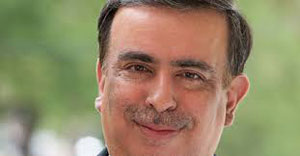 SRINAGAR, Nov 2: As the tragic summer of 2016 unfolded, I became a witness to the nightmares of Kashmir but also a victim to my own self-inflicted little horror.
Aviation
| Business | Defence | Foreign
Affairs | Communication | Health
| India | United Nations
India-US
| India-France | Entertainment
| Sports | Photo Gallery |
Tourism | Advertise with Us
| Contact Us
© Noyanika International, 2003-2009. All rights reserved.