


Art & Culture
|
Hong Kong tycoon offers $65 million for wooing lesbian daughterHong Kong, Oct 11: : A Hong Kong billionaire has announced $65 million reward for any man who would be able to woo and marry his lesbian daughter. Property and shipping tycoon Cecil Chao has promised the “marriage bounty” following reports that his daughter had wed her long-term girlfriend, BBC reported. Cecil, who has never married himself, claimed that his daughter was still single and needed a “good husband”. His daughter’s profile for the networking website LinkedIn says she worked with the British architect Sir Terry Farrell for two years. She now runs Haut Monde Talent, a model management and PR firm with an office on Hong Kong’s Hennessy Road. Chao’s search for a husband for his daughter appeared to contradict a description Miss Chao gave of her father in a 2007 interview, The Telegraph reported. “My father took a hands-off approach in parenting,” she told HK Magazine as quoted by The Telegraph. “I see him as a friend more than a father. My parents never pressure me with high expectations.” It also exposed a traditional streak in a man known for his playboy way of life. Mr Chao made headlines in 2003 when his Rolls-Royce caught fire while he and his girlfriend were inside. The tycoon has never married and once claimed to have had “intimate relations” with about 10,000 women. This week he denied that he would force his daughter to marry a man, the Telegraph reported. Same-sex unions are not recognised in Hong Kong, although homosexuality was decriminalised in 1991. Gigi Chao, a businesswoman and graduate from the University of Manchester, is said to have married her female partner of seven years, Sean Eav, in a ceremony in France earlier this year. Her flamboyant father, however, rejected such claims as false, adding that his generous offer had already evoked many replies from potential suitors. Canara Bank celebrates Hindi Diwas with zealBy Deepak Arora BANGALORE, Sept 17: Canara Bank, a leading nationalised Bank, celebrated "Hindi Diwas" with zeal and zest at its Head Office here. Canara Bank Chairman and Managing Director S Raman presided over the function. In his address, Mr Raman encouraged and inspired all employees to do maximum work in Hindi. Famous Kannad-Hindi litterateur M K Gururaj Rao was honoured in the function. Mr Arun Kumar Nahar, General Manager, Human Resources Wing, delivered welcome address and Mrs Sulekha Mohan, Asst General Manager, Human Resources Wing, presented the Annual Report on Official Language Implementation in the Bank for the period of 2011-12. Mr Shyamalendu Saha, General Manager, Human Resources Wing also The employees presented a cultural programme at the end of the function which included a “Skit” by employees of Bangalore Metro Circle. Mrs Seema Kumari Dubey, OL Officer, introduced the litterateur. Mr Abhinay Kumar The prizes for Canara Bank Rajbhasha Akshay Yojana and Canara Bank Rajbhasha Puraskar Yojana 2011-12 and various competitions held in connection with Hindi Diwas 2012 were given away in the function. Mr Shojo Lobo, OL Officer, delivered vote of thanks and Mr R P Sharma, Manager, O L Section compered the function. Revealed! Why we lieWASHINGTON, Sept: In a new study, researchers have investigated what factors influence dishonest behaviour. Previous research has shown that a person’s first instinct is to serve his or her own self-interest and that people are more likely to lie when they can justify such lies to themselves. With these findings in mind, psychological scientists Shaul Shalvi of the University of Amsterdam and Ori Eldar and Yoella Bereby-Meyer of Ben-Gurion University colleagues hypothesized that, when under time pressure, having to make a decision that could yield financial reward would make people more likely to lie. They also hypothesized that, when people are not under time pressure, they are unlikely to lie if there is no opportunity to rationalize their behaviour. “According to our theory, people first act upon their self-serving instincts, and only with time do they consider what socially acceptable behaviour is,” Shalvi said. “When people act quickly, they may attempt to do all they can to secure a profit—including bending ethical rules and lying. Having more time to deliberate leads people to restrict the amount of lying and refrain from cheating,” Shalvi said. For the study, the researchers first tested participants’ tendency to lie when doing so could be easily justified - approximately 70 adult participants rolled a die three times such that the result was hidden from the experimenter’s view. The participants were told to report the first roll, and they earned more money for a higher reported roll. Seeing the outcomes of the second and third rolls provided the participants with the opportunity to justify reporting the highest number that they rolled, even if it was not the first – after all, they had rolled that number, just not the first time they rolled the die. Some of the participants were under time pressure, and were instructed to report their answer within 20 seconds. The others were not under time pressure, and had an unlimited amount of time to provide a response. The experimenters were not able to see the actual die rolls of the participants, to ensure all rolls were private. Instead, in order to determine whether or not the participants had lied about the numbers they rolled, Shalvi and colleagues compared their responses to those that would be expected from fair rolls. They found that both groups of participants lied, but those who were given less time to report their numbers were more likely to lie than those who weren’t under a time constraint. The second experiment followed a similar procedure, except that the participants were not given information that could help them justify their lies - instead of rolling their die three times, they only rolled it once and then reported the outcome. In this experiment, the researchers found that participants who were under time pressure lied, while those without a time constraint did not. Together, the two experiments suggest that, in general, people are more likely to lie when time is short. When time isn’t a concern, people may only lie when they have justifications for doing so. “One implication of the current findings is that to increase the likelihood of honest behaviour in business or personal settings, it is important not push a person into a corner but rather to give him or her time,” Shalvi said. “People usually know it is wrong to lie, they just need time to do the right thing,” Shalvi added. The study has been published in Psychological Science. President gives away National Awards to TeachersNEW DELHI, Sept 5: President Pranab Mukherjee on Wednesday gave away this year’s National Teachers Awards to teachers performing meritorious service in the field of education. While acknowledging the important role played by teachers in nation building, he called for changes in curriculum to include subjects to build and improve scientific temper among students. President Pranab Mukherjee said that new technologies should be an integral part of the curriculum development for all stages of education. Speaking at a function here after presenting National awards to teachers for 2011, Mr Mukherjee said new methods and teaching aids must equip the younger generations to learn more, explore more and contribute more to the society. The President said, with the Right to Education in position, the country has set itself the goal of 'Education for All' by 2015. Mr Mukherjee said, the motto should be all for Knowledge and Knowledge for all. The President said, teachers should also give themselves a new orientation and evolve an enhanced institutional capacity. Mr Mukherjee stressed the first and foremost task to build India of our dreams is to improve the quality of educaiton. Addressing the function, Human Resource and Development minister Kapil Sibal said, despite its drawbacks Indian education system has produced many reknowned scientists and scholars due to inspirational teachers. The Prime Minister Dr.Manmohan Singh has said that the empowerment of teachers is key for the educational reform process. In his message, he said, nation remembers and honours one of the greatest leaders and teachers, Dr. S. Radhakrishnan. He said, his work, dedication and wisdom continue to inspire us generation after generation. The awards, instituted in 1958, give public recognition to teachers working in primary, middle and secondary schools. IFFCO Literary Award to Shekhar Joshi
Shekhar Joshi is a well known senior Hindi writer, famous for short stories such as Dajyu, Kosi Ka Ghtwar and many milestone short stories in this genre. In the year 2011, IFFCO instituted this award in the memory of the great Hindi novelist and writer Shri Shrilal Shukla - the writer of epic novel Rag Darbari and other major works of Satire, Memoirs and essays etc. The award carries an amount of Rs.5.51 lakhs and citation. The award is planned to be given at Lucknow on October 28 this year. Shekhar Joshi has been nominated by a Committee of writers or literary world headed by renowned Hindi Literature Rajendra Yadav. ATA Carnet a boon for exporters and exhibitorsBENGALURU, Aug 31: A Workshop on ATA Carnet “Your visa for temporary export/ import of goods between international borders”, was organized in the city by FICCI to inform and educate the exporter community about the benefits of using ATA Carnet. The workshop was inaugurated by Mr. Sandeep Prakash, Commissioner of Customs, Bangalore. Mr. Satish Kumar Reddy, Director (ICD), Ministry of Finance, New Delhi, made a special address to the participants highlighting the benefits of using ATA Carnet. Mr. K. Shiva Shanmugam, President, FKCCI, made a presentation on the subject. Curiosity lands on MarsPASADENA (California), Aug 6: The Mars science rover Curiosity has landed on the Martian surface to begin a two-year mission seeking evidence the Red Planet once hosted ingredients for life, Nasa said. Mission controllers at the Jet Propulsion Laboratory near Los Angeles said they received signals relayed by a Martian orbiter confirming that the rover had survived a make-or-break descent and landing attempt to touch down as planned inside a vast impact crater. Nasa has described the feat as perhaps the most complex ever in robotic spaceflight. The $2.5 billion Curiosity project, formally called the Mars Science Laboratory, is Nasa's first astrobiology mission since the 1970s-era Viking probes. The landing, a major victory for a US space agency beleaguered by budget cuts and the recent loss of its space shuttle program, was greeted with raucous applause and tears of joy by jubilant engineers and scientists at mission control. JPL's team said the spacecraft and its systems were functioning flawlessly, and forecasts called for favorable Martian weather over the landing zone, when Curiosity's rendezvous with Mars was just 12 hours away. After a journey from Earth of more than 350 million miles (567 million km), engineers had said the rover, the size of a small sports car, landed precisely as planned near the foot of a tall mountain rising from the floor of Gale Crater in Mars' southern hemisphere. Facing deep cuts in its science budget and struggling to regain its footing after cancellation of the space shuttle program - Nasa's centerpiece for 30 years - the agency has much at stake in the outcome of the $2.5 billion mission. President Barack Obama's top science adviser, John Holdren, was among the dignitaries visiting JPL on Sunday for the landing, along with Nasa Administrator Charles Bolden. "It's critically important for the nation because it allows us to stay on pace for what the president asked us to, getting humans to Mars in the mid-2030s," said Bolden. He added that success also was key to Nasa's international partners in 12 countries in maintaining public and government support abroad for their continued funding. Mars is the chief component of Nasa's long-term deep space exploration plans. Curiosity, the space agency's first astrobiology mission since the 1970s-era Viking probes, is designed primarily to search for evidence that the planet most similar to Earth may once have harbored the necessary building blocks for microbial life to evolve. The rover, formally called the Mars Science Lab, is equipped with an array of sophisticated chemistry and geology instruments capable of analyzing samples of soil, rocks and atmosphere on the spot and beaming results back to scientists on Earth. One is a laser gun that can zap a rock from 23 feet (7 meters) away to create a spark whose spectral image is analyzed by a special telescope to discern the mineral's chemical composition. Hiroshima marks 67th anniversary of atomic-bomb attackTOKYO, Aug 6: Japan marked the 67th anniversary of the world's first atomic bomb attack with a ceremony Monday that was attended by a grandson of Harry Truman, the US president who ordered the bomb dropped on the city of Hiroshima. About 50,000 people gathered in Hiroshima's peace park near the epicenter of the 1945 blast that destroyed most of the city and killed as many as 140,000 people. A second atomic bombing Aug. 9 that year in Nagasaki killed tens of thousands more and prompted Japan to surrender to the World War II Allies. The ceremony, attended by representatives of about 70 countries, began with the ringing of a temple bell and a moment of silence. Flowers were placed before Hiroshima's eternal flame, which is the park's centerpiece. Truman's grandson, Clifton Truman Daniel, and the grandson of a radar operator who was on both of the planes that dropped the atomic bombs, joined in the memorial. Ari Beser's grandfather, Jacob Beser, was the only person who directly took part in both the Hiroshima and Nagasaki bombings. In a news conference after the memorial, Daniel declined to comment on whether his grandfather's decision was the right one. ``I'm two generations down the line. It's now my responsibility to do all I can to make sure we never use nuclear weapons again,'' he said, according to Japan's Kyodo news service. Daniel, 55, said in a statement earlier that he decided to visit Hiroshima and Nagasaki because he needed to know the consequences of his grandfather's decision as part of his own efforts to help achieve a nuclear-free world. The US government sent a representative _ the American ambassador _ to the annual commemoration for the first time two years ago. Ambassador John Roos attended the Hiroshima ceremony on Monday. Hiroshima Mayor Kazumi Matsui said Japan must take a bolder role in leading global disarmament efforts and called on world leaders to come to his city to ``contemplate peace.'' He also said the nuclear accident at Fukushima last year has shown the dangers of nuclear technology, even for peaceful purposes, and urged the government to create a mix of energy sources for Japan that is safe and secure. ``I firmly believe that the demand for freedom from nuclear weapons will soon spread out from Hiroshima, encircle the globe, and lead us to genuine world peace,'' he said. Matsui noted that the average survivor of the bombing is now 78 years old, and said the city is increasing its effort to provide them with health care and chronicle their experiences so the events of that day are remembered. Prime Minister Yoshihiko Noda said Japan must pass the experience on to future generations so that the lessons of Hiroshima are not forgotten. |
|
||||||||
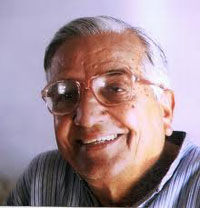 NEW DELHI, Aug 29: The eminent Hindi writer Shekhar Joshi has been nominated for the well known literary award “Shri Lal Shukla Memorial IFFCO Sahtiya Samman” for the year 2012. The award has been instituted by the fertilizer and cooperative giant IFFCO in recognition of the major literary achievements depicting the life of rural India.

Aviation
| Business | Defence
| Foreign Affairs | Communication
| Health | India |
United Nations
India-US | India-France
| Entertainment | Sports
| Photo Gallery | Tourism
| Advertise with Us | Contact
Us
© Noyanika International, 2003-2009. All rights reserved.