


Art & Culture
|
London Olympics give boost to ATA carnet, a passport for goodsBy Deepak Arora NEW DELHI, July 28: ATA carnet – the passport to carry goods abroad without hassles got a big boost during the Olympics with many TV broadcasters and others making use of it to carry their equipment to London to cover the same and to display their goods. The companies using it included TV 18, Independent News Service, TV Today, Amrit Bazar Patrika news and Zoom Communications. Other companies which used it in past were NDTV for IIF Awards, Essel Communications for Srilanka cricket series and Hazoorimal Jewellers for Oscar awards 2012. In the contemporary free and open global economic set-up the importance of exhibitions, fairs and business development tours cannot be overstated. The only problem an exporter faces is how to carry the exhibits and samples without much difficulty? This is where the ATA Carnet, an international business promotion tool, can play a vital role. FICCI, as the apex chamber, is the Sole National Issuing and Guaranteeing Association (NIGA) for ATA Carnets in India. ATA Carnet, a unique service offered by FICCI will take care of exporters needs in the country. It can benefit Business travelers/sales executives, Fair Exhibitors, Film and TV crew, Artists, Engineers, Educationalists, Entertainers, Sports teams etc during their overseas trips. Over the last few years, FICCI has tried to make the Carnet system simpler and easier and the procedure has been made uncomplicated for the benefit of the industry. ATA Carnet is the simplest method of exporting goods on a temporary basis. Carnets are like passports for goods replacing normal Customs documentation enabling fast trouble free importation into member countries without having to pay duty/tax. The key benefit is that it can be used for multiple trips throughout the period of its validity and covers over 71 countries. It allows a reduction of delays and a standardization of procedures that are vital in today’s economic world. One of the biggest benefits of Carnets, that people really appreciate, is that it eliminates the need to spend time to complete all the different paperwork for Customs clearance in India and overseas. It also saves money, as there’s no need to put down a ‘bond’ each time when enter a foreign country. Upon presentation, the Carnet permits the exhibit and equipment to clear customs without the payment or deposit of import duties and taxes. Payment is not necessary because the Carnet guarantees to foreign customs that the goods will be re-exported timely. A good way of thinking an ATA Carnet is to call it "a passport for goods". Without a Carnet, duty is refunded if merchandise leaves the overseas country, but it may take up to six months and the refund comes in the currency of the country. Sometimes there are possibilities that refund never comes at all. FICCI, which administers the ATA Carnet system in India, informs the Indian exporting fraternity that Carnets can be used for all sorts of special purposes. For example, Carnets can be used by Journalists and Sports teams for London Olympics to have stress free entry into UK. Carnets have also been used by various media companies for shipping goods to Singapore for the recent IIFA awards. FICCI as a National Guarantor has been making vigorous efforts to spread this service throughout the country. To meet this target, several awareness workshops/training programs are being conducted by FICCI every year. In the recent past, such workshops/ training programs were conducted in Srinagar, Chennai, Mumbai and Surat for the benefit of local exporters. Despite all efforts done by FICCI, the utilization of Carnets is yet to see its full potential. In India, only 453 Carnets were issued in the year 2011 as compared to over 25000 Carnets issued by Germany and more than 4000 Carnets in the other European Countries. FICCI’s effort is to increase the number of Carnet users in tune with other countries in the world. Big exporters understand the scheme and adopt it as needed. But if we look at the millions of small exporters in India, they are still not aware of this service. FICCI’s key focus is to get them started using ATA Carnet Service. During this year, FICCI is planning to partner with all sectoral associations, regional chambers for promoting the use of ATA Carnet in the untapped sectors and regions in the country. Rajesh Khanna, Bollywood's first superstar, is no more
The cremation ceremony will be held tomorrow at 11am. Rajesh Khanna, who has been battling health issues since April 1, was visited by the Bollywood fraternity while he was in hospital. The 69-year-old actor was admitted to the hospital after he complained of weakness and fatigue. Kaka, as he was popularly known, is survived by wife Dimple Kapadia and daughters Twinkle and Rinke. Scores of worried fans gathered outside his 'Aashirwad' home on Carter Road in Bandra on Wednesday following the news. The veteran actor had been battling with health issues for a long time and was frequently admitted to hospital in the last few months. In April, he was admitted to hospital due to weakness and fatigue but was discharged in three to four days. He was again rushed to the Lilavati Hospital June 23 and discharged after being treated for two weeks. A week later he was again taken to the hospital after he complained of weakness, but was discharged soon after. Rajesh began his career with "Aakhri Khat" in 1966. He became a superstar like know other with his work in hits like "Aradhana", "Do Raaste", "Safar" and "Anand". He was last seen in a TV commercial for Havells fans earlier this year. Rajesh Khanna, whose romantic persona in songs like 'Mere sapno ki raani', 'O mere dil ke chain' and 'Roop tera mastana' made many a young woman's heart skip a beat, was Hindi film world's first actor to attain superstar status. His mannerism, his unique style of dancing, dialogue delivery and gestures added to his onscreen persona and have been imitated countless number of times. At the peak of his career, Khanna, popularly called Kaka, would be mobbed during public appearances as fans kissed his car, which would be covered with lipstick marks. They lined the road, cheering and chanting his name. Female fans sent him letters written in blood. His predecessors Raj Kapoor and Dilip Kumar broke hearts in their time no doubt, but the hysteria connected with Khanna was unprecedented. Born as Jatin Khanna on December 29, 1942, he was adopted and raised by foster parents. He began taking interest in acting while in school and performed in a number of plays. It was his uncle who changed Khanna's first name to Rajesh when he decided to join films. In 1965, he won an all India talent contest organised by United Producers and Filmfare and as a result made his debut the next year in "Aakhri Khat", directed by Chetan Anand. His second film "Raaz" was also a part of his predetermined prize for winning the competition. He found success with films like "Baharon Ke Sapne", "Aurat", "Doli" and "Ittefaq", but it was the 1969 film "Aradhana" opposite Sharmila Tagore that catapulted Khanna to superstardom. The film also saw the resurgence of Kishore Kumar, who eventually became the official playback voice of Khanna and the actor-singer duo delivered a number of hit songs subsequently, memorable among them being 'Mere sapno ki raani', 'Roop tera mastana', 'Kuch to log kahenge' and 'Jai jai shiv shankar'. After "Aradhana", "Haathi Mere Saathi" (1971) became the biggest hit and also the biggest grosser ever till then. Khanna appeared in 163 feature films of which 106 had him as the solo lead hero and 22 were two hero projects. He had 15 consecutive solo superhits between 1969 and 1972, which is still an unbroken record in Indian film history. He won three Filmfare Best Actor Awards and was nominated for the same fourteen times. He was awarded the Filmfare Lifetime Achievement Award in 2005. Despite his heartthrob status, Khanna played a variety of roles - the terminally ill Anand, a chef in "Bawarchi", a lonely husband in "Amar Prem", and a psychiatric patient in "Khamoshi". He worked with the best of the talents of his time, be it directors, actresses and composers. Sharmila Tagore and Mumtaz became his leading ladies in many films including "Amar Prem" and "Aap Ki Kasam". Directors like Shakti Samanta, Yash Chopra, Manmohan Desai, Hrishikesh Mukherjee and Ramesh Sippy worked with Khanna. His films' music made them more memorable, with the trio of composer R D Burman, Kishore and he himself working together in more than 30 films. The commercial success of his films declined during 1976–78. After 1978, Khanna starred in critically acclaimed films such as "Amado", "Phir Wohi Raat", "Dard", "Dhanwan", "Avtaar" and "Agar Tum Na Hote". If Khanna's rise to fame was meteoric, so was his fall from stardom. By the late 80s his charm at the box office had waned but it did not affect his personal charisma. He held a Lok Sabha seat as a Congressman from 1992 to 1996. His enigmatic personality not only charmed his fans but also led to him into relationships with three Bollywood actresses in their heydays. Khanna was in a long-term relationship with Anju Mahendru in the early '70s, and later went on to marry Dimple Kapadia, 15 years younger to him, in 1973. They have two daughters - Twinkle and Rinke - who followed their parents into showbiz. Dimple split from the actor in 1984. Though they lived separately, the couple never completed divorce formalities. Khanna was also romantically involved with his "Souten" co-star Tina Munim (now Ambani). The pair starred together in films like "Fiffty Fiffty", "Bewafai", "Suraag", "Insaaf Main Karoonga" and "Adhikar". What it takes to become a full-fledged GurgaoniteBy Bhuvnesh Chawla
So what about Gurgaon? Is it just a dimple on the fair cheek of Delhi or a pimple on the hairy chin of Haryana? Every day, hundreds of people tumble into the Millenium City trying to figure out how they can quickly assimilate into the Gurgaon culture. The good news for wannabe Gurgaonites is that you dont have to be born in Gurgaon or grow up in Gurgaon to become its citizen. In fact, no one over ten years (apart from a few buffaloes) was born here. Being a Gurgaonite is really about adopting the Gurgaon way of life, a unique lifestyle that is different from life in any other part of the country.
1. You have four cars one for the spouse, one for the maid to ferry Pinky and Bunty to after school classes, one is a Santro just in case the Honda City doesnt start, one is a BMW for special occasions, just in case people think you own only a Santro. 2. You complain about the traffic, the terrible pollution and the lack of parking space. Really, it is too bad. 3. You employ two full time maids, one part-time cleaning maid, one standby maid, one driver, one car cleaner, a regular cook, a party cook, a dog walker and one security guard. 4. You complain about how it is so difficult to find good domestic help. 5. You never walk anywhere. You only drive to the malls. You never climb stairs, you only take escalators in the malls. 6. You have a membership at a gym because you never get any exercise. The gym is only a kilometer away from your house. You rarely use your membership because you get stuck in traffic every time you drive to the gym. 7. You have bought an apartment or two. You look down on those who havent they have no idea about real estate. Prices will only go up. 8. You are thinking about buying an apartment or two. You look down on those who already bought their own they have no idea about real estate. Prices will only go down. 9. You have four brokers (real estate consultants) on your speed dial. Two are good friends. Your spouse is thinking of becoming a real estate consultant. 10. You complain about the lack of greenery and open spaces around you. Your family compensates by staying indoors and switching on all five air conditioners, watching three televisions and chilling beer in two refrigerators. You complain about the electricity bills. Then each one takes a car and drives to Delhi to get some fresh air. If you have scored more than 7, you can now proudly wear the I am a Millenium Citizen badge. A score of 4-7 indicates that there is still hope for you. You should buy another car and complain more. Anything less than 3 and you need to crawl back to wherever you came from. Alternately, you can become a real estate consulant. SC Seeks Govt's Explanation on Amarnath Pilgrims' deathNEW DELHI, July 16: Expressing concern over rising incidents of deaths of Amarnath pilgrims on way to the holy shrine, the Supreme Court has sought explanation from the Centre and Jammu and Kashmir government on lack of proper medical and other facilities to them. Taking suo motu note of media reports of pilgrims' deaths, a bench of justices B S Chauhan and Swatanter Kumar directed the two governments to explain the causes for the growing fatalities and the facilities, being provided to them. "Some of the events that have been widely reported in the newspapers compel us to take a judicial notice of the lack of necessary facilities, essential amenities and the risk to the lives of the yatris, en route and around the Holy Cave of Amarnath," the bench said. "...It is a matter of common knowledge that the path leading to the holy cave is not only very narrow but is even unprotected. The photographs also show that hardly any amenity is available for yatris in and around the holy cave, though thousands of people, who throng the holy cave, have to wait for hours and days for having the darshan," it said while referring to photographs published in national dailies. The bench said every year the pilgrims are dying on their way to the holy cave and "it is again a matter of great regret that obviously because of the lack of proper aid and amenities, the death toll is rising." "It is expected of the government and the concerned authorities to devote more attention and provide appropriate amenities and facilities to protect the lives of individuals, the environment as well as to make the yatra effective and successful, preferably without any human casualty," the apex court said. "The authorities cannot shirk from their responsibility of providing minimum essential facilities, including medical assistance, roads and other necessary infrastructure," the bench said. So far 83 people have lost their lives up to July 16 this year. Ordering the governments to respond within a week on the cause for high fatalities among pilgrims, the apex court also asked it to explain as to why seven times the requisite number of people are being permitted to visit the cave every day. "With the increase in the number of pilgrims coupled with the poor management, it appears that there was a sharp increase in the casualty rate," the bench said adding "it appeared from this report that constraints on availability of medical aid and medical examination is writ large." The court said the pilgrims have a right to get proper facilities and the governments cannot "escape their obligations to provide minimum essential facilities". "They are also expected to make appropriate arrangements for darshans at the holy cave so as to avoid health hazards and injuries, provide proper paths and one-way system passages to the pilgrims to the Holy Cave," the bench said. "All these reports clearly showed disregard to the human lives. Lack of facilities at the shrine and on the route to the shrine is evident from all the aforesaid articles and the photographs published therein," the bench said. Referring to newspaper reports, the bench said "inhuman, unsafe and undesirable conditions are prevailing at the base camps and en route to the holy cave". "The time intervening the previous and the current year clearly demonstrates that the authorities have not taken any effective and appropriate measure for protecting the lives of thousands of devotees who visit the holy cave during this limited period, despite the print media repeatedly bringing this to the notice of all concerned. Training Imparted on ‘how to identify various counterfeit parts’
Brand Protection team from German automobile giant BMW and Japanese car manufacturer Toyota imparted training to the customs on how to identify various counterfeit parts and safeguard the general public from the tragic harm that counterfeit parts could bring. Ms. Meenu Chandra, Head, FICCI CASCADE, also addressed the gathering on the risk attached to buying fake products and the work of Committee Against Smuggling and Counterfeiting Activities Destroying the Economy (CASCADE) in spreading awareness on this issue. While addressing the gathering Mr. Rahul Sethi, partner,Ranjan Narula Associates, applauded the efforts of Customs in curtailing the menace of counterfeit goods from entering into the country since Intellectual Property Rights (Imported Goods) Enforcement Rules, 2007 came into existence. He, however, mentioned that still much more needs to be done. The Custom officials from Chennai that were part of the workshop were Mr. Sanjay Kumar Agarwal – Commissioner, Mr.K.S.V.V. Prasad – Joint Commissioner and Mr. Murali Krishna – Deputy Commissioner. Similar workshops are being organized with the Customs in other cities. A training workshop was held on 2nd July in New Delhi. Thai sextuplets named after car brandsBANGKOK, July 7: A Thai woman who delivered six children this May has named them after her favourite car brands -- Audi, Fortune (Toyota Fortuner), Porsche, Mini, Volkswagen and Fiat, the Bangkok Post reported. The sextuplets -- three girls and three boys -- are the first born in Thailand. Duangchanok Wangwitthayaskul, 29, had pregnancy related problems and could not have children for a long time. But when she delivered the babies at Bumrungrad International Hospital at the beginning of May, Wangwitthayaskul along with her husband decided to wait for two months to show the infants in public. According to a Thai tradition, in addition to the names recorded in birth certificates children are given pet names that often replace the name in informal situations, in family and with friends throughout life. But this couple opted to choose their newborns' nick names from car brands. Duangchanok's pregnancy was the result of in vitro fertilisation. After the birth of six children, the parents had to invite relatives to help care for children and hire three nannies. |
|
||||||||
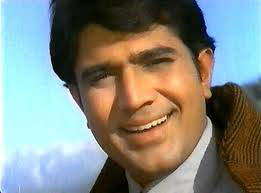 MUMBAI, July 18: Rajesh Khanna, the actor who became Bollywood's first superstar with a string of movie hits in the seventies, died in his Mumbai home on Wednesday. He was 69. Khanna was also a former Lok Sabha MP.
 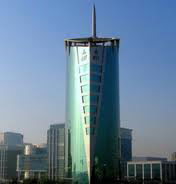 GURGAON, July 18: Every city and town has a unique culture and ethos. Mumbaikars rush about in public transport and swear by their vada paavs, Kolkatans never rush about and swear by their maccher jhol, Delhities just rush about and swear.
 Here is a simple checklist to decide if you qualify as a Gurgaon citizen:
 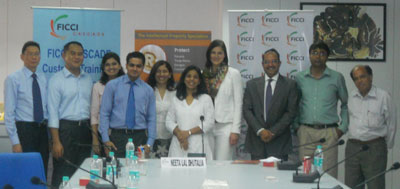 NEW DELHI/ CHENNAI, July 6: To sensitize the customs and border protection in detection and control of counterfeit goods FICCI-CASCADE in association with its member Ranjan Narula Associates; an IPR specialist law firm, organized a training workshop for custom officials at Chennai. The event was organised under the aegis of Commissioner of Customs – Import & General Ms. Neeta Lal Butalia, and Joint Commissioner - Mr. Satyender Mathuria.

Aviation
| Business | Defence
| Foreign Affairs | Communication
| Health | India |
United Nations
India-US | India-France
| Entertainment | Sports
| Photo Gallery | Tourism
| Advertise with Us | Contact
Us
© Noyanika International, 2003-2009. All rights reserved.