


United Nations
|
UN Chief welcomes open-ended ceasefire for Gaza?By Deepak Arora UNITED NATIONS, Aug 26: The UN Secretary-General has welcomed Tuesday's announcement of an open-ended ceasefire for Gaza, brokered under Egyptian auspices. A brighter future for Gaza and for Israel depends on a sustainable ceasefire. It is up to the parties to live up to this responsibility. After this latest round of killing and the further widespread destruction of Palestinian homes, civilians on both sides need a reprieve in order to resume their daily lives, and to allow for humanitarian and early recovery efforts to address the desperate needs of the people in Gaza, according to the spokesman for the Secretary-General on Gaza. He said "the children of Gaza and Israel must be able to start the school year without the sound of rocket alarms and airstrikes. After 50 days of profound human suffering and devastating physical destruction, any violations of the cease-fire would be utterly irresponsible." The Secretary General said "Any peace effort that does not tackle the root causes of the crisis will do little more than set the stage for the next cycle of violence. Gaza must be brought back under one legitimate Palestinian Government adhering to the PLO commitments; the blockade of Gaza must end; Israel's legitimate security concerns must be addressed. The United Nations stands ready to support efforts to address the structural factors of conflict between Israel and Gaza." The Secretary-General remains hopeful that the extended ceasefire will act as a prelude to a political process as the only way of achieving durable peace. The two-state solution is the only viable option. The Secretary-General urgently calls on both parties to return to meaningful negotiations towards a final status agreement that addresses all core issues and ends the 47-year occupation. UN chief stresses talks to resolve India-Pak issues
"The secretary-general calls on both sides to solve the issues peacefully and through dialogue," according to a statement given from the office of Ban's spokesperson in response to questions about the cancellation of the talks and ceasefire violations. Prime Minister Narendra Modi's government cancelled the August 25 meeting scheduled in Islamabad between the foreign secretaries after Pakistan's high commissioner to India Abdul Basit held talks with Kashmiri separatist leaders. Also, ceasefire violations by Pakistani forces along the Line of Control and the International Border have increased over the last few weeks. There have been 21 ceasefire violations by Pakistani troops in less than a fortnight and 23 in August. Defence minister Arun Jaitley has said in New Delhi that India has been responding effectively and strongly to the ceasefire violations by Pakistan side. India has also further strengthened its counter infiltration grid to tackle any attempt by Pakistan to push in militants during the ceasefire violations. U.N. chief: Unity needed against record swell of crisesUNITED NATIONS, Aug 19: The world faces the greatest humanitarian crises in United Nations history and nations aren't coming together to solve the problems, according to Ban Ki Moon, U.N. Secretary-General. World leaders "have to sit down together with an open heart to negotiate in the interests of their people," Ban said in an interview with USA TODAY as he marked World Humanitarian Day. "The crises we're experiencing cannot be solved by one person. As secretary-general, I can bring world leaders to the river, but I cannot force them to drink water." Civil war in Syria and South Sudan, the world's newest country, and conflict between governments and non-state militants in Gaza, Iraq, Ukraine and elsewhere have contributed to 155 aid worker deaths, 171 serious injuries and 134 kidnappings in 2013, a 66% increase from the previous year and the highest number of fatalities in a decade. Deaths this year - 79 - outpace 2013, a record that is "deeply troubling," Ban said. World Humanitarian Day commemorates Aug. 19, 2003, when a massive truck bomb demolished U.N. headquarters in Baghdad, killing 22 people, including the top U.N. envoy in Iraq, Sérgio Vieira de Mello. At least 33 million people were displaced last year by conflict and violence, the highest figure ever recorded, according to the U.S. Agency for International Development. The level of violence by the Islamic State in Iraq is so great that Pope Francis took the rare step Monday of endorsing the use of force against the militants, who have beheaded opponents and kidnapped women to take as wives and sex slaves. Francis called on the United Nations to organize a force to stop attacks on civilians there, but Ban said it would be difficult to obtain such a commitment from U.N. members. The world's nations are less comfortable about sending troops into hot battle than to peacekeeping operations, he said. "When there is no peace to keep, it is very difficult," he said. An exception occurred in the Democratic Republic of the Congo where, under Ban's strong urging, U.N. countries produced a mandate in 2013 for 3,000 soldiers to intervene militarily to protect civilians. That intervention occurred in a "dire situation," Ban said, and resulted in the surrender in November of rebels. The operation "was quite effective" but a "very rare" exception, he said. Ban complained about a lack of political will to resolve conflicts between Israel and Hamas militants in Gaza, and between Ukraine and pro-Russian separatists in eastern Ukraine. In Gaza, six weeks of Hamas rocket fire into Israel prompted a massive Israeli bombardment that killed more than 2,000 Palestinians, most civilians. The fighting caused massive damage and destroyed 25 U.N. schools, many of them used as shelters, according to UNICEF spokeswoman Sarah Crowe. Israel says nearly half the deaths were militants and Hamas uses civilians as shields. U.N. officials found rockets stored in two U.N. schools. Human rights violations on both sides should be investigated and people should be held to account, Ban said. Referring to the civilian toll after three years of war in Syria, where 6.5 million people have been displaced, and fighting in eastern Ukraine, where 2,000 have died in fighting, Ban said cross-border support for non-state militants should be prevented, but again, political will is lacking. "This is happening everywhere," he said. "There are many fires. First, we need to extinguish these fires, then deal with root causes." Ban Ki-moon to Release Book on Indian War Memorials of First World WarBy Deepak Arora
Permanent Representative of India to the United Nations Ambassador Asoke Mukerji has put together a special photo publication bringing together War Memorials from around the World, where Indian soldiers lost their lives in the First World War. UN Secretary General Ban Ki-moon will release the book on Indian War Memorials of the First World War on August 13 at the special commemorative event to be held at the United National Headquarters in New York. he said the immense sacrifices and widespread destruction caused by the War resulted in the decision of the participants in the Paris Peace Conference of 1919 to establish the world's first inter-governmental organisation, the League of Nations, the precursor of the United Nations. The event is co-hosted along with the Permanent Missions of Belgium, Egypt, Greece, Iraq, Kenya, Nigeria and Tanzania. All Missions to the UN and senior officials of the UN would be attending. Tagore's Gitanjali part of WW-I commemorative event at UNUNITED NATIONS, Aug 5: A poem from Nobel laureate Rabindranath Tagore's masterpiece 'The Gitanjali' was recited by Indian Ambassador to the UN Asoke Kumar Mukerji as part of a commemorative ceremony held here marking 100 years of the outbreak of the World War I. The poems and their recordings were displayed at an interactive exhibition organised by the UK's mission to the UN Monday as it took over the rotating presidency of the UN Security Council for the month of August. Mukerji read verse 96 from 'The Gitanjali', a collection of Tagore's poems originally published in 1910. "When I go from hence, let this be my parting word, that what I have seen is unsurpassable," reads the first para of the poem by the legendary Indian philosopher. The Indian delegation said as the shadows of an impending world war were gathering, Tagore's poems encapsulated a simple faith in man and divinity, a refuge from the crass materialism that was engulfing the world. It said the spirit of Tagore's poems appealed to an entire generation, affording solace, faith and hope by rediscovering truth and beauty in the world. Among the poignant instances of the popular appeal of Tagore's poetry in war-torn Britain is the story of trench poet Wilfred Owen. After the death of her son on the warfront, Owen's mother Susan got his personal possessions back. In the notebook that Owen carried in his pocket, he had written poem 96 from Gitanjali with Tagore's name inscribed below. Owen had recited lines from the poem when he had bid goodbye to his mother. Owen's mother had written to Tagore in August 1920 recounting the experience, moved by the power of the poem that reverberated in her mind in the voice of her lost son. As part of its presidency of the Security Council, UK's mission to the UN would be focusing on conflict prevention and commemorating the centenary of the outbreak of the war. In July, India had co-sponsored a commemorative event on the World War I at the world body's headquarters. The courage and sacrifice of millions of soldiers, including thousands from India, who fought in the war was remembered at the event titled 'Learning from War to Build Peace.' The event highlighted the importance of reconciliation through diplomacy and dialogue. During the event, a short film showing images of the World War I was screened. The film had particularly moving images of the Indian soldiers fighting in the battlefield across the world. UN chief Ban Ki-moon had said that as the world marks the 100th anniversary of the "war to end all wars," nations continue to see horrific violence on many fronts. Mukerji had said apart from the soldiers and medical personal from India who played a key role in the war, a large number of technical support troops during the war also hailed from India. During the event, excerpts from letters and diaries of soldiers and nurses as they lived through the war were also read by UN interns and staff. Among the three letters that were read was one by Indian soldier Gholam Rasul Khan, who was one of over a million volunteer Indian soldiers serving in the war as part of Indian Expeditionary Forces. Khan had written the letter from France on May 24, 1916 to his father Mahmood Navas Khan in which he had said he hoped to soon return to his homeland. Modi to address UN General Assembly on Sept 27By Deepak Arora
India’s “Head of Government” is scheduled to address the General Debate of the UN General Assembly on the morning of September 27, according to a first provisional list of speakers released here. The UN General Debate, where Presidents, Prime Ministers, monarchs and foreign ministers address the General Assembly, is scheduled from September 24 to October 1. The week of the General Debate is traditionally considered the busiest week of the year for international diplomacy as heads of states and governments along with their armies of diplomats, civil society members and business heads descend on the UN headquarters and discuss pressing global issues. As is customary, the leader of Brazil will be the first speaker to address the General Debate followed by US President Barack Obama. The leaders of Bangladesh, China and Russia will address the world body the same day as Mr Modi. Pakistan Prime Minister is scheduled to speak at the General Assembly on September 25. Apart from addressing the General Assembly, Modi is expected to travel to Washington for his first meeting with US President Barack Obama. Modi’s first foreign visit, after becoming India’s Prime Minister in May, was to Bhutan. He then travelled to Brazil last month for a meeting with BRICS leaders and will head to Nepal on Sunday on a two-day visit. The Indian Prime Minister is expected to hold bilateral meetings on the sideline of the UN General Assembly session with several world leaders. He is also expected to meet UN Secretary General Ban Ki-moon. Ban’s spokesperson had said in May that the UN chief would “very much hope” that Mr Modi would attend the General Assembly and especially attend the Climate Change summit as India has a big role to play on this issue. Ban condemns latest deadly attack near UN school as 'moral outrage and criminal act'By Deepak Arora
“The attack is yet another gross violation of international humanitarian law, which clearly requires protection by both parties of Palestinian civilians, UN staff and UN premises, among other civilian facilities,” declared Mr. Ban in a statement issued by his spokesperson in New York. “United Nations shelters must be safe zones not combat zones,” the Secretary-General's statement continued, adding that the Israel Defence Forces (IDF) have been repeatedly informed of the location of these sites. “This attack, along with other breaches of international law, must be swiftly investigated and those responsible held accountable. It is a moral outrage and a criminal act.” The UN chief's strongly worded statement comes after the collapse two days ago of a humanitarian ceasefire brokered by the United Nations and the Unites States, and in the wake of two earlier reported attacks near schools managed by the UN Relief and Works Agency for Palestine Refugees in the Near East (UNRWA).
Mr. Ban's statement today expressed “profound dismay” over the appalling escalation of violence and loss of hundreds of Palestinian civilian lives since the breach of the ceasefire. The resurgence in fighting has only exacerbated the man-made humanitarian and health crisis wreaking havoc in Gaza. “Restoring calm can be achieved through resumption of the ceasefire and negotiations by the parties in Cairo to address the underlying issues,” said the statement, adding: “The Secretary-General repeats his demand to the parties to immediately end the fighting and return to the path of peace. This madness must stop.” Mr. Ban's strong condemnation was echoed in a statement issued in Jerusalem by the UN Special Coordinator for the Middle East Peace Process, Robert Serry, who also expressed dismay at reports of a strike in the immediate vicinity of the UNRWA school, which was sheltering some 3,000 civilians displaced by the ongoing violence. “It is simply intolerable that another school has come under fire while designated to provide shelter for civilians fleeing the hostilities,” said the statement, which underscored the Secretary-General's call on all parties to respect the inviolability of UN premises and protect civilians. Mr. Serry in his statement deplored the escalation of violence over the past 48 hours, particularly in the Rafah area. “This shocking violence underscores the urgent need, despite recent setbacks, for a ceasefire and negotiations between all parties in Cairo addressing the underlying issues.” In the statement, Mr. Serry called on all parties to cooperate with ongoing international efforts to find a way out of this crisis and prevent the loss of more human lives. Meanwhile, UNRWA announced today that since 20 July, nine of its staff members have been killed, humanitarian workers struck down by the “pitiless conflict.” “These were people who had dedicated years or decades to serving the Palestine refugees of Gaza”, said UNRWA Commissioner-General Pierre Krahenbuhl. “Many of them were educators, inculcating in children the hope of a brighter future and supporting them through the most difficult of times…The cruel ways in which they lost their lives has devastated families they leave behind and all of us in UNRWA,” he said. UN spokesperson breaks down in tears on camera after Gaza school bombingUNITED NATIONS, Aug 3: With over 1300 dead in the ongoing conflict between Israel and Hamas in Gaza, the international community led by the United Nations, has appealed time and again to both the sides to stop the fighting and enter into a dialogue. However, resisting all criticism, Israel and Gaza have kept at it, resulting in the death of many innocent lives. The most recent bombing of of another UN run school in Gaza has evoked a strong response from the international body. The UN declared "enough is enough" on Wednesday and asked pertinent questions like where are the civilians who have been warned expected to go? "This is a moment where you really have to say 'enough is enough' and you have to search for the right words to convince those who have the power to stop this," Eliasson told reporters at the United Nations. In a media address, that immediately followed the shelling of the school, UN Relief and Works Agency (UNRWA) spokesperson Chris Gunness could not restrain his tears, and broke down mid-briefing on camera. In the video of his breakdown, that has since gone viral, Gunness tells Al Jazeera, "The rights of Palestinians, and even their children, are wholesale denied, and its appalling." |
|
||||||
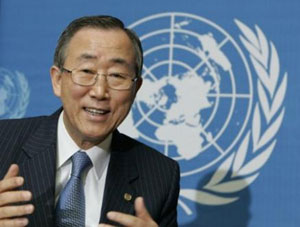 UNITED NATIONS, Aug 26: UN chief Ban Ki-moon has asked India and Pakistan to resolve their issues peacefully and through dialogue, against the backdrop of cancellation of foreign secretary-level talks between the two nations and continued ceasefire violations by Pakistan along border posts.
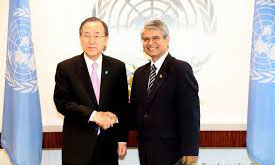 UNITED NATIONS, Aug 6: The Permanent Mission of India to the United Nations is organizing a special commemorative event to the sacrifices made by Indian soldiers in the First World War.
 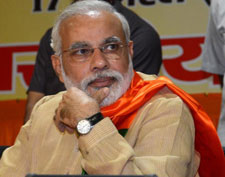 UNITED NATIONS, Aug 2: Indian Prime Minister Narendra Modi is expected to address the 69th Session the United Nations General Assembly on September 27. This would be Modi's first global speech to an audience of nearly 200 world leaders and foreign ministers at the annual gathering in New York.
  UNITED NATIONS, Aug 3: Amidst an 'appalling' escalation of violence in the Gaza Strip since the collapse of a brief 1 August ceasefire, Secretary-General Ban Ki-moon strongly condemned the killing today of at least 10 Palestinian civilians in shelling outside of a United Nations school in Rafah which had been sheltering thousands of civilians.
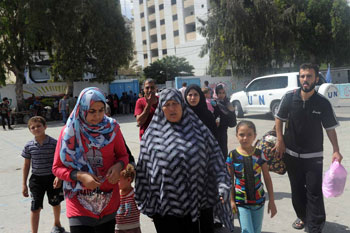 As the brief pause faltered and attacks in Gaza escalated, UN humanitarian officials yesterday said that weeks of intense fighting has left medical services and facilities in the enclave “on the verge of collapse,” warning that a health disaster of widespread proportions is rapidly unfolding.

Aviation
| Business | Defence | Foreign
Affairs | Communication | Health
| India | United Nations
India-US
| India-France | Entertainment
| Sports | Photo Gallery |
Tourism | Advertise with Us
| Contact Us
© Noyanika International, 2003-2009. All rights reserved.