


United Nations
|
India warns against dangers of exposing UN PKOs to resolve armed internal conflictsBy Deepak Arora
Speaking at the United Nations Security Council Open Debate on Peacekeeping Operations: The United Nations and Regional Partnerships and its Evolution held here on Monday, Ambassador Asoke Kumar Mukerji, Permanent Representative of India to the United Nations, said India has consistently emphasized that the new trend of the PKOs wherein there is a mixing of mandates, directly affects the operational effectiveness of the PKO and exposes traditional mandate peacekeepers to unnecessary threats from armed internal conflicts which the United Nations has not itself instigated. Ambassador Mukherji pointed out that the dangers of using the UN Peacekeepers to tackle what are essentially internal political conflicts. In doing so, the Council is effectively endorsing an unsustainable approach to the maintenance of international peace and security. As the largest overall contributor of troops to the UN Peacekeeping operations (PKOs) having sent more than 170,000 Indian troops to 43 of the 69 UNPKOs mandated so far, he said India speaks with considerable experience in this field. “With the changing nature of conflict, we have witnessed that there are new demands that have been placed on the PKOs. These new trends could be seen most in the African continent where we have the bulk of the PKOs.” He said Africa has seen several PKOs which witnessed collaborations of non-UN third parties and regional organizations, including the African Union (AU), the European Union (EU), the North Atlantic Treaty Organization (NATO), the Economic Community of West African States (ECOWAS) and the Southern African Development Community (SADC). Through this debate, he said “we are endeavoring to undertake a much needed stocktaking of the partnership between the United Nations and regional organizations in PKOs.” “We do agree that once there is a structured mechanism of cooperation between the United Nations and regional organizations, it would be useful to strengthen it and focus on replacing adhoc mechanisms with tested permanent mechanisms which would be more predictable. We believe that regional organizations, which are composed of member states of the United Nations, must advocate and apply the same principles of the United Nations Charter for PKO, which currently apply to mainstream UN PKOs. UN Chief Ban Ki-moon outraged at weapons found in UN school in GazaBy Deepak Arora
Rockets, found in a United Nations Relief and Works Agency for Palestine Refugees in the Near East (UNRWA) school in Gaza subsequently went missing. Ban demanded that militants groups, who are responsible must stop such actions and should be held accountable for endangering the lives of civilians. The Secretary-General is "alarmed to hear that rockets were placed in an UNRWA school in Gaza and that subsequently these have gone missing. He expresses his outrage, and regret, at the placing of weapons in a UN-administered school," according to a statement issued by his spokesperson. Ban has directed the UN Department of Safety and Security (DSS) and the UN Mine Action Service (UNMAS) to immediately develop and implement an effective security plan for the safe and secure handling of any weapons discovered in UN premises. He also directed UNMAS to immediately deploy personnel with expertise to deal with this situation. Ban said by placing weapons in schools, "those responsible are turning schools into potential military targets, and endangering the lives of innocent children, UN employees working in such facilities, and anyone using the UN schools as shelter". He called on all of those with influence over militant groups to send an "unmistakable message that this is unacceptable". The Secretary-General noted that such conduct is inconsistent with UN Security Council resolution that calls for the prevention of arms smuggling. Ban has called for a full review of the incidents. "The United Nations is taking concerted action to increase its vigilance in preventing such episodes from happening again," the statement said. India backs Palestine in UNHRC vote on GazaBy Deepak Arora
In the 47-member council, 29 countries voted in support of the resolution while 17 nations abstained. The US was the only nation to vote against the resolution. European countries abstained. In what seems like a flip-flop, the Indian government recently voted with its BRICS partners to censure Israel, then tried to block a debate on Gaza in Parliament, and has now voted in Palestine’s favour. The voting came as bloodbath in the Gaza Strip continued unabated on Wednesday with Israel and Hamas refusing to back down in the 16-day conflict that has killed over 680 Palestinians and 31 Israelis. Earlier this month, India joined BRICS nations to vote for a Palestinian-drafted resolution on “Ensuring Respect for international law in The Occupied Palestinian Territories, including East Jersusalem”. India's Prime Minister Narendra Modi, in his address at the Brics summit in Brazil, had spoken about India’s concerns and called for a negotiated settlement on the issue. But back in Delhi, pushed by the Opposition to side with Palestine, the government was initially averse to a debate on Gaza in Parliament. Forced into a discussion, External Affairs Minister Sushma Swaraj said there was no change in India’s position on the issue. “We remain hopeful that a sustainable ceasefire will be reached between the two sides, linked to the resumption of the peace process, for a comprehensive resolution of the Palestinian issue,” said Ambassador Asoke Mukerji, India’s Permanent Representative to the UN. Ambassador Asoke Mukerji said "wWe in India are following the current situation with a great deal of concern. We have called upon both sides to exercise maximum restraint and avoid taking actions that may further exacerbate the situation and threaten the peace and security of the region. India supports all efforts for an immediate ceasefire between the parties involved. Ambassador Asoke Mukerji said "India’s deep association with, and continuing commitment to, Palestine is rooted in our modern history that goes back to our struggle for independence. We would also like to reiterate our support for a negotiated solution to the Israeli Palestinian issue based on the relevant UN resolutions, the Arab Peace Plan and the Quartet Roadmap resulting in a sovereign, independent, viable and united state of Palestine with East Jerusalem as its capital, living within secure and recognized borders, side by side and at peace with Israel. UN, Obama call for ceasefire in Gaza
US President Barack Obama echoed the call in a telephone conversation with Israeli Prime Minister Benjamin Netanyahu early Monday, as Secretary of State John Kerry headed to the region to join true efforts. A fresh air strike on Monday morning killed a family of nine, including seven children, after a weekend of incessant shelling by land, sea and air sent thousands of terrified civilians fleeing their homes. A man was also killed in a strike on a motorbike, taking the Palestinian death toll to 502 as the Israeli offensive entered its 14th day, medics said. The Israeli army said 13 soldiers had been killed inside Gaza on Sunday, raising to 18 the number of soldiers killed since a ground operation began late on Thursday. Gaza's emergency services spokesman Ashraf al-Qudra said many of the more than 150 Palestinians killed on Sunday -- the bloodiest day of fighting in Gaza in years -- were women and children. Israeli forces killed at least 10 Palestinian militants who tunneled into southern Israel from the Gaza Strip to carry out an attack on Monday, the military said. "Hamas terrorists infiltrated Israel through two tunnels from north Gaza. IDF intercepted and killed more than 10 terrorists," Lieutenant Colonel Peter Lerner wrote on his official Twitter feed. Israeli aircraft targeted one of the squads and soldiers opened fire on the other, resulted in the militants being killed. The Security Council held urgent talks on the conflict, expressing "serious concern about the growing numbers of casualties." "The members of the Security Council call for an immediate cessation of hostilities," said Rwandan ambassador Eugene Richard Gasana, whose country chairs the 15-member council. Late Sunday, the armed wing of the Islamist Hamas movement, which dominates Gaza, claimed it had kidnapped an Israeli soldier, prompting celebrations in the streets of Gaza City and West Bank towns. "The Israeli soldier Shaul Aaron is in the hands of the Qassam Brigades," a spokesman using the nom de guerre Abu Obeida said in a televised address. Israel's UN ambassador Ron Prosor denied a soldier had been kidnapped, saying: "Those rumours are untrue." However a spokeswoman for the Israeli military said they were investigating the claim. Hamas militants held Israeli soldier Gilad Shalit for more than five years until his release in a 2011 prisoner exchange. The Obama administration, including Kerry, is sharpening its criticism of Hamas for its rocket attacks on Israel and other provocative acts, like tunneling under the border. It is also toning down an earlier rebuke of Israel for attacks on the Gaza Strip that have killed civilians, including children. In a statement Sunday evening, State Department spokeswoman Jen Psaki said the US and international partners were "deeply concerned about the risk of further escalation, and the loss of more innocent life." "The Council failed again and again to shoulder its responsibility," Mansour told reporters. Prosor said Israel had agreed to earlier ceasefire proposals from Egypt and was acting in self-defence. British Prime Minister David Cameron also spoke with Netanyahu, voicing "strong support for Israel's right to take proportionate action to defend itself from" Gaza rockets, while expressing condolences over the Israeli deaths and concern over the "mounting civilian casualties in Gaza." Ceasefire discussions between Hamas leader Khaled Meshaal and Palestinian president in Qatar were due to take place on Monday after being delayed by a day. UN chief Ban Ki-moon was also in Doha where he urged Israel to "exercise maximum restraint". "Too many innocent people are dying...(and) living in constant fear," he told a news conference in Doha. So far, ceasefire proposals have been rejected by Hamas which has pressed on with its own attacks. The Islamists have been demanding that as part of any truce there be a complete end to Israel's long-standing blockade od Gaza, the Rafah crossing with Egypt be opened, and Israel free scores of veteran prisoners re-arrested in recent weeks. In the early hours of Monday Israeli jets carried out strikes throughout Gaza, including in southern Rafah and Khan Yunis, and northern Beit Lahiya. Witnesses said warplanes had bombed the home of Hamas politburo member Imad al-Alami in Gaza City, as well as the Khan Yunis home of head of security and police in Gaza, General Saleh Abu Sharekh. No casualties were reported in either attack. On Sunday, thousands of Palestinians fled the Shejaiya neighbourhood, between Gaza City and the Israeli border, after hours of heavy shelling which killed 72 people, an AFP correspondent reported. The UN agency for Palestinian refugees UNRWA has opened 61 of its schools to shelter more than 81,000 people who have fled their homes. "We are carrying out a complex, deep, intensive activity inside the Gaza Strip and there is world support for this... very strong support," he said before a security cabinet meeting. Although Israel said earlier Sunday it was expanding its ground operation to destroy tunnels used by militants to carry out cross-border attacks and fire rockets, Netanyahu said troops could end their mission "fairly quickly". His Defence Minister Moshe Yaalon also suggested it could end within days, demanding international action to "demilitarise Gaza". 1/3rd of world's extreme poor are in IndiaBy Deepak Arora NEW DELHI: One third of the extreme poor global population reside in India which has also recorded the highest number of under-five deaths in the world, the latest UN Millennium Development Goals report has said. Minority affairs minister Najma Heptulla, who released the report here, said its findings present a challenge to the government under Narendra Modi and that they would be able to surmount it. "Good days will come," she said. "We don't have to be proud of what we have done. Poverty is the biggest challenge... I am sure when the next report comes, we will have done much better," she said, stressing on Prime Minister's commitment to poverty elimination and "sabka saath sabka vikas (With all, development for all)". Though the report's figures for various human development parameters are mostly specific to different regions of the world, it has made references to India none of which, she said, are "flattering. Heptulla has had a long association with the UN programme and was closely involved with it during the previous NDA government under Atal Bihari Vajpayee. According to the report, almost 60% of the people who defecate in open reside in India, which has also accounted for 17% of global maternal deaths. China, which has made rapid strides in reducing poverty, follows India in housing the extreme poor global population and was home to 13% of them in 2010, followed by Nigeria at 9% and Bangladesh at 5%, it said. South Asia, of which India is the largest and most populous country, has fared worse than other Asian regions in most of the parameters. The region has, however, done well in school enrolment. |
|
||||||
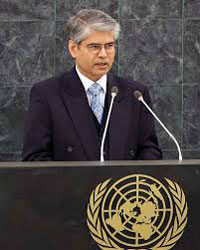 UNITED NATIONS, July 28: India has warned against the dangers of exposing UN Peacekeeping operations (PKOs) to resolve the armed internal conflicts which the United Nations has not itself instigated.
 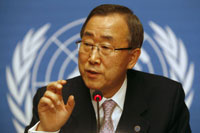 UNITED NATIONS, July 24: UN Secretary General BanKi-moon has expressed his outrage over rockets found in a UN-administered school in Gaza, calling for a full review of the incident which he said could turn schools into "potential military targets" and endanger lives of innocent children.
 NEW YORK, July 23: India has voted in support of a United Nations Human Rights Council (UNHRC) resolution to launch a probe into Israel’s offensive on Gaza.'
 GAZA, July 21: The UN Security Council has called for an "immediate ceasefire" as Israel pressed on with a blistering assault on Gaza on Monday taking the Palestinian death toll above 502.

Aviation
| Business | Defence | Foreign
Affairs | Communication | Health
| India | United Nations
India-US
| India-France | Entertainment
| Sports | Photo Gallery |
Tourism | Advertise with Us
| Contact Us
© Noyanika International, 2003-2009. All rights reserved.