


United Nations
|
India has over 1 million children out of school: UNNEW DELHI, June 30: India, Indonesia and Pakistan each have more than a million children out of school, according to a UN report which said the global number of unschooled children aged 6 to 11 is still as high as 58 million, showing little overall improvement since 2007. The United Nations Educational, Scientific and Cultural Organization (UNESCO) report said that India had 1.4 million children out of school in 2011 but the country is among 17 other nations that have managed to reduce the number of out-of-school children in the past decade. "Combined with UNESCO's recent news that aid to education has fallen yet again, the lack of progress in reducing out of school numbers confirms our fears there is no chance whatsoever that countries will reach the goal of universal primary education by 2015," UNESCO Director-General Irina Bokova said in a statement. Pakistan had 5.4 million children out of school in 2012 while the figure for Indonesia was 1.3 million. The UNESCO's policy paper said that positive change is possible, spotlighting success in 17 countries that have reversed that trend over the past decade. The 17 countries, including Burundi, Yemen, Ghana, Nepal, Rwanda, India, Iran and Vietnam, accounted for about one-quarter of the global out-of-school population in 2000. But they managed to reduce their out-of-school numbers by 86 per cent, from 27 million to less than four million, in little over a decade. The UNESCO Institute for Statistics, which produced the policy paper, said that 15 million girls and 10 million boys, constituting around 43 percent of those out of school, are unlikely to ever get access to primary education if the current situation remains the same. "We cannot meet this news with further inertia. On the contrary, we must sound the alarm and mobilise the political will to ensure that every child's right to education is respected," she said. The lack of global progress is largely due to high population growth in sub-Saharan Africa, which is now home to more than 30 million out-of-school children. Most of them will never start school and those who do are at risk of dropping out. The paper also shows critical gaps in the education of older children aged 12 to 15. Globally, 63 million adolescents were out of school in 2012. Numbers have fallen by nearly one-third since 2000 in South and West Asia, the region has the largest population of out-of-school adolescents at 26 million. According to the UNESCO paper, abolishing school fees, introducing more relevant curricula, devoting increased attention to ethnic and linguistic minorities and providing financial support to families in need could have a positive role in promoting and extending the right to education to every human being. Bokova stressed that progress is possible and that many countries have been key examples in driving positive changes in education for all. Large India population still energy deprived: Dr PachauriBy Deepak Arora NEW DELHI, June 28: “While India has made major progress in the supply of electricity and modern forms of energy, a large part of the population still lives in a state of energy deprivation,” said Dr. R.K. Pachauri, Director-General, The Energy and Resources Institute (TERI) and Chairman of the Intergovernmental Panel on Climate Change (IPCC). Dr. Pachauri was delivering the third United Nations Public Lecture in New Delhi today. He said, “The challenge to provide energy access for all has to be seen in the context of the problem of human- induced climate change, the impacts of which would create very high vulnerability for India in a large variety of ways.” According to Dr. Pachauri, “India has the largest number of people lacking access to electricity and clean cooking fuels among all the countries in the world. Over 300 million people have no access to electricity, and a significant number receives limited and sporadic supply even if they have connections. Over two-thirds of the country’s population depend on traditional biomass and animal waste for cooking, all of which leads to high levels of indoor air pollution. TERI estimated almost 20 years ago the level of mortality from air pollution in the country at about 2.5 million people, a large share of which was from indoor air pollution.” A key challenge for India is making sure that all four of these "A"s are present for all people,” said Lise Grande, United Nations Resident Coordinator. Ayumi Fujino, UNIDO Representative for India and Regional Director for South Asia added “Amongst all the ‘A’s, ensuring accountability of all stakeholders in planning, delivery and utilization of energy is the = common, but the most critical element that runs through all other actions that can ensure all people are able to fulfill their energy needs.” UN chief Ban Ki-moon slams Badaun gang-rapes
"In just the last two weeks, we have seen despicable attacks against women and girls around the world, from Nigeria to Pakistan and from California to India. I was especially appalled by the brutal rape and gruesome murder of two teenaged women in India who had ventured out because they did not have access to a toilet," Ban said on Tuesday. Decrying the recent attacks against women and girls around the world, Ban stressed that "Violence against women is a peace and security issue. It is a human rights issue. It is a development issue." He said nations must respond on all fronts and achieve full equality for all women. "We say no to the dismissive, destructive attitude of 'Boys will be boys'. Together, we can empower more people to understand that violence against women degrades us all," Ban said at the launch of a video campaign on ending sexual violence through gender equality. Calling on the society to join the outcry against sexual violence, Ban said, "I will be raising my voice and I count on all of you to join our chorus demanding action around the world." He said violence against women and girls is "totally unacceptable" but is unfortunately happening throughout the world. "We must put an end to these unacceptable, intolerable acts," the UN chief said. Ban referred to the recent killing of three women in California in a shooting spree by 22-year-old Elliot Rodger who was frustrated over being rejected by women as well as to the tragic killing in Pakistan of a pregnant woman who was stoned to death for marrying the person of her choice. Earlier this week, the UN system in India had condemned the brutal gang rape and murder of the two teenaged girls in Uttar Pradesh's Badaun district. They were gang-raped and killed, with their assailants hanging the bodies from a mango tree in their village. The violence against the girls highlighted the dangers females all over India are exposed to due to the lack of toilets, the world body said. UN honours 8 Indian soldiers among 106 peacekeepersBy Deepak Arora NEW YORK, May 30: The United Nations honoured 106 peacekeepers, including eight Indian soldiers, who lost their lives in peacekeeping operations. The International Day of UN Peacekeepers was commemorated in United Nations on Thursday with UN Secretary General Ban Ki-moon laying a wreath at a newly-created memorial for the peacekeepers. The ceremony was attended by India's Permanent Representative to the UN Ambassador Asoke Kumar Mukerji and other envoys and military attaches of member states. Ban then presided over a solemn ceremony where the prestigious Dag Hammarskjold Medal, named after the second UN chief, was posthumously awarded to the 106 fallen peacekeepers for their courage and sacrifice in the line of duty. Mukerji accepted the medal on behalf of the eight Indian soldiers who lost their lives while stationed at UN missions. The fallen Indian peacekeepers are Lt Col Mahipal Singh, Lance Naik Nand Kishore Joshi, Havildar Heera Lal, Naib Subedar Shiv Kumar Pal and Havildar Bharat Sasmal from the UN Mission in South Sudan (UNMISS) who were killed in April last year when they were ambushed by about 200 attackers near Jonglei State as they escorted a UN convoy. Subedar Dharmesh Sangwan and Subedar Kumar Pal Singh died in action in December last year in Akobo following an assault on a UN base. Sepoy Rameshwar Singh, deployed as a peacekeeper in the UN Organization Stabilization Mission in the Democratic Republic of the Congo, was killed in February 2013. Mukerji later hosted a commemorative reception where the names of all the 106 peacekeepers were placed along with photographs of the eight Indian soldiers who had died. The symbolic tribute, an initiative by India and a first, was made to honour those who collectively gave their lives in pursuit of international peace and security. Candles were lit in their memory to demonstrate the solidarity of the UN peacekeeping community and the debt owed by the international community to the brave souls. India asks UN to implement UNSC reforms
It also said the relevance of the world body is at stake if the UN is not reformed to be more effective and representative. India's Permanent Representative to the UN Asoke Mukerji yesterday said an "over-riding view" of a majority of participants in the previous five rounds of talks is that the requirement to reform the Council to make it more effective and representative cannot be delayed any longer. He was addressing an informal plenary meeting of the Intergovernmental Negotiations (IGN) on 'Question of equitable representation on and increase in the membership of the Security Council and other matters related to the Council'. "During these past months, even as we have engaged in making statements at each other, the Security Council has been paralyzed by its inherent flaws. The result of this paralysis is visible. The failure of the Security Council to respond to eruptions of crises, and create sustainable frameworks of political stability, whether on the continent of Africa, or in Asia and in Europe, has been starkly documented for the wider public. "This failure has already extracted a huge human and material cost, which the UN can ill afford at a time our organization is poised to articulate the blueprint for the post-2015 Development Agenda for the World. At stake is the relevance of the United Nations to embark upon such an ambitious exercise when it has not been able to set its house in order," Mukerji said. The sixth meeting of the IGN saw participation of 64 speakers, of which more than 40 spoke in favour of India's position for early UNSC reforms. There was broad convergence on expanding the Council in both permanent and non-permanent categories of membership and for delivering concrete outcomes by 2015, a position supported by countries such as Japan, Brazil, South Africa, Nigeria, Germany, UK, France, Nicaragua, Palau, Benin, Malawi, St. Vincent and Grenadines and nearly 30 more countries. Mukerji said the mandate for "early reforms" of the UN Security Council was given by global leaders at the 60th anniversary Summit of the United Nations in 2005 and UN member states must build on the convergences to carry the negotiations forward and concretise outcomes for adoption by the 70th Anniversary Summit of the UN in 2015. India wins elections to key UN bodiesUNITED NATIONS, April 23: India continued its winning streak in elections to key UN bodies, getting elected on Wednesday to crucial UN organizations, including the International Narcotics Control Board. India's candidate Jagjit Pavadia won the closely- contested election to the International Narcotics Control Board for the 2015-2020 term. Pavadia, who got 34 votes, was the first woman to be appointed Narcotics Commissioner of India. A total of 15 candidates were in the fray for just five seats. India was also elected, by acclamation, to the executive board of the UN Development Programme for the term 2015-2017, Committee on Non-Governmental Organisations for the term 2015-2018 and Commission of Science and Technology for Development for the term 2015-2018. India's candidate Chandrashekhar Dasgupta got re-elected to Committee on Economic, Social and Cultural Rights for the term 2015-2017. The various elections were held to fill vacancies in subsidiary bodies of the 54-member UN Economic and Social Council. Pavadia is a highly regarded law enforcement officer, who will be able to contribute significantly to the rule of law based activity of the International Narcotics Control Board, the Indian mission here said. She has also worked as Training Adviser under the Commonwealth Programme to build up national capacity not only in India but in other countries around the world. The International Narcotics Control Board is an independent expert body. It has 13 members, each elected by the Economic and Social Council for a period of five years. Ten of the members are elected from a list of persons nominated by governments, while the remaining three are elected from a list of persons nominated by the World Health Organisation for their medical, pharmacological or pharmaceutical experience. Pavadia is among the five candidates elected to fill the posts that would become vacant on March 2015 on the expiration of the term of office of members from Russia, France, South Africa, Thailand and Colombia. |
|
||||||
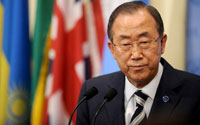 NEW YORK, June 4: Appalled by the brutal rape and murder of two teenaged girls in India, UN secretary general Ban Ki-moon has demanded action against sexual violence and appealed to the society to reject the destructive attitude of 'boys will be boys'.
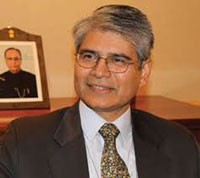 UNITED NATIONS, May 10: India has said the United Nations should "set its house in order" and implement the much-delayed reform of the Security Council before it seeks to embark upon an ambitious post-2015 development agenda.

Aviation
| Business | Defence | Foreign
Affairs | Communication | Health
| India | United Nations
India-US
| India-France | Entertainment
| Sports | Photo Gallery |
Tourism | Advertise with Us
| Contact Us
© Noyanika International, 2003-2009. All rights reserved.