


United Nations
|
UNGA High-Level Week: 194 Delegations Take the Floor as Assembly President Pushes for Security Council ReformBy Deepak Arora
Briefing news persons here on Tuesday, Melissa Summers, spokesperson of the President of the General Assembly, said the preliminary figures showed that women accounted for about 14 percent of speakers, up from 12 percent last year, while more than 60 percent of speakers referred to artificial intelligence and nearly three quarters mentioned climate change in their addresses. The spokesperson said the modest increase in women’s participation represented progress, but added that it was “not nearly fast enough.” Five mandated high-level meetings were held during the week, including a meeting focused on the total elimination of nuclear weapons. The Assembly also held its annual meeting of the UNGA Platform of Women Leaders jointly with UN Women. One of the key outcomes was a consensus political declaration addressing the existential threats posed by sea-level rise. The declaration is expected to be formally adopted by the General Assembly plenary in October. The Assembly President also maintained an intensive diplomatic schedule. As of the morning of the briefing, Khalilur Rahman had held 95 bilateral meetings with heads of state and government, ministers and other senior officials. The meetings also included UN agency chiefs, member-state groups and coalitions. The central theme of the high-level debate was “Restoring Trust, Managing Transformation: A United Nations that Delivers for All.” According to Melissa Summers, the theme was widely embraced by member states and also featured prominently in the President’s bilateral discussions. In his opening remarks, Rahman called for “action, sober reflection, clear-eyed realism, and pragmatism” in dealing with the challenges and opportunities confronting the United Nations. A major focus was the need to reform the UN Security Council, particularly to strengthen Africa’s representation in the body. The President has argued that Africa should have a meaningful place in the Council’s decision-making structure. In a pointed formulation during his opening remarks, he said, “Africa needs to be at the table, not on the menu.” Asked what concrete steps Rahman would take to move long-running Security Council reform discussions forward, the spokesperson said the President would continue to follow the intergovernmental negotiations already mandated by the General Assembly. “He will follow the wishes and desires of the groups in the member states,” Melissa Summers said, while stressing that the President had been clear about the need for African representation. Pressed on whether the Assembly President would take additional measures to accelerate the reform process, the spokesperson said Rahman emphasizes the need for action across all his priorities, but declined to provide further details on the negotiations. The briefing also touched on the conflict involving Iran and the continuing diplomatic stalemate over its nuclear programme. The spokesperson said Rahman echoed calls from across the UN system for de-escalation and the urgent protection of civilians. Rahman, described as a career diplomat and civil servant, believes strongly in dialogue and diplomacy and that there is no military solution to the crisis, the spokesperson said. The President is also concerned about the wider economic consequences of the confrontation, particularly its impact on freedom of navigation, food prices and fertilizer prices. The effects, the spokesperson said, are especially serious for poorer populations. On the selection of the next UN Secretary-General, the spokesperson said Rahman would ensure that any new candidate who emerges is properly introduced to the wider UN membership. The format could differ from that used by the previous Assembly presidency, but the process would remain in line with relevant General Assembly revitalization resolutions. Melissa Summers said no additional candidates were known to have been put forward at the time of the briefing. The briefing also clarified preliminary participation figures. While 194 delegations addressed the Assembly, the spokesperson said two UN member states, Afghanistan and Myanmar, had not delivered statements. The spokesperson cautioned that the information would be checked and confirmed. The high-level week thus closed with a mix of diplomatic engagement, calls for institutional reform and continuing attention to conflicts and global crises. For the Assembly presidency, the message was that restoring confidence in the UN would require not only debate, but action on some of the institution’s longest-running challenges. |
|
|||
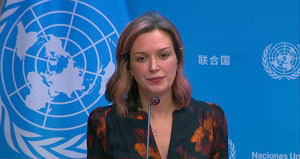 UNITED NATIONS, Sept 29: The 81st session of the UN General Assembly’s high-level week brought 194 delegations to the podium, including 113 heads of state and government, as the world body confronted a packed agenda ranging from wars and climate change to artificial intelligence and reform of the international system.
India-US | India-France | Entertainment | Sports | Photo Gallery | Tourism | Link Partners | Contact Us
© Noyanika International, 2003-2024. All rights reserved.