


Environment
|
Silted Sukhna Lake to breathe againCHANDIGARH, May 1: The hugely popular Sukhna lake, faced with a major threat of siltation, is set to regain its vast water expanse -- thanks to some frantic digging by the authorities to clear up mounds of silt. The lake, which has the picturesque Kasauli hills of the lower Himalayas in the backdrop, was conceived by architect Le Corbusier and his team who planned Chandigarh in 1958. The deterioration of the lake over the years has caused much concern. The Punjab and Haryana High Court this week directed the union territory authorities to clear up the lake. With the court watching the operations closely, the administration is trying to get the silt removed before the onset of the monsoon season – June-end. The authorities have now raised the target of silt removal to 80 lakh cubic feet from 50 lakh cubic feet. However, a fresh area of the lake’s silted bed -- about 15-20 acres -- is beginning to show up over the receding water level. The new underbelly of the Sukhna Lake signifies that nearly half of the man-made lake’s original size is now a dry bed. The city’s engineering department this month mounted the biggest exercise to remove the silt -- using heavy machinery and equipment. Nearly 10 lakh cubic feet of silt has already been removed. “We have pressed heavy machinery and several trucks and tractor-trolleys for silt removal. We hope to achieve our target before the monsoon sets in,” Chandigarh’s engineering secretary Sanjay Kumar said. Only 7.75 lakh cubic feet of silt was removed in 2009. In 2008 and 2007, the silt removed was a mere 2.14 lakh cubic feet and 0.67 lakh cubic feet. Sukhna Lake, the most popular tourist spot in the city along with the Rock Garden, was built by making a 3-km long dam on the Sukhna Choe (seasonal rivulet). It was conceived as a place of relaxation, seclusion and sport by the city’s founder architect Le Corbusier and his team. The lake faced unchecked siltation for over three decades from its catchment area, reducing its water storage capacity by nearly half, before authorities woke up to the problem. Efforts to de-silt the lake in the next two decades, including voluntary service (shramdaan) failed to bring any substantive results. The forest and wildlife department has built 192 silt-retention dams and 200 check dams in the catchment area to prevent silt from flowing into the lake bed. This helped cut down the inflow of silt into the lake -- from 140 tonnes to five tonnes per hectare per year. However, by the time the silt inflow was checked, over 70 acres of the lake’s bed was lost permanently to silt -- which the authorities are now trying to reclaim. The lake is frequented by scores of morning and evening walkers every day, besides hundreds of tourists and other visitors. “We have seen gradual deterioration of the lake. It is good that the administration is finally doing something about the silt because no one seemed bothered about it for the last 3-4 decades,” morning walker A.K. Bhatia told IANS. The authorities have planned a Garden of Silence as an added attraction and a tourist information centre for visitors at the lake. Boating is a very popular activity with tourists, with over 100 paddle and rowing boats and five shikaras or house boats, being booked daily. India announces climate change fundTHIMPU, April 28: India on Wednesday announced setting up of a fund that would help South Asia effectively meet urgent adaptation and capacity building needs posed by the climate change and also proposed establishment of innovation centres in the region to develop sustainable energy technologies. Prime Minister Manmohan Singh made the announcement at the 16th South Asian Association for Regional Cooperation (SAARC) Summit that began in Thimphu on Wednesday with an apt theme –“Towards a Green and Happy South Asia’. “I am happy to announce the setting up of an ‘India Endowment for Climate Change in South Asia’ to help member states in meeting urgent adaptation and capacity building needs,” Dr. Singh said. He also proposed setting up of climate innovation centres in South Asia to develop sustainable energy technologies based on indigenous resource endowments and welcomed the conclusion of the SAARC Convention on Cooperation on environment. Noting that India has already launched a national mission in sustaining the Himalayan ecosystem, the Prime Minister said the initiative could serve as a nucleus for regional cooperation in this vital area. Iffco earns 14 lakh Carbon Credits from UN bodyBy Deepak Arora
The United Nations Framework Convention on Climate Change (UNFCCC) issued 80,636 MT Certified Emission Reduction (CER) which has been sold to M/s FC2E, Spain under Clean Development Mechanism. This reduction in emission of CO2 achieved through implementation of its CDM project “Fuel Switch over from Higher Carbon Intensive Fuels to Natural Gas (NG)” at IFFCO Phulpur from March 31, 2008 to March 31, 2009 was verified by M/s SGS, UK. Further, the reduction of 1.60 lakh MT CO2 emission achieved through implementation of CDM project “Reduction in Steam Consumption through Revamping of Ammonia Plant” in all the five Ammonia plants of IFFCO from April 15, 2007 to December 31, 2007 has also been verified by M/s SGS, UK and will be submitted to Executive Board of UNFCCC for issuance shortly. In an effort to mitigate the emission of Green House Gas (GHG) to counter Global Warming, IFFCO has implemented various schemes viz; “Reduction in Steam Consumption through Revamping of Ammonia Plant” at its plants, Feed/Fuel Switch over from Higher Carbon Intensive Feed/Fuels to Natural Gas (NG)” at IFFCO Phulpur unit. Mr Jakhar further added that Phulpur, which was the largest Naphtha based plant in the World, has now been converted in Gas based plant. The emission reduction achieved through implementation of these schemes prior to registration of the Project with UNFCCC has been verified and traded as Verified Emission Reduction (VER) under VCS. Under this scheme reduction of 4.07 lakh MT CO2 emission achieved from the CDM Project “Reduction in Steam Consumption through Revamping of Ammonia Plant” and CDM Project “Fuel Switch over from Higher Carbon Intensive Fuels to Natural Gas (NG)” at IFFCO Phulpur has been traded. Mr Jakhar, stated that “We have also taken up various green initiatives and created a division “Alternate & Renewable Energy and Natural Resources Management”. This division will focus on construction of Green Building, installation of Wind Mill to generate Power, Solar Panel for Street Lighting, Water Harvesting, etc.” He also said that this is the step towards saving our planet & Mother Nature and IFFCO will continue to serve the country in this manner. Act now, or you'll have e-waste mountain, UN tells IndiaBALI, Feb 24: India, China and other developing countries face “the spectre of hazardous e-waste mountains” unless they step up action to collect and recycle e-waste, the UN Environment Programme (UNEP) has warned. As sales of electronic products in India, China and other developing countries are set to rise sharply in the next 10 years, these “e-waste mountains” would have “serious consequences for the environment and public health”, said a report released here during UNEP’s governing council meeting. The report, “Recycling — from E-Waste to Resources”, used data from 11 developing countries to estimate current and future e-waste generation — which includes old and dilapidated desk and laptop computers, printers, mobile phones, pagers, digital photo and music devices, refrigerators, toys and television sets. The report estimates e-waste generation in India now at over 100,000 tonnes a year from refrigerators, 275,000 tonnes from TVs, 56,300 tonnes from personal computers, 4,700 tonnes from printers and 1,700 tonnes from mobile phones Electronic waste from old computers will jump 500 percent in India, and between 200 and 400 percent in South Africa and China by 2020, the report predicts. By that same year in India, e-waste from discarded mobile phones will be about 18 times higher than 2007 levels and, in China, seven times higher. By 2020, e-waste from televisions will be 1.5 to 2 times higher in China and India while in India e-waste from discarded refrigerators will double or triple. Most e-waste in India is incinerated by backyard recyclers to recover valuable metals like gold — practices that release steady plumes of far-reaching toxic pollution and yield very low metal recovery rates compared to state-of-the-art industrial facilities. UNEP Executive Director and UN Under-Secretary-General Achim Steiner said: “India, Brazil, Mexico and others may face rising environmental damage and health problems if e-waste recycling is left to the vagaries of the informal sector.” The report was co-authored by the Swiss EMPA, Umicore and the United Nations University (UNU), part of the global think tank StEP (Solving the E-waste Problem). UN warns of electronic waste timebombDeveloping nations risking harm to people and the environmentSAN FRANCISCO, Feb 22: The United Nations has warned of a rise in electronic waste in developing nations that could put ecosystems and human populations at risk. A report from the UN Environmental Programme said that waste from mobile phones, PCs and other electronics could become a serious environmental issue in the coming years for a number of countries. The uptake of electronics in developing countries will increase dramatically over the next 10 years, but many developing regions are ill-prepared to process and recycle the components. The report estimates that levels of electronic waste in India will jump five-fold by 2020, while regions such as South Africa and China could see a four-fold increase. Of particular concern is the prospect of citizens searching through electronic waste for valuable metals. The UN warned that home-made incinerators used to extract valuable metals from circuit boards and electronic components in regions such as China can release hazardous substances into the atmosphere. The processing and disposal of discarded electronics is also a concern in developed nations that process and consume most of the world's electronics. Environmental groups such as Greenpeace have stepped up the pressure on manufacturers and vendors in recent years to offer recycling programmes. Indian PM for creation of Solar Valleys across the country
Launching the Jawaharlal Nehru National Solar Mission "Solar India" in New Delhi on Monday, he said its success has the potential of transforming India's energy prospects, while contributing to national as well as global efforts to combat climate change. The role of industry in this Mission that set an ambitious target to generate 20,000 MW of solar generating capacity by the end of 13th Five Year Plan, would be critical. "Eventually, if the ambitious roll out of the Mission is to become a reality, we will have to create many Solar Valleys on the lines of the Silicon Valleys that are spurring our IT industry across the four corners of the country," Singh told the gathering which included Union Ministers Sharad Pawar, Farooq Abdullah and Jairam Ramesh. Noting that these valleys would become hubs for solar science, engineering and research, fabrication and manufacturing, the Prime Minister urged the Indian industry to see the Solar Mission as the "huge business opportunity that it is". Referring to Jawarharlal Nehru's vision to create world-class scientific and technological capabilities in the atomic energy and space sectors, he said it was these strengths that created the Information Technology revolution in the country and made it a global player. "I am convinced that solar energy can be the next scientific and industrial frontier in India after Atomic Energy, Space and IT", he said. The Prime Minister said though the Mission's target of 20,000 MW was ambitious, it was "doable and we should work single-mindedly to achieve it as a priority national endeavour". He said various ministries and authorities would have to work in tandem in order to make the Mission a success. The Mission should evolve as a single national platform for coordination among scientific, industrial and regulatory establishments in a synergetic manner. Increased use of solar energy was a central component of government's strategy to bring about a strategic shift from the current reliance on fossil fuels to a pattern of sustainable growth based on renewable and clean sources of energy, Singh said. He hoped that the Mission would also establish India as a global leader in solar energy, not just in terms of solar power generation but also in solar manufacturing and technology. Noting that solar energy in its decentralised and distributed applications is already beginning to light the lives of tens of millions of India's energy-poor people, he said the rapid spread of solar lighting systems, solar water pumps and other solar power-based rural applications could change the face of rural energy sector. "We intend to significantly expand such applications through the Mission", he said, adding the regulatory and incentive framework would encourage technological innovation and generate economies of scale and lead to steady lowering of costs. Speaking on the occasion, Minister for New and Renewable Energy Farooq Abdullah said though the initial cost of solar energy was very high, the government would aim to bring it down "as quickly as possible" in order to provide power to villages and rural homes. Over the next three years, the NTPC Vidyut Vyapar Nigam (NVVN) would purchase solar power at rates fixed by the Central Regulatory Electricity Commission, he said, adding when the State utilities purchase solar power from NVVN they would get an equivalent amount of thermal power from NVVN. "The bundling of more expensive solar power with cheaper thermal power will enable a much cheaper tariff for the consumer, estimated at about Rs five or less per unit," he said. Abdullah said that the government wanted to install 20 million solar lights by 2022, which would save about one billion litres of kerosene a year and was working with banks, especially rural banks, to offer soft loans to consumers. He said the government also proposed to provide upto 90 percent support for setting up solar power plants in island States and border areas. In other solar applications, the government was considering proposals for providing upto 30 percent grant-in-aid, he added. Indian PM seeks constructive approach to combat climate change
"Climate change cannot be addressed by perpetuating the poverty of the developing countries," Singh said in a statement before his departure for climate change summit in Copenhagen. He said India, as a responsible member of the international community, has announced that it will reduce the emissions intensity by 20-25 per cent in 2020 as compared to 2005. Singh noted that India has also launched a comprehensive Action Plan on Climate Change and the eight National Missions have been set up. "We are willing to do more provided there are credible arrangements to provide both additional financial support as well as technological transfers from developed to developing countries," he said. Singh's remarks come as negotiations in Copenhagen have hit a roadblock with no headway being made on agreement on emission cuts, mitigation targets and financing. The scheduled departure of Prime Minister was delayed by three hours as the special Air India Aircraft developed some technical snag. US joins fund to provide $100 billion to developing countries after 2020
“Today’s big achievement is that we are back to negotiating two texts... The two-track negotiating process is back on stream,” said Environment Minister Jairam Ramesh, speaking to Indian journalists on Thursday evening. For the last few days, there has been concern among developing countries that rich nations were pushing for a new single agreement, ignoring the Kyoto Protocol, which mandates legal commitments to cut greenhouse gas emissions by developed countries alone. Developing countries had accused the Danish hosts of showing bias against the Kyoto Protocol track of negotiation and feared that a new Danish draft would provide a mandate for a new agreement which would mandate emission cuts from developing economies as well. “Danish Prime Minister Rasmussen has assured me that the Danish draft is buried. It is out of the question,” said Mr. Ramesh. World leaders, including Prime Minister Manmohan Singh and U.S. President Barack Obama, arrive in the Danish capital on Thursday night and Friday morning. They will now adopt a political statement based solely on the two drafts — one on the Kyoto Protocol and the other on long-term action. “We will do our best to remove brackets [indicating disagreement], but there will be no artificial compromise,” Mr. Ramesh said. U.S. Secretary of State Hillary Clinton preceded her President in Copenhagen by a day, offering a boost to the talks with the announcement that the U.S. will join the $100 billion fund originally announced by British Prime Minister Gordon Brown. However, her announcement had certain conditions — that all major economies would join a deal with meaningful emission reduction commitments and an international system to ensure transparency in the implementation of those commitments. This call for international monitoring and verification is a major sticking point for all major developing countries, including India and China. However, there seems to be some movement toward consensus on this, with both China and India saying that they would consider the possibility of exchanging their domestic verification reports and allowing clarification of data on a voluntary basis at the discretion of individual countries. Poor nations stall global climate talks, seek voiceCOPENHAGEN, Dec 16: The world’s poorest nations on Tuesday stood together and refused to accept a warming of the earth beyond 1.5 deg C by 2050, throwing global climate talks into further disarray. On a day when the UN released seven drafts on technology finance, forests and adaptation for ministers to decide over the next two days, Lumumba Di-Aping, spokesman of the G-77 group plus China, contested the stand of Indian environment minister Jairam Ramesh, that a rise in global temperature by 2 deg C by 2050 without any limitations on carbon dioxide concentration on particles per million (PPM) was “acceptable”. “Africa will burn like a furnance if two degrees is allowed,” Aping said at a ministerial consultation. Ramesh later said the “hard work” of bringing the developing world together was coming apart. The Association of Small Island Nations also opposes India on its stand. The island nations, predicted to be the first to go under if global warming accelerates, are winning popular support in Copenhagen. The stand of the poorer countries comes a day after they accused countries like India and Brazil of deciding negotiations on their behalf. With three days left, the latest split makes hopes of even a common political statement difficult, let alone a treaty. The seven drafts will be discussed at ministerial consultations that started on Wednesday. “We expect good progress on these issues,” said Danish Environment minister Connie Hedegaard. She acknowledged agreement is only expected on technology and adaptation drafts, which consider smaller technical issues linked to lessening climate-change effects in different sectors. India’s proposal of holding the global-temperature rise to 2 deg C would mean carbon emissions can go to 550 particles per million (ppm) from the present level of 430 ppm. Agreeing to 1.5 deg C would mean restricting emissions to 450 ppm. That means developing nations like India and China must cut emissions. “Such a situation is not acceptable to us,” Chinese chief negotiator Qingtai Yu told Hindustan Times. “We have a right to increase our emissions forsustainable growth.” Ramesh agreed with the Chinese, and for the first time, sought a 40 per cent emission-reduction from rich countries from their 1990 levels. The offer of the rich: 4 to 25 per cent reduction by 2020, which India and China refuse to accept. On Monday, 53 African countries had stalled negotiations, accusing the Danish government (the organiser of the summit) of holding talk with only 48 ministers in advance ahead of states meeting on Dec 17-18. “Forty eight countries cannot represent our aspirations,” said Algerian diplomat and Africa representative Kamal Djemonai. It is a view increasingly being voiced by many countries, with Bolivia’s chief climate negotiator Angelica Navarro saying smaller nations are told at the last minute of even sudden room changes, so they must sit at the back. Navarro accused more powerful countries of using what she called “WTO (World Trade Organisation) tactics” of an “exclusive and untransparent” process. That view was echoed by diplomats from Phillipines, Indonesia and Sri Lanka. “We (Sri Lanka) chair SAARC nations but here we are not being heard,” said Palitha TB Kohona, permanent representative of Sri Lanka to the UN. Danish Environment minister Connie Hedegaard, could not be reached for comment, but her office said smaller discussions were only meant to speed the negotiating process and no slight was intended. PM Manmohan Singh, Wen may skip Copenhagen
Negotiators and ministers from 192 countries took the day off from formal talks to discuss the looming possibility that they could fail the world in its search for an equitable and scientifically adequate agreement to prevent disastrous climate change. The chances of a stalemate loomed large as governments went into informal huddles over the weekend. The ministerial round that began on Saturday only added to the fear that industrialised countries were not ready to budge from their stands and the negotiations were headed towards a collapse. The Indian and the Chinese governments made it clear that their leaders, Prime Minister Manmohan Singh and Premier Wen Jiabao, were not going to come in at the end of the talks to crack the fine details, they would agree only if the industrialised world was ready for a deal by December 16. Many industrialised countries remained firm in their stand that Kyoto Protocol must die and emerging economies must undertake international obligations under one name or the other regardless of their historical burden of emitting greenhouse gases, or the lack of it. Environment minister Jairam Ramesh, in between an array of parleys and closed-door discussions, came out to say, “The UN draft on low-term cooperation (LCA) can become the roadmap for fighting climate change, provided the clauses of peaking year for emissions, cutdown on emissions by all and a review of domestic mitigation actions are not there.’’ However, he added that a few agreed on the point. Rumours flew fast and thick that if the US could not secure a weak “pledge and review’’ kind of agreement that it had been supporting for months, President Barack Obama may give the meet a miss. The industrialised countries want to hammer out a large part of the deal on the last day when the heads of states arrive. "It is ridiculous to expect the heads of states of poor countries to have the capacity to deal at such detailed level. It’s a ploy to slip in provisions that are not amenable to developing country efforts. It’s playing dirty,’’ said an African negotiator. “Europe and Japan have refused to sign any agreement without the US on board with strong mitigation commitments and the latter refuses to be part of Kyoto,’’ Ramesh said. “India will not allow Kyoto to be discarded and India wants an agreement.’’ Ramesh has rejected the Australian proposal that the heads of states and ministers should decide the final text for the political statement to be made on December 18, a day after they announce their domestic climate plans. On Sunday, when most negotiators rested and waited for Monday, it became evident that all the positive domestic announcements of emerging economies like India, China, Brazil and South Africa, days ahead of the talks, had still not got Obama to turn less Bush or for the Europeans and other industrialised countries to depend less on the US president for deliverance. India cuts differences, won’t cut emissions
A day before a crucial second week of negotiations begins, and a day after 196 nations at the climate summit were split along rich and poor lines over a contentious United Nations proposal on Long-Term Cooperation (LCA), Environment Minister Jairam Ramesh said the draft could be a road map. It’s a roadmap developed countries refuted strongly on Saturday, as did the world’s small island nations, who are most at risk from global warming. Meanwhile, Kirit Parik, leading Indian economist and the creator of India’s energy policy — on which the Planning Commision based the energy reductions that Ramesh has brought to the negotiating table — said there was “no point in sticking to the idea that there should be no emission cuts for developing nations”. Like most developing countries in the G-77 group and China, India said it would not accept three points in the LCA draft: defining a “peaking year”—after which greenhouse gas emissions must decline; emission cuts for all nations, rich and poor, so global temperatures do not rise beyond 2 deg C by 2050; and international verification of domestic mitigation action. Developed countries say the draft, introduced on Thursday and followed by a plenary on Friday, does not oblige the developing world to fight climate change. They say it is time to move beyond the 1997 Kyoto Protocol, something the poorer countries refused to do on Saturday. “The LCA draft has 46 paras, we don’t agree at all with three and can negotiate on another three,” Environment and Forest Minister Jairam Ramesh told reporters in Copenhagen on Saturday. “It (the LCA proposal) has been prepared in agreement with the African block,” Ramesh said. India is now ready for “domestic verification” of its mitigation actions along UN guidelines, which have yet to be finalised. “Our domestic actions will be provided to UN once in two years only as information and not verification,” said Ramesh, acknowledging that hopes of an agreement in Copenhagen were bleak. Parikh has said that he sees Copenhagen as “just the start of the negotiation process”, and real progress will need greater concessions from all sides. “I would like to see deep cuts from the West, strong action to allow developing countries to transition (to a low-carbon economy) and for developing countries to start thinking of cuts,” said Parikh, who has advised five former Prime Ministers and is chairman of the Integrated Research and Action for Development (IRADe), a New Delhi think tank that boasts Prime Minister Manmohan Singh on its governing council. “It doesn’t make sense that developing countries should have exemptions for ever,” said Parikh. “Then there will be no incentive to reduce emissions.” Thus far, the developing world is standing firm on the Kyoto Protocol, which mandated cuts for the rich only: global emissions have risen 30 per cent since then. Ramesh blamed differences between the developed countries for lack of progress at Copenhagen and said the West must be blamed. “Europe and Japan have refused to sign any agreement on strong emission cuts without the US on board. The US has refused to be part of Kyoto,” Ramesh said. “India will not accept anything other than Kyoto and wants an agreement.” India has also rejected an Australian proposal that head of the states and ministers should decided the final text for a political statement to be made on December 18, a day after countries announce their domestic climate plans. Europe and US US, China and India G-77 and small island nations Aggressive India to make a political statement at Copenhagen
"I have clearly and categorically stated on behalf of the government of India that our Prime Minister is not coming here to negotiate the text," he said. Singh is due to arrive here on December 17. "India would not compromise on 'teen-murti' (United Nations Framework Convention on Climate Change, Kyoto Protocol and Bali Action Plan)," Ramesh said ahead of tomorrow's high-level segment which would see participation of environment ministers from across the globe. "We must get an agreement in 2010," he said, adding that the text of the political statement should be ready by December 15. Climate pact: Pachauri warns of ‘major setback’
Mr. Pachauri, the chairman of the Intergovernmental Panel on Climate Change (IPCC) which got the Nobel for highlighting that climate change was happening more quickly than believed, also asserted that all evidence pointed to its acceleration, refuting notions accompanying ‘climate gate’. The ‘climate gate’ scandal had recently hit headlines after hackers gained access to documents of the climate research centre of the UK-based East Anglia University and leaked confidential data, including thousands of e-mails and documents between scientists in Britain and U.S. over the past 10 years which led to accusations that researchers had exaggerated the crisis. “The world will have to pay less if it acts swiftly to combat climate change”, Mr. Pachauri told reporters here on Saturday. “If we are able to get a good agreement it would create an enormous amount of confidence in the ability of human society to be able to act on a multilateral basis,” he said as negotiators at the December 7-18 climate meet here struggled to hammer out a pact to deal with global warming. “If we fail I don’t think everything is lost but it certainly would be a major setback,” he said. Mr. Pachauri stressed that the poor around the world would be the most-hit by climate change and highlighted the devastating impact that even a 2-degree rise in temperature affected small island States. “If we take action, the cost of mitigation are really much lower than what anyone had anticipated,” he said. In the light of ‘climate gate’, the top scientist and his colleagues once again reiterated that the scientific reporting and analysis of the IPCC was above board and all the evidence pointed towards accelerating climate change. “What is more significant is that there are rich co-benefits in taking mitigation action,” Mr. Pachauri said and noted that the IPCC had identified “key vulnerabilities” in both developed and developing countries. “Vulnerabilities depend on the exposure that people have, the status of development and their adaptive capacity. The poor in every part of the world are clearly very vulnerable,” he said. He said that extreme weather events and the distribution on the impacts of vulnerability must be taken into account. “The U.S. was not part of the multilateral process... they have made a major beginning... they have taken a big step and I am sure that this is not the last step they are taking,” Mr. Pachauri said. Canada offers green technologies to IndiaBy Deepak Arora
"Ontario has world-class high-tech industry with 2,600 environmental firms, is ready to provide access to India its new environmental friendly technologies as desired by Prime Minister Manmohan Singh recently to strengthen shaping a greener and more dynamic Indian economy," Dalton McGuinty said. McGuinty will lead a week long 'Clean Technology Trade Mission' to India from December 6. He will visit Delhi, Mumbai, and Hyderabad. Emphasizing that Ontario is determined to play a major role in India's dynamic economic growth, McGuinty added, "We are indebted to India's rich history. We are impressed by the exciting India of today and we are intent on playing a bigger role in India's future." "The world is looking for innovative ways to conserve energy and fight global warming. Ontario is determined to play a major role in India's dynamic economic growth," he said. Leading in fields of water treatment, air pollution, site and brown field remediation, green building solutions and renewable energy, "Ontario has scientists who are among the best and brightest, workers who have the best skills and knowledge on the continent and industries that are among the most productive and innovative in the world," he said. "As leaders in that dynamic and emerging market, Ontario technology mission will demonstrate how Ontario s cutting-edge technologies and green solutions can assist India in achieving sustainable growth," McGuinty said. "Ontario s environmental industry is helping companies and communities around the world respond to the rising demand for environment-related solutions that meet local needs," McGuinty added. More than 100 leading Ontarians -- representing 26 companies, universities and other organizations will participate in the mission. Sandra Pupatello, Minister of Economic Development and Trade, Harinder Takhar, Minister of Consumer Services and several Member of Parliament will also be part of the delegation. India to cut carbon emission intensity by 20-25 pc by 2020
Environment Minister Jairam Ramesh said if the Copenhagen Summit is successful in reaching a "comprenhensive and equitable agreement", India would be willing to do more but only through voluntary measures. "We are telling the world that India is voluntarily ready to reduce emission intensity by 20-25 per cent in 15 years from 2005," he said replying to a debate in the Lok Sabha on Thursday on impact of climate change. Ramesh listed out a series of steps including introducing mandatory fuel efficiency standards on all vehicles by December 2011, model green building code and amendment of Energy Conservation Act to make it necessary for industries to have energy efficiency certificates. Greater thrust will be given to generating electricity using clean coal technologies, he said adding that 50 percent of all new capacity additions will be based on such source. Marking the red lines for negotiators for Copenhagen meet that will take place from December 7 to 18, Ramesh said India will not accept legally binding emission cuts and not agree to any "peaking year" for its green house gas emissions. He said India was not ready to subject its domestically funded mitigation actions to international review. However, India could be agreeable to international review for mitigation actions which are supported by foreign technology and finances, Ramesh said. The minister said the 20-25 percent emission intensity reduction has been arrived at by the Planning Commission which conducted a variety of exercises. He also announced that the 12th Five Year Plan will focus on low-carbon strategy for economic growth. Ramesh noted that between 1990 and 2005 emission intensity in the country has gone down even as the GDP and population have gone up. "There has been a 17.6 per cent decrease in emission intensity from 1990-2005," he said. The Nationally Accountable Mitigation Actions (NAMA) will be voluntary and the government would report it to Parliament from time-to-time, he said. "We are accountable to Parliament and not to any international organisation," the minister said. India will not accept legally binding emission cuts: Jairam Ramesh
Environment Minister Jairam Ramesh told Lok Sabha that India needs to be flexible without compromising national interest. He stressed that India needs to show leadership at the climate change summit. Meanwhile BJP today assured the Lok Sabha that it would fully back the government at the Copenhagen summit provided it did not buckle under pressure of the developed world on carbon emissions and other climate change issues. Senior BJP leader Murli Manohar Joshi said India should send a strong message that Western countries are historically responsible for global warming and should be bound by emission cuts targets. International community has been building pressure on India after US President Barack Obama and Chinese Premier Wen Jiabao announced commitments to reduce emissions. Addressing the media outside the Parliament House in the national capital, Ramesh said that India would not change its stand under international pressure. The entire world is monitoring China because it is the number one country, as far as the carbon emissions are concerned, they (Chinese) are under pressure from international community, but we will not change our stand under international pressure. We will adopt policy according to our national consensus, Ramesh said. Ramesh further said that India and China would work towards a common position in talks on a climate deal. We are at the fifth spot in emission intensity rankings, our carbon emission is less than five percent, so we should not be compared with China, as far as carbon emission rate is concerned. But, both (India and China) are united as far as our negotiations are concerned. Both are developing nations, our interests and concerns are same and we can understand problems of each other. We are coordinating everyday, but we should not be compared with China, said Ramesh. The United Nations is aiming for a comprehensive political agreement at climate talks in the Danish capital that start in little over a week. The troubled talks have run out of time to settle a legally binding deal after rancorous arguments between rich and poor nations about who should cut emissions, by how much and who should pay. Danish draft seeks emission cuts from IndiaNEW DELHI, Dec 4: Denmark, the host country and chair for the climate talks to begin at Copenhagen on December 7, has shared a draft of a proposed final political statement with select countries that would completely undermine the Indian government and the developing country positions. The draft follows the controversial US-Australia proposal of ‘common schedules’ and puts India and other emerging economies on the same page as the industrialized economies and asks all to take similar emission reduction actions. Denmark, as host, invited select countries including India and China to take a look at the draft on December 1 and 2. China as a counter presented the BASIC draft (forged by China along with India, Brazil and South Africa). The Danish draft was distributed for perusal and then taken back. Denmark, sources in one of the representatives of the smaller developing countries, first suggested that the commitments of all countries be put in the same schedule. When the others protested, they moved to create two schedules, one for the developed economies and the other for developing economies with just a superficial difference. The draft seeks emission reduction actions from all countries at varying degrees. India had strongly opposed any such move to destroy the firewall between emerging and developed economies. They had earlier in negotiations warned that this was tantamount to destroying the Kyoto Protocol, which creates commitments only for the rich countries. The Bali Action Plan does ask developing countries to take actions on reducing emissions but only when enabled by international finance and technology. The common schedule approach does away with this basic tenet of the Bali Action Plan that all countries signed on to in 2007. It delinks the transfer of finance and technology from actions of developing world. The draft proposed by India, China, Brazil and South Africa, sources pointed out, clearly differentiated between the countries already party to Kyoto Protocol and the developing countries. It also creates the space for the US to undertake emission reduction cuts outside the protocol as it is not a signatory to it and is not inclined to accept it in the future either. The US has been keen on a ‘pledge and review’ formula to go with the schedules. Indian study challenges global view on Himalayan glaciersNEW DELHI, Nov 9: India on Monday challenged the internationally accepted view that the Himalayan glaciers were receding due to global warming. The glaciers, although shrinking in volume and constantly showing a retreating front, have not in any way exhibited any abnormal annual retreat of the order that some glaciers in Alaska and Greenland have reported, a state-of-the-art review of Glacial Studies, Glacial Retreat and Climate Change said. Brought out by V.K. Raina, former Deputy Director-General, Geological Survey of India, for the Ministry of Environment and Forests, the discussion paper on the Himalayan glaciers points out that it was premature to make a statement that the glaciers were retreating abnormally because of global warming. The study says a glacier is affected by a range of physical features and a complex interplay of climatic factors, and it is, therefore, unlikely that the snout movement of any glacier can be claimed to be the result of periodic climate variation until many centuries of observations become available. While glacier movements are primarily due to climate and snowfall, snout movements appear to be peculiar to each glacier, the paper adds. Releasing the documents, Minister of State for Environment and Forests Jairam Ramesh said that while most Himalayan glaciers were retreating, some were advancing as well. This included the Siachen glacier. “Some glaciers are retreating at a declining rate, like the Gangotri, and the overall health of the Himalayan glaciers was poor as the debris cover had reached alarming proportions,” he said, citing the paper. Mr. Ramesh added that there was no conclusive scientific evidence to show that global warming was resulting in the glacial retreats. Contrary to what most believe, there can be no comparison between the Arctic glaciers and the Himalayan glaciers, as the former are at sea-level and the latter at a very high altitude. According to Mr. Raina, all glaciers under observation in the Himalayan region during the past three decades have shown cumulative negative mass balance (determined by annual snow precipitation). Degradation of the glacier mass has been the highest in Jammu and Kashmir, relatively lower in Himachal Pradesh, even less in Uttarakhand, and the lowest in Sikkim — showing a declining trend from the north-west to the north-east. Irrespective on latitudinal difference, glacier melt contributes to about 25-30 per cent of the total discharge of glacier ice, with maximum discharge in mid-July and August. Assuring several steps to study the Himalayan glaciers scientifically and arrive at a final conclusion, Mr. Ramesh said he would bring the discussion paper to the notice of R.K. Pachauri, chief of the Intergovernmental Panel on Climate Change, and other agencies that have warned of doom due to melting glaciers. India, China sign pact on climate changeNEW DELHI, Oct 21: Reiterating that the United Nations Framework Convention on Climate Change and Kyoto Protocol are the most appropriate framework for addressing climate change, India and China on Wednesday signed a Memorandum of Agreement to establish a partnership in the area for strengthening dialogue and practical cooperation. They agreed to set up an India-China Working Group on Climate Change that will hold annual meetings alternately in China and India to exchange views on important issues concerning international negotiations and domestic policies and measures. The MoA was signed by Xie Xhenhua, vice chairman, National Development and Reform Commission of China, and the Minister of State (Independent charge) Environment and Forests, Jairam Ramesh, at a workshop on National Action Plans on Climate Change of the two countries here. Speaking on the occasion, Mr. Ramesh said there was no difference between the Indian and Chinese negotiating positions and both were working closely for a fair and equitable outcome at Copenhagen in keeping with the UNFCCC, Kyoto Protocol and the Bali Action Plan. “The implementation of the MoA will usher in a new scenario and take cooperation on climate change between the two countries to a new high,” Mr. Xie said through an interpreter. |
|
|||||||
 NEW DELHI, March 10: Indian Farmers Fertiliser Cooperative (IFFCO) Ltd., world’s largest manufacturer and marketer of processed fertilizers in cooperative sector, has fetched around Rs. 4 crore towards sale of its carbon credits.
  NEW DELHI, Jan 11: As part of efforts to combat climate change, PM Manmohan Singh has advocated creation of Solar Valleys on the lines of Silicon Valleys and asked industrial houses to view the Solar Mission as a huge business opportunity.
 COPENHAGEN, Dec 18: With just one day left at the United Nations climate talks, it was a day of cautious progress. The Kyoto Protocol seems to be safe for now, there has been some movement toward consensus on the issue of transparency in developing country emission commitments, and the United States has joined a fund to provide $100 billion in annual funding to vulnerable developing countries after 2020 — albeit with some strings attached.
 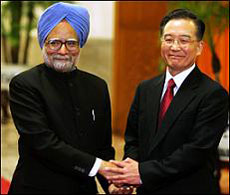 COPENHAGEN: At 55 degrees and 43 minutes north, the winter sun sets early in Copenhagen, plunging the city into a cold grey gloom that only Christmas celebrations can lift. But on Sunday, the chilling news that climate change talks could break down completely spread far deeper dismay in the Danish capital.
  COPENHAGEN, Dec 13: In line with its promise that it would not be a deal-breaker, India on Sunday narrowed the gap over climate-change talks to three of 46 points — but in agreement only with other developing countries.
  COPENHAGEN, Dec 13: Ruling out any compromise in its stand, environment minister Jairam Ramesh on Sunday pitched for a strong political statement at the end of the climate change talks and asserted that a deal must be reached by next year.
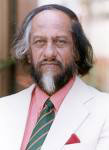 COPENHAGEN, Dec 13: Warning that a failure to come out with a pact to combat global warming at the 12-day meet here will be a “major setback” to the world, noted Indian environmentalist and head of a Nobel-winning UN panel on climate change, R. K. Pachauri, said the international community would have to pay less if it acts swiftly.
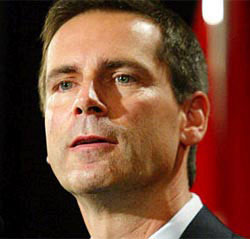 NEW DELHI, Dec 4: Canada will offer India a wide range of eco-friendly technologies ensuring sustainable development, besides protecting environment, according to Dalton McGuinty, Ontario Premier.
Aviation
| Business | Defence
| Foreign Affairs | Communication
| Health | India |
United Nations
India-US | India-France
| Entertainment | Sports
| Photo Gallery | Tourism
| Advertise with Us | Contact
Us
© Noyanika International, 2007. All rights reserved.