


Environment
|
Maldives Cabinet meets under water to seek action on climate change
The Maldivian Cabinet met at the bottom of the sea on Saturday to frame an SOS to global leaders to save their atoll nation from being submerged by the rising seas. A declaration approved at the end of a 25-minute meeting, presided by President Mohammad Nasheed, called for global action to combat climate change. It will be presented at the Copenhagen climate summit in December. “We should come out of Copenhagen with a deal that will ensure that everyone will survive,” said Mr. Nasheed. “Maldives is a frontline state and what happens to us today will happen to others tomorrow.” The declaration said global warming was sending the ice caps crashing into the sea, leading to sharp rise in water levels, the Presidential spokesperson said over phone from Male. The 42-year-old President of this picturesque group of coral islands and his Cabinet colleagues, wearing face masks, scuba-dived to their underwater rendezvous held six metres below the surface of a lagoon off Girifushi island, about 35 nautical miles from capital Male. They spent 45 minutes sitting across tables immersed to the sea bottom. Mr. Nasheed and his colleagues used white boards and hand signals to communicate their decisions. While the Ministers had undergone diving courses for the past two months to keep their underwater date, Mr. Nasheed was an experienced diver, the spokesperson said. The Maldivian Ministers went to these extraordinary lengths as a United Nations panel on climate change had warned that even a rise in sea levels between 18 and 60 cm would submerge the islands by 2100. Maldives comprises more than 100 islands scattered over 800 km across the equator, and 90 per cent of them are just a metre above sea level. Climate change endangering medicinal herbs of India: President
"The Ayurvedic medicines make intelligent use of herbs. Climate change is disturbing ecological balance which is making herbs, used in Ayurvedic medicines, extinct. It is a big challenge for us," President Pratibha Patil said while inaugurating centenary celebrations of All India Ayurvedic Congress in New Delhi on Wednesday. She said herbs and plants which are getting extinct should be properly categorised and efforts made to protect them. "In this work, help of National Medicinal Plants Boards and Central Institute of Medicinal and Aromatic Plant should be taken," Patil said. Herbs like Kutki, Atees, Kasturi, Praval which form the base of several Ayurvedic drugs are getting difficult to find because of the ecological changes, Vaid Devendra Triguna, the Chairman of the Congress, said on the sidelines of the function. "Good herbs are getting difficult to secure because of changes in climate. We used to get good herbs from Himachal Pradesh but now it is becoming difficult. We have helped the states to constitute medicinal plant boards which are working in this area," Triguna said. Action on climate change must empower the poor: AnsariBy Deepak Arora
Addressing the inaugural session of “Global Summit on Sustainable Development and Climate Change” held here on Thursday, Ansari said that the human aspiration for leading a life of dignity must not be the outcome of the dice of geography. Lauding the appropriate timing of the conference, as it comes in the run up to the 15th Conference of Parties in Copenhagen, the Vice President said: "Climate Change remains one of the most complex problems facing humankind today. It is expected to impact on the distribution and quality of natural resources, and consequently the developmental path of nations and the quality of lives of peoples across the globe.” Ansari opened the two-day conference in New Delhi, just after world leaders gathered in New York this week for the United Nations summit on climate change. The Summit has been organised by Observer Research Foundation (ORF) and Rosa Luxemburg Stiftung (RLS).
An incontrovertible premise in the debate is the right of every human being to a life of dignity. This needs to be assessed in terms of some basic indicators, he said. He warned that gaps between developed and developing nations could widen farther in the absence of a global agreement on equity and burden-sharing on carbon emissions. Without such an agreement, he said climate change negotiations would likely spill over to other multilateral, regional and bilateral negotiation platforms and would "further accentuate existing divisions." Asserting that developing nations like India could not be held responsible for climate change, he compared the energy consumption of the other countries vis-a-vis India. "In terms of basic energy consumption for two essential requirements of household electricity and transport, the per capita energy use in India was around 18 tons of oil-equivalent per person in the year 2005 when compared to Pakistan which was 41, for China 52, for Mexico 345, for Brazil 205 and the United States 1881 tons," he said. Ansari said India, despite having 17 per cent of the world population and a rapidly growing economy, has only 4 per cent of carbon emissions as compared to US and China which account for over 16 per cent each. Similarly, in per-capita terms, country's Greenhouse Gas emission of 1.1 ton/annum is minuscule when compared to over 20 tons of the US and in excess of 10 tons of most of the OECD countries, he added. The vice president pointed out that India's primary energy consumption growth rate is 3.7 percent a year despite a GDP growth rate of about 9 percent. "This contrasts with the pattern seen in developed countries and even a few major developing countries where higher GDP growth has followed the traditional pattern of increased use of energy," he said. The Vice-President was also of the opinion that "pursuit of equity at the international level needs to be reflected at the national level" given that there is significant variation in emissions of various states within the country. "As part of the national debate on climate change, we should discuss whether urban areas and heavily industrialised States that significantly contribute to emissions should have different financial and other responsibilities on climate change as compared to rural areas and economically less developed states," he said. Ansari also sought increased role of civil society to tackle the threat. At the inaugural session, Mr M Rasgotra, President, Observer Research Foundation, gave a welcome address. Ms Marlies Linike, Regional Manager -Asia, Rosa Luxemburg Stiftung, and Mr Sunjoy Joshi, Distinguished Fellor, ORF, addressed the gathering. Soon after the inaugural, a pre-lunch session on "Climate Change: Into the New Millennium: The Shaping of a Discourse" was addressed by Dr Pradipto Ghosh, Distinguished Fello, The Energy & Resource Institute, Mr Mukul Sanwal, former Coordinator, UNFCCC and former Joint Secretary at India's Environment Ministry, Dr Yue Li, Associate Researcher, Asia-Africa Development Research Institute, Beijing, and Fr Tobias Feakin, Director, National security and Resilience, Royal United Services Institute, London. The post-lunch session was on "Equity and Development". It was chared by Dr R Ramachandran, Member, PM's Council on Climate Change and Associate Editor, Frontline. The others who participated in the deliberations included Prof Eduardo Viola, Institute of International Relations, University of Brasilia, Mr Daniel Bladh, Asst to Member of European Parliament Jens Holm, and Mr Harro van Asselt, Reseracher, Department of Environment Policy Analysis, Institute for Environment Studies, Vrije Universiteit Amsterdam. ‘India cannot accept emission reduction targets’
New Delhi also rejected the possibility of phasing out subsidies on energy pricing saying while it was an objective it would not be implemented at the cost of poor people. India’s position was enunciated on the sidelines of the G20 summit here by the Prime Minister’s Special Envoy on Climate Change, Shyam Saran, who attended the just concluded conference in the United Nations and the Major Economies Forum last week in Washington. “We will not be able to undertake emission reduction targets of the kind the developed countries are obliged to take under the United Nations Framework Convention on Climate Change. However, it is not that India is not taking mitigation action,” Mr. Saran told reporters. Mr. Saran also rejected suggestions that India was phasing demands or threats to undertake emission reduction targets. In fact, there is recognition that India was doing its best to contain carbon emissions and also taking up programmes for encouraging production of green energy through various methods. Mr. Saran said the G20 summit was not a negotiating forum for discussing climate change issues which is expected to be thrashed out in the Copenhagen Summit in December. “The sole negotiating forum for climate change is the UNFCCC. Nevertheless, a strong political message from the G20 leaders that they are committed to a comprehensive, balanced and above all an equitable outcome in Copenhagen, would have favourably impact on the negotiations,” the special envoy said. Mr. Saran said the Major Economies Forum meeting in Washington agreed that there was need to place greater emphasis than hitherto on adaptation to climate change by developing countries for which both financial resources and technology transfers would be required. It was also felt that emphasis should be on energy efficiency, solar energy, wind power, smart grids, carbon capture and storage and clean coal technologies. Replying to questions whether India would undertake reduction of subsidies on energy pricing and whether a timeframe could be set for that, he said while as a policy, rationalisation of energy pricing was certainly welcome, the government can’t take measures that could harm the poor 400 million who do not have access to energy. US needs to change lifestyle to save planet: IndiaUNITED NATIONS, Sept 22: Ahead of the Climate Change Summit in the UN, India has underlined the need for the United States to embark on a "lifestyle change" to save the planet as New Delhi said it was on the path to unilateral voluntary mitigation measures by 2020 to combat climate change. Environment minister Jairam Ramesh, who is in New York to attend the Climate Change Summit, told an audience that India was on the path to unilateral voluntary mitigation measures by 2020. These would include mandatory fuel efficiency standards, renewable energy initiatives, clean coal technologies, and lower methane farming, he said. Ramesh and climate change expert Rajendra Pachauri underlined the need for the US to bring about a "lifestyle change" to combat climate change. "In terms of lifestyle changes the time has come that we should not be shy about raising this issue," said Pachauri, the chairperson of the Intergovernmental Panel on Climate Change, which received the Nobel Peace Prize in 2007. He said it was time for "major changes" in our value systems. "There is a ground swell of public opinion also that some major changes have to be made in value systems," Pachauri said. "If it is affecting the rest of the planet then it should be up for negotiation," the scientist underlined. Jairam Ramesh suggested it was wrong to blame India for the deadlock on the global climate change accord. "It beats me how as to how a country that accounts for less than five percent of the world's greenhouse gases (India) is painted as the one that is preventing the deal in a country that accounts for 20% of the world's greenhouse gases," Ramesh noted. He called the Waxman-Markey Bill, which was passed by the US House of Representative, a step forward because it takes on quantitative emission cuts by 2020. "The US has entered the international environmental arena," he said. The Bill, however, still has a steep climb to pass the US Senate. Pachauri underlined the need for the Obama administration to take on a set of executive steps even while the Bill is pending. "I think they can do a lot in terms of promoting renewable energy," he said. "Between now and Copenhagen they could take a lot of action, which will be an important message for the Congress." Ramesh said the voluntary mitigation measures by India would soon be worked into legislation. "We are not part of the problem but we want to be part of the solution," he stressed. India, China create conducive ‘climate’ at UNNEW YORK, Sept 22: "India wants a deal at Copenhagen. And India is prepared to be an active player in working towards an agreement ... It is in our interests ... because we are very climate-vulnerable,'' says Environment Minister Jairam Ramesh. China's ambition to grow quickly but cleanly soon may vault it to "front-runner'' status, far ahead of the United States, in taking on global warming, the UN climate chief said Monday. China could steal the show by unveiling new plans on Tuesday at a U.N. climate summit of 100 world leaders. India has also signalled that it wants to be an "active player'' on climate change. "China and India have announced very ambitious national climate change plans. In the case of China, so ambitious that it could well become the front-runner in the fight to address climate change,'' U.N. climate chief Yvo de Boer said. "The big question mark is the U.S.'' The development would mark a dramatic turnabout. The United States, under former President George W. Bush's administration, long cited inaction by China and India as the reason for rejecting mandatory cuts in greenhouse gases. Tuesday's meeting is intended to rally momentum for crafting a new global climate pact at Copenhagen, Denmark, in December. Bush rejected the 1997 Kyoto Protocol for cutting global emissions of warming gases based on its impact on the U.S. economy and exclusion of major developing nations like China and India, both major polluters. Su Wei, director of China's climate change department, pledged a "pro-active'' approach to make Copenhagen a success. "China takes the threat of climate change very seriously and fully recognizes the urgency to take actions,'' he said, flanked by top climate negotiators from the U.S., India and Denmark at a news conference on Monday. ``China will continue to play certainly an active and constructive role.'' Jairam Ramesh, India's Environment Minister, said India was also committed to reaching a global climate accord. "India wants a deal at Copenhagen. And India is prepared to be an active player in working towards an agreement ... It is in our interests ... because we are very climate-vulnerable,'' Mr Ramesh said. Todd Stern, the top U.S. climate envoy, said the Obama administration also is moving ``full speed ahead'' toward helping craft a deal. But with Congress moving slowly on a measure to curb emissions, the United States could soon find itself with little influence when 120 countries convene in Copenhagen. China and the U.S. together account for about 40 percent of all the world's emissions of carbon dioxide, methane and other industrial warming gases. At Tuesday's summit, Chinese President Hu Jintao is expected to lay out new plans that focus on extending China's energy-saving programs rather than committing to a cap on its greenhouse gases, at least not until the fast-growing nation reaches a higher level of development. Experts say they expect as a first step that China will announce targets for reducing the "intensity'' of its carbon pollution, not shrinking emissions overall, but reducing the carbon dioxide emitted per unit of economic growth. For the past four years China has been cutting energy intensity and could include a new carbon intensity goal in a five-year plan for development until 2015. China already has said it is seeking to use 15 percent of its energy from renewable sources by 2020. A key point of dispute remains whether developing countries would agree to be legally bound to a Copenhagen accord. The House of Representatives passed a climate bill this summer that would set the first mandatory limits on greenhouse gases and impose trade penalties on countries that don't cap their emissions. Factories, power plants and other sources would be required to cut emissions by about 80 percent by 2050. But action in the Senate has been delayed as lawmakers wrestle with overhauling the health care system. However, President Barack Obama has opposed attaching trade issues to climate and energy legislation. India has proposed forbidding any government from erecting trade barriers to punish a nation that refused to accept limits on its carbon emissions. Tuesday's U.N. summit and the G-20 summit in Pittsburgh at the end of this week are intended to add pressure on the United States and other rich nations to commit to cuts and cough up billions of dollars to help developing nations install new technologies and take other actions to adapt to climate change. Mr Obama has announced a target of returning to 1990 levels of greenhouse emissions by 2020. The EU is urging other rich countries to match its pledge to cut emissions by 20 percent from 1990 levels by 2020, and has said it would cut up to 30 percent if other rich countries follow suit. European Commission President Jose Manuel Barroso said Monday the Copenhagen meeting could end in deadlock unless all participants agree to sweeping cuts in greenhouse gases. "The public in Europe would not accept (such cuts) in the EU if the rest of the world does not move too,'' he told the Council on Foreign Relations in New York. Mr Barroso warned that inaction on climate change would cut the world's gross economic output by 5 percent a year. "We must see that the costs of inaction are higher from an economic point of view than the costs of action,'' he told the Council on Foreign Relations in New York. British Prime Minister Gordon Brown pledged to attend the Copenhagen talks and called on other heads of state to join him for "a historic moment.'' Environment ministers are scheduled to be the highest-ranking officials there. "The negotiations are proceeding so slowly that a deal is in grave danger,'' he said in an article published Monday in Newsweek. "If we miss this opportunity, there will be no second chance sometime in the future, no later way to undo the catastrophic damage to the environment we will cause.'' India designs new version of Advanced Heavy Water Reactor: Kakodkar
"A new version of AHWR named Advanced Heavy Water Reactor-Low Enriched Uranium (AHWR-LEU) that uses low enriched uranium along with thorium as fuel has been designed recently," Mr. Kakodkar said at the International Atomic Energy Agency's General Conference. The reactor has a significantly lower requirement of mined uranium per unit energy produced as compared to most of the current generation thermal reactors, Mr. Kakodkar said. "This version can also meet the requirement of medium sized reactors in countries with small grids while meeting the requirements of next generation systems," Mr. Kakodkar said indicating that India was ready for export of such reactors in the near future. "While we strongly advocate recycle option, AHWR-LEU would also compete very favourably even in once through mode of fuel cycle (where spent fuel is stored without reprocessing)," he said adding that the Department of Atomic energy has circulated a brochure of AHWR-LEU at the Conference for the benefit of potential customers. The already designed and developed 300 MWe AHWR by Bhabha Atomic Research Centre, which is expected to start production soon, is mainly a thorium-fuelled reactor with several advanced passive safety features, Mr. Kakodkar said. The AHWR has high level of fault tolerance and provides for a much greater immunity even from inside threat. These features therefore, offer enhanced intrinsic proliferation resistant characteristics and high security strength, Mr. Kakodkar said. The safety features in its design would enable meeting next generation safety requirements such as three days grace period for operator response, elimination of the need for exclusion zone beyond the plant boundary, hundred year design life and high level of fault tolerance, he said. The reactor is manageable with modest industrial infrastructure within the reach of developing countries. Also, for the same amount of energy produced, the quantity of long-lived minor actinides generated is nearly half of that produced in current generation Light Water Reactors. "Importantly, high level of radioactivity in the fissile and fertile materials recovered from the spent fuel of AHWR and their isotopic composition preclude the use of these materials for nuclear weapons," he said. Mr. Kakodkar emphasised the need for global attention on radioactive waste disposal issue. While India considers recycle option backed up by immobilisation of residual waste in inert matrices as a proven technological option for safe geological disposal, there is perhaps a need to develop partition and transmutation technologies, he said. "This will reduce the radioactive half life of the waste to a level wherein most of the radioactivity is lost within a practical time frame comparable with life span of institutions that are required to manage them," he said. Vice President Releases The Book 'Water and the Laws in India'
The Vice President said that water is a basic need and right; an integral part of the environment and the ecological system, sustaining and being sustained by them; a part of society, culture and history; and in the eyes of many, a sacred resource as well. Water projects often involve issues of environmental impact and social justice. The book is an invaluable resource for policy-makers, planners and administrators concerned with water at the Central, State and local levels; students, academics and practitioners in the domins of water as well as law; and social scientists,NGOs and activists concerned. Denmark backs Indian stance on climateNEW DELHI, Sept 11: Danish Prime Minister Lars Lokke Rasmussen, whose country is a pioneer in promoting green technologies, has virtually endorsed India’s stand on climate change but hoped that all countries will come to an agreement by the year-end. The visiting Prime Minister said “we cannot ask you in developing countries to take on the responsibilities. You have your obligations. Developed countries must act now.” Both Rasumssen and Environment Minister Jairam Ramesh, also present at the meeting, hoped there would be progress during the 15th meeting of the Conference of Parties under the UN Framework Convention on Climate Change that will meet in Copenhagen in December. India’s stand, articulated by Ramesh, has been: Developing countries cannot be asked to cut their emission levels at the same level as that required by rich nations since the current environmental woes were the result of unchecked practices of the industrialised world. “Any agreement, which starts with recognition that India and China are part of the problem, will not succeed,” said Ramesh. India also maintains that as per the framework convention, reducing emissions is largely the responsibility of industrialised countries but they were not even adhering to the legally binding regulations. Developing countries have demanded a 40 percent cut in carbon emissions by rich countries taking 1990 as the base year even as some developed nations, which continued to emit more green house gases want the base year to shift to 2005. India has said this will bring down carbon emissions by a mere 15 percent by 2020. The Indian minister also set to dispel any anxiety over India’s commitment for a resolution at the upcoming talks in Copenhagen. “We may not have been part of the problem, but we definitely will be part of the solution. It may not be possible to have a perfect agreement but let us have a good agreement,” said Ramesh. India, Denmark sign MoU on environment
During the meeting, a Memorandum of Understanding (MoU) was signed on co-operation between the governments of both the nations in the areas of environment. Ole Lonsmann Poulsen, Denmark Ambassador to India and Vijay Sharma, Secretary to India’s federal Ministry of Forests and Environment signed the MoU in the presence of premiers of both the nations. Danish Prime Minister’s two-day visit to New Delhi also held met the head of the UN climate panel and chairman of the Intergovernmental Panel on Climate Change Dr R K Pachauri. Global talks for a new U.N. climate agreement have become mired in differences over how much money and technology rich nations will provide to poor countries to help seal a climate deal to replace the Kyoto Protocol that expires in 2012. India fears that emissions targets will stunt its economic growth and has said it will take its own unilateral action to cut pollution. Five EU states vow to step up climate diplomacyCOPENHAGEN, Sept 10: Britain, France, Denmark, Sweden and Finland agreed Thursday to intensify "green diplomacy" to rescue an ambitious global climate agreement in Copenhagen in December, officials said. "Now it is time to show the same leadership on ensuring an ambitious financial package that can assist the poorest countries to adapt to the challenges posed by climate change," Moller told a news conference. "We today have agreed to work together to secure an ambitious deal in Copenhagen," Moller said after a meeting with British Foreign Secretary David Miliband, French Foreign Minister Bernard Kouchner and the Swedish and Finnish foreign ministers Carl Bildt and Alexander Stubb in the Danish capital. With less than 100 days until the December 7-18 Copenhagen conference, Moller said the momentum toward a climate deal risked fading away if the opportunity were not seized now. Differences between rich and poor countries over funds for dealing with the consequences of climate change have emerged as the main stumbling block to a new U.N. climate treaty which world leaders hope to agree in Copenhagen in December. And developing nations say that the rich, which have burned most fossil fuels since the Industrial Revolution, should promise deeper cuts of 40 percent or more below 1990 levels by 2020 to avert the worst of climate change. "We are here because the Copenhagen agreement hangs in the balance," the UK's Miliband said. "We are now entering the hot phase of the campaign." Sweden's Bildt said: "As we now approach the Copenhagen meeting, we must accelerate European global green diplomacy, and that is what we have agreed here in Copenhagen to do in the days, weeks and months to come." The ministers spoke before the European Commission announced in Brussels that Europe could pay poor countries up to 15 billion euros ($22 billion) a year by 2020 to help persuade them to fight climate change -- less than indicated last week. Speaking before that announcement, the ministers declined to comment on reports earlier this week that the Commission was poised to reduce its climate funding for developing countries. Instead, Miliband referred to a proposal from British Prime Minister Gordon Brown for the world to contribute $100 billion per year from public and private sources to help poor nations cope with climate change as part of a new treaty. "One hundred billion a year is not peanuts," he said in a panel discussion with his counterparts at Copenhagen University Japan's next PM vows tough greenhouse gas cutsTOKYO, Sept 7: Japan's next Prime Minister vowed tough greenhouse gas cuts for the world's number two economy as he prepared to name key cabinet posts ahead of taking power next week. Yukio Hatoyama, whose centre-left Democratic Party of Japan (DPJ) defeated a conservative party in a landslide election eight days earlier, said his government would take an aggressive global stance on climate change. Japan would seek to cut its emissions by 25 percent by 2020 from 1990 levels a cut far deeper than that pledged by the outgoing business-friendly government of Prime Minister Taro Aso. "Our nation will strongly call on major countries around the world to set aggressive goals," said Hatoyama, 62, who last week suggested that Japan would seek a greater voice in international diplomacy. The premier-in-waiting, who is due to take office on 16th September, is planning to detail his plan, which he dubbed the 'Hatoyama Initiative,' at a UN meeting on climate change in New York later this month. Japan will officially present its target at international talks in Copenhagen in December aimed at agreeing a follow-up treaty to the Kyoto Protocol which expires in 2012. Japan is the fifth largest emitter of greenhouse gases which are blamed for raising global temperatures, melting the earth's ice caps and glaciers, and changing weather patterns. TERI, Nikkei to host the first Global Eco-Business Forum to strengthen Indo-Japan partnershipBy Deepak Arora NEW DELHI, Aug 28: As per the Kyoto Protocol, the developed countries are increasingly looking towards developing nations for collaborations in the area of reducing greenhouse emissions through introduction of environment and energy technologies and also earn carbon credits. In this direction, Nikkei’s Global Eco-Business Forum, a conglomerate of government and private sector business enterprises from Japan are coming together in New Delhi on September 5 to set up partnerships and collaborations in India for introducing energy technologies aimed at reducing greenhouse emissions. The Energy and Resources Institute (TERI) is the knowledge partner. The forum will deliberate and discuss the areas of technological development and deployment to promote an ecologically sustainable growth. This seminar brings together Dr. Kiyoshi Kurokawa, former Energy Advisor to the Prime minister of Japan, Dr. Rajendra K Pachauri, Director-General TERI and Chairman IPCC, and Mr. Kohei Osada, Chairman, Nikkei Digital Media Inc. amongst other distinguished luminaries such as Ajay Shankar, Secretary, Department of Industrial Promotion and Policy (Ministry of Commerce & Industry), Raj Chengappa, Managing Editor, India Today and Member of the Prime Minister's Council on Climate Change, and Sanjay Seth, Bureau of Energy Efficiency (BEE), Ministry of Power, Government of India. Elaborating on the need for such partnerships, Dr. Rajendra K Pachauri, Director-General TERI and Chairman IPCC, said, “I have long believed that Japan and India should develop a strategic partnership in a number of areas and I am certain that Nikkei’s initiative would provide an excellent platform for taking up the partnership to a new enhanced level.” The seminar is being held in association with Mitsubishi Estate and Sun and Sands Advisors. Speaking about the forum and its objectives, Sanjeev Sinha, President Sun and Sands Advisors Co. Ltd. said, “To strengthen this partnership, the forum seeks to contribute by bringing together the thought leaders and industrialists from both countries. The forum is the second leg of Global Eco-Business Forum hosted by Nikkei Inc. to be held in New Delhi with Dr. Rajendra Pachauri as the key note speaker.” Nikkei is a leading Japanese media conglomerate and the event is expected to generate substantial interest in India and Japan. The event is being held with the support of top Japanese government institutions like Japan Bank of International Cooperation (JBIC), Japan International cooperation Agency (JICA) and Japan External Trade Organisation (JETRO) amongst others. Affordable solar power kits to aid students during power-cutsCHENNAI, Aug 24: Students would no longer have to sweat it out for their exams, or wear their eyes out poring over their books in bad light. The Bureau of Efficient Energy (BEE) and Urjavaran Foundation, a non-governmental organisation (NGO) are planning to launch a mission called Vidya Jyoti, to provide solar-powered lanterns and fans to enable students avail power in times of load-shedding. “Vidya Jyoti is aimed at developing a kit comprising a solar power-run lantern with LED illumination and one small table fan for students to provide them uninterrupted power,” said Anil Razdan, Urjavaran Foundation Chairman and former Power Secretary. Such a kit would provide five to six hours of uninterrupted lighting and ventilation and would help students in their studies, especially those living in areas with frequent power-cuts, Mr. Razdan said. Urjavaran has plans to launch the programme in association with BEE, he said, adding, our aim is to provide the kit as cheaply as possible. Surging energy demands, nuclear renaissance key factors to promoting N-energyBy Deepak Arora
To discuss the same, The Energy and Resources Institute (TERI) and the Indian Nuclear Society (INS) organised a one-day national workshop on “Nuclear Energy Development in India: addressing climate change, public perceptions and large scale deployment”. Present on the occasion were Dr R K Pachauri, Director General, TERI, and Chairman, IPCC, Dr R Chidambaram, Principal Scientific Adviser, Government of India, and a panel of top nuclear scientists from the Department of Atomic Energy (DAE), researchers from the Bhabaha Atomic Research Centre (BARC), TERI, and policymakers, who then brainstormed the relevance of nuclear energy to India’s technological, economic, and environmental future. Speaking on climate change and its implications for the energy sector, Dr. R.K. Pachauri said “We are facing some urgent challenges and unless we are able to pool our resources we will lose the climate change battle. Nuclear energy can be seen in two contexts: a) Climate Change and b) ensuring energy security. “With regards to climate change, the fourth assessment report of IPCC has proved scientifically that warming of the planet is unequivocal and most of the warming took place in the last 50 years due to human action. Climate change is not merely warming of the globe but the disruption of the climate system of the planet. “India has been long dependant on conventional fuels such as coal and oil. However, we can't continue to depend on the same for a long time. Thus, to ensure energy security, we must foresee our needs and look for substitutes to ensure our energy security. Here, I don't see a conflict between nuclear and renewable energy, especially solar energy and I feel that we need both forms of energy. Nuclear energy and technologies associated with it have progressed and time has come to work together objectively.” Describing a strategy for long term energy security for India, Dr. Chidambaram stressed the need for using high resolution modeling to develop mitigation technologies. “As the world moves away from fossil fuel-powered development, it is important for a country like India to tread a low carbon path. India’s per capita electricity consumption has to go up eight times for Indians to have the same quality of life as Americans and Japanese, and for this, the country would have to push nuclear energy in a big way. “For this, I feel renewable like solar, wind, hydro, and nuclear are extremely important. Nuclear, hydroelectricity, renewable, and energy efficiency are the mitigating technologies that will reduce India’s greenhouse gas emissions that are leading to climate change. Surging energy demands and nuclear renaissance are key factors promoting nuclear energy. We have to worry about our local and global environment and nuclear energy should be seen in this context.” He cited the examples of France where 80 percent of the electricity comes from nuclear power plants and Japan (30 percent) as economies that have almost wholly gotten over the fossil fuel habit. Dr. Chidambaram recalled that it was in 1954 that a nuclear power reactor put electricity into the grid for the first time in the world. Just a couple of years down the line, in 1956, India’s first reactor managed to do the same. This speaks volumes about India’s capabilities in nuclear energy development. Given the fact that in the near future renewable energy will not be commercially viable on a large scale, we will have to use nuclear power to supply our needs. "Only a massive expansion of nuclear power, which produces almost no CO2, can complement climate change mitigation efforts of the country." He said “India's closed nuclear fuel cycle has been necessitated by the country's three-stage nuclear program for the optimized use of a very limited uranium base, and extensive thorium reserves. The first stage with Pressurised heavy water reactors (PHWRs) is well established, while the second stage (with Fast Breeder Reactors or FBRs) is being implemented. The crucial third stage envisages advanced nuclear power systems to be based chiefly on thorium.” Later, answering questions from the audience, Dr. Chidambaram said “Today other countries want to collaborate with India on nuclear energy development, since we are in a position to offer technical cooperation at a quarter of the costs elsewhere”. India’s energy security concerns require that India add significant power generation capacity in the coming years at a fast pace, lest the economy suffers. Nuclear energy has the potential to address a major portion of India’s power shortage. The Indo-US nuclear deal set in motion several events for the Indian nuclear industry. Several international technology suppliers have been showing keen interest in selling nuclear power generation technology to India, and the Prime Minister’s office has put nuclear power development at a high priority. This workshop provided a unique platform for stakeholders representing various segments of the society as well as the Indian and international nuclear industry to interact with each other. A wide range of professionals from all fields related to the nuclear industry, right from finance, construction, and engineering, to regulatory bodies and policy makers attended the workshop. This workshop helped in better understanding of the Indian nuclear sector by identifying some major challenges in the large-scale deployment plan, such as regulatory issues and public concerns. Rashtrapati Bhavan turns into eco-friendly TownshipBy Deepak Arora
In the past one year, the Roshini initiative saw the completion of nine projects such as vermin-composting of garden waste, rain water harvesting, use of solar power, installation of bio-gas, solid waste management, plantation of new trees, development of natural trail and recycling of water. Explaining the objectives behind the programme, Dr Christy Fernandez, Secretary to the President of India, said “Roshini is basically a programme for better understanding of the management of the 354 acres of President’s Estate in a more ecologically acceptable and environment friendly manner.” Dr Fernandez said “the programme endeavours to transform the residents and to make them more responsive in all identifiable areas such as better waste management, judicious use of water, recycling of water and judicious use and saving of electricity.”
Vermi-composting and solid waste management helps produce in-house manure that saves lakhs of rupees. The biogas plant was set at a cost of Rs 4.4 lakh, to better utilise the 600 kilos of cow dung that we get every day from the 54 cows that we have. It helps saves 15 litres of kerosene or 10.8 kg of LPG everyday.
The Secretary said we also plan to register this project for ISO 14001 environmental certification. The expertise of a number of institutes like Delhi University, Indian Institute of Technology (IIT) Delhi, environment department of the Delhi government, New Delhi Municipal Council and the likes were taken for the project's implementation. ... a Light for Ecofriendly Township of Rashtrapati Bhavan
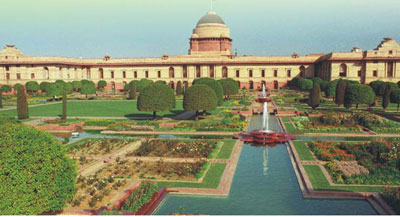
Rashtrapati Bhavan NEW DELHI, July 25: Roshini is an initiative taken on the directions of the President to make the President's Estate a green, energy efficient and a zero waste model township. The programme was launched in July 2008 to make the President's Estate a model ecofriendly township. To achieve this, the following programmes are envisaged:
Solid Waste Management
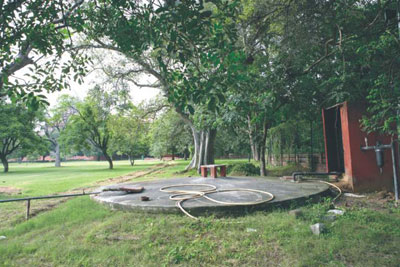
Traditional system of waste disposal is presently followed in the President's Estate wherein all the waste generated is collected and transported to the NDMC land fill sites. A new Waste Segregation and Recycling Programme - RRR (Recycling, Reuse and Reduce) will now be introduced in the President's Estate with the active support of NDMC. Under this programme, the residents would be trained in segregating the bio-degradable (organic) and non-biodegradable waste generated in each house and a system of door to door collection of this waste is being put in place. The biodegradable waste would then be composted in the President's Estate and the organic manure generated would be used in the President's Gardens. A workshop-cum-training programme of the residents of President's Estate was held in collaboration with NDMC on June 21, 2008 on waste segregation. In the first phase of the programme, on July 25, 2008, residents of 106 houses in Zone-1 Schedule 'B' would be given two specially designed waste bins for segregation of household waste. The waste generated in the President's Gardens would be composted into Vermi compost. For this purpose, 96 vermi-compost pits covering 3840 sq.ft. would be made in the Dalikhana area. Training of the staff has been conducted with the help of National Centre of Organic Farming Institute, Ghaziabad. Liquid Waste Management - Sewage Treatment Plant
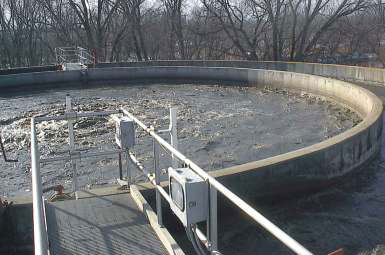
The fresh water once used by the residents of the President's Estate flows into the NDMC drain. Water being a precious and non-renewable resource, water recycling as a reliable alternative for conserving the highly treated expensive drinking water becomes necessary. President's Estate requires on an average of above 15 lakhs litres of water for its residents and in addition 5 lakhs litres of water per day for maintaining the Gardens and Greens. This water supply is being met by NDMC and CPWD. The remaining deficiency is met through pumping from bore wells in the President's Estate. It is now planned to treat the domestic waste water in a Sewage Treatment Plant to be installed in the President's Estate. This Sewage Treatment Plant would have designed capacity to treat 2 million litres of water per day. This Plant would adopt the latest ultra modern and ecofriendly Membrane Bio Reactor (MBR) Technology without using any chemicals and this treated water would be utilized for the 14 gardens of vermi-compost Rashtrapati Bhavan. The total cost of installation of the Plant would be Rs.8.69 crores and the work would be completed in approximately 6 months' time. Rain Water Harvesting
A concept of zero wastage of water is our focus. All the waste water will be recycled and the rain water will be harvested in the President's Estate. Rain Water Harvesting in the Rashtrapati Bhavan has been taken up since 1998. An advisory committee was set up by the Centre for Science and Environment which developed a plan of water harvesting in the Rashtrapati Bhavan. The CPWD and the Central Ground Water Board undertook the implementation of this scheme. The President's Estate spreads out in approximately 360 acres of Raisina Hills which receives an average of 700 mm of annual rainfall. This rain water is captured from roof tops and storm water drain besides surface run off from non-paved areas and used for recharging the existing dry dug wells. In addition one injection well, one recharge shaft and two recharge trenches with borewells and allied structures were constructed. Piezo Meter readings were taken. In the first year of the project, there was a 97 cm net increase in the ground water level. As a result of these rain water harvesting structures, the rate of diminution of ground water levels has been checked. It has been decided to further augment this process in collaboration with the Central Ground Water Board by collecting the run off from the areas which were earlier not covered in the Ist phase of the programme and by diverting the rain water from these new areas into specially constructed recharge structures. Recharging of 2 dug-wells and 4 dry borewells in the resident's Estate would also be taken up in the second phase, thereby utilizing 100% run off in the President's Estate.
Increase in green cover, tree census, protection of flora and fauna in the President's Estate.
The President's Estate has a sizeable green cover. In the Roshini Programme, efforts would be made not only to increase this green cover but also to protect the ridge area in the President's Estate and to mend and replace dry and dead trees. A 'Van-Mahotsav' programme will be celebrated in the President's Estate right through the year. To mark the beginning about 1000 fruit bearing and flower trees have been planted. A Tree Census consisting of a survey and inventorization of trees of Rashtrapati Bhavan and preparation of a status report is being taken up with the help of the Department of Forest, Govt. of NCT of Delhi and Horticulture Wing of NDMC. This exercise would be completed by 31 August 2008. A field study on the National Bird in the Estate and their habitat conditions is being studied for ensuring their better protection and conservation is being taken up with the help of the World Pheasant Association, India Chapter. Launching of 'Nature Trail' in the Estate
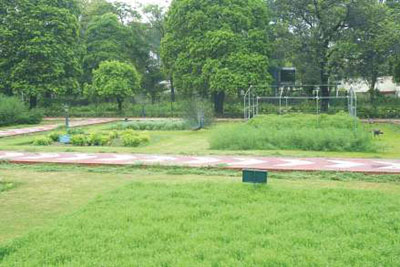
A Nature Trail is being developed in the President's Estate with the help of Department of Environment and Forest, Govt. of NCT of Delhi which th would be inaugurated by 15 August. This trail would show-case the bio-diversity of the President's Estate displaying rare, old and important trees and the avian life in the Estate. It would include a butterfly park as well. This nature trail would be open for the visitors to the Rashtrapati Bhavan every Saturday, along with the trail experience the visitors would be given the opportunity to have a glimpse of the process of converting waste into compost/vermi-composting and the various energy efficient measures adopted in the Estate. Ban on usage of Plastic bags and replacement by more eco-friendly products
Usage of plastic products specifically plastic bags, is discouraged in the President's Estate. However, total ban could not be imposed for the want of suitable alternatives. Now under the 'Roshini' programme, it is proposed to promote the usage of more eco-friendly products. Under this initiative self-help groups of women would be formed who would be trained in making paper bags in collaboration with an NGO, 'Literacy India'. The waste paper generated in the President's Secretariat would be used for making paper bags with a view to replace plastic bags. As a part of this programme these self-help groups would also be used to motivate residentsof President's Estate to use more eco-friendly products. The shops situated in the President's Estate would also be asked to replace plastic bags with paper bags.
Energy Audit and Conservation Rashtrapati Bhavan was selected as one of the six buildings by the Ministry of Power for implementation of Energy Efficiency Measures (EEMs). An energy audit in the main building was conducted in 2003 and a report on energy saving was prepared by the Bureau of Energy Efficiency. On the basis of this report Energy Efficiency Measures were carried out in the main building. From 1.8.06 to 31.6.07, about 1020650 KW hrs were saved. The Bureau of Energy Efficiency has been requested to carry out an energy audit of the entire President's Estate and submit a report for adoption of Energy Efficiency Measures in the President's Estate. Usage of energy efficient electrical appliances would be promoted as a part of this programme. The residents of the President's Estate would also be co-opted in the energy efficiency programme. The students of the Rajendra Prasad Sarvodaya Vidyalaya located in the President's Estate would also be integrated in the implementation of this programme. Distribution of BEACON (Building Energy Awareness on Conservation) booklet to students is being taken up. Usage and Promotion of new and renewable sources of energy
A committee has been constituted including officials from the Ministry of New and Renewable Energy for the promotion of new and renewable sources of energy in the President's Estate. The following areas have been identified to be taken up: (i) For demonstration purposes, a path from where general public approaches the Mughal Garden would be illuminated using solar panels. (ii) Common lighting in blocks would be converted into solar lighting. (iii) Operation of musical fountain by using solar energy. (iv) Replacement of conventional pumps by solar pumps. (iv) Installation of solar photovoltaic panels in the new Auditorium, Health Centre, Officers Institute, etc. (vi) Installation of solar power based water heating devices. In addition, a 25 CUM Bio-gas plant would be installed in collaboration with MNES and KVIC for the kitchen of the President's Bodyguard and the Army Guard kitchen situated in the President's Estate. These kitchens' currently use LPG cylinders for cooking purposes. There are about 40 cattle in the PBG Dairy. The cow dung generated would be used in the bio-gas plants and the methane gas generated would be used for kitchen purposes. Replacement of LPG by Piped Natural Gas
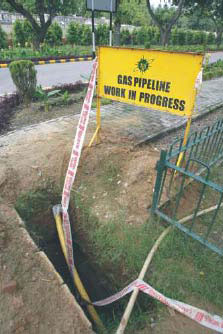
The residents of President's Estate use LPG cylinders for cooking purposes. It was decided to promote the usage of CNG in the President's Estate. Accordingly, a project costing Rs.1.5 crores covering the whole President's Estate and quarters situated outside has been sanctioned, 1631 houses would be converted to PNG under this project. Indraprastha Gas Limited (IGL) has already started work on this project. This work would be completed in about 6 months' time. In the second phase of this project the main Rashtrapati Bhavan building would also be connected to this eco-friendly alternative.
Making the residents of the Estate more responsive, responsible & eco-friendly The successful implementation of the Roshini Programme initiatives is not possible without the active participation and involvement of the residents of the President's Estate. The programme would endeavour to educate the residents and to make them more responsible and responsive in all identifiable areas viz: solid waste management, judicious use of water/electricity, promotion of recycling and recyclable products and discourage the use of plastic etc. This would be brought about through Information Education Communication (IEC) efforts. A President's Estate Residents Welfare Association (PERWA) has been formed. This Association consists of 11 nominated persons comprising of officers from the President's Secretariat, the Engineering Wing, Gardens, Sanitary Wing, President's Bodyguard and Army Guards. This executive committee in turn has selected about 129 block representatives on the principle of approximately one representative for 10 houses who would act as motivator's and promoter's of this Roshini initiative amongst all the residents of the President's Estate. Active involvement of housewives, youth and school going children is envisaged.
An Advisory Committee and a Project Implementation and Monitoring Group have been formed to oversee the planning and execution of this programme. These committees have been meeting regularly to deliberate and oversee the implementation of 'Roshini' rogramme. These committees have been meeting regularly to deliberate and oversee the implementation of 'Roshini' Programme.
|
|
|||||||
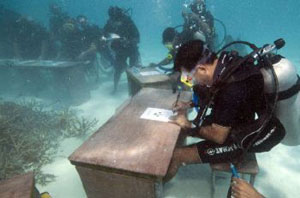 MALE, Oct 19: Maldives, facing a grave threat of being swamped by the rising sea levels, appealed for concerted action on climate change when its Cabinet held the world’s first underwater meeting to highlight the danger posed to low-lying nations by global warming.
 NEW DELHI, Oct 7: Climate change is threatening the existence of several Indian herbs which are key ingredients of traditional Ayurvedic system of medicine, President Pratibha Patil said and expressed concern over the trend.
 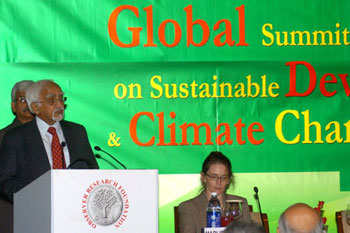 NEW DELHI, Sept 24: Indian Vice President Mohammad Hamid Ansari has said any action on climate change must enlarge, not constrict, the possibilities for development and empowerment of the world’s poor.
 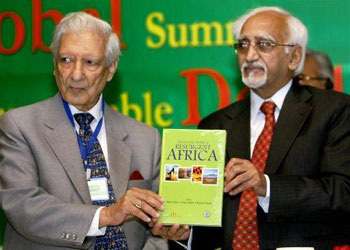 “To developing countries like India, climate change imposes new challenges that may probably require negotiating new international and national political and economic arrangements, fashioning new technological interventions, and negotiating financial and technological transfers for mitigation and adaption to climate change,” he added.
 NEW YORK, Sept 24: India on Thursday made it clear that it cannot accept any emission reduction targets in the climate change negotiations heading for a climax in Copenhagen later this year, but expressed the hope that there would be consensus on financing emission control programmes in developing countries aided by technology transfer.
 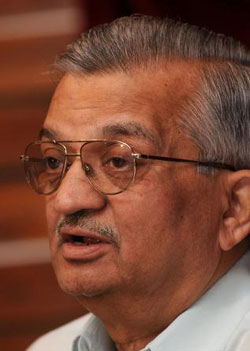 VIENNA, Sept 16: India has designed a new version of Advanced Heavy Water Reactor (AHWR) which will use low enriched uranium along with thorium as fuel, chairman of Atomic Energy Commission Anil Kakodkar announced on Wednesday in Vienna.
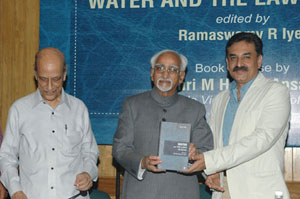 NEW DELHI, Sept 15: The Vice President, Mr M. Hamid Ansari, released a book entitled “Water and the Laws in India” edited by Ramaswamay R. Iyer at a function here today. Addressing on the occasion, he said that water is larger than rivers; ponds and lakes, springs, groundwater aquifers, glaciers, soil and atmospheric moisture, and so on, are all forms of water and constitute a hydrological unity; and there is more to water than irrigation.
 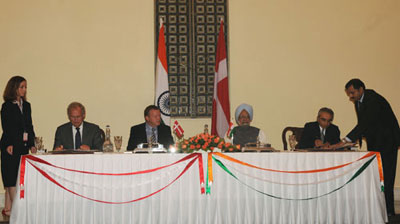 NEW DELHI, Sept 11: Danish Prime Minister Lars Lokke Rasmussen met Prime Minister Manmohan Singh here on Friday. The two leaders discussed bilateral, regional and international issues.
 NEW DELHI, Aug 13: Imagine lighting up Delhi using electricity from a lump the size of a soda can! Nuclear energy makes this possible -- with minimal fuss and practically no emission of the bad boy of global warming: carbon dioxide. It has emerged as one of the best bets for kicking the world’s dependence on fossil fuels.
  NEW DELHI, Aug 1: Rashtrapati Bhavan is becoming a green, energy efficient and zero waste model township for the country. When President Pratibha Patil assumed office two years she had given several directives to the officials. One of those being Greening of the President’s Estate. The President formally launched the programme “Roshini” on July 25 last year.
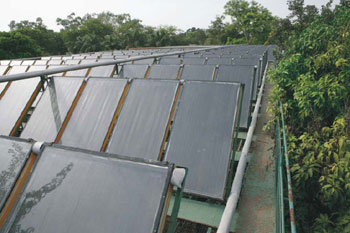 The Estate now has 100 energy efficient solar lamp posts. The auditorium is lit by the solar energy through the solar panels set up on its terrace.
 The idea is to create a model carbon-neutral township. “Today, the world is struggling with the issue of climate change. We were wondering how we could tackle climate change at the urbane level. Rashtrapati Bhavan is a living heritage and we wanted to set an example,” said Dr Fernandez.


Aviation
| Business | Defence
| Foreign Affairs | Communication
| Health | India |
United Nations
India-US | India-France
| Entertainment | Sports
| Photo Gallery | Tourism
| Advertise with Us | Contact
Us
© Noyanika International, 2007. All rights reserved.