


DEFENCE
Time for Military Justice Reform? Experts Call for Overhaul of India's Court Martial SystemBy Rear Admiral Dhiren Vig (Retd)
The military legal framework operates under a distinct set of laws designed to ensure swift disciplinary action and maintain operational readiness, morale and discipline among service personnel. Unlike the civilian justice system, military jurisprudence is governed by the Army Act, 1950, the Air Force Act, 1950, and the Navy Act, 1957, with constitutional backing through provisions such as Articles 33, 136(2) and 227(4), which provide the Armed Forces with a unique legal structure. The system allows punishments ranging from administrative censures for minor infractions to Summary Court Martials (SCMs), District Court Martials (DCMs) and General Court Martials (GCMs) for more serious offences. While these mechanisms are intended to deliver speedy justice, legal experts argue that the existing framework has significant structural limitations. A major turning point came with the Supreme Court's landmark judgment in Lt Col Prithi Pal Singh Bedi vs Union of India (1982), which highlighted the absence of an independent appellate authority in the military justice system. The Court observed that the same institution effectively acted as investigator, prosecutor and adjudicator, raising concerns over fairness and accountability in court martial proceedings. The judgment, coupled with mounting case backlogs in constitutional courts, eventually paved the way for the establishment of the Armed Forces Tribunal (AFT) in 2009. The tribunal now hears appeals against court martial verdicts and adjudicates most service-related disputes involving serving and retired Armed Forces personnel. Despite the creation of the AFT, concerns persist over the functioning of military The AFT's Principal Bench in New Delhi alone reportedly continues to deal with hundreds of pending court martial appeals, some dating back more than two decades. Much of the pendency stems from cases transferred from various High Courts and the Supreme Court following the tribunal's establishment. Legal observers note that a significant number of appeals succeed because of procedural lapses rather than the merits of the case. In several instances, court martial proceedings have reportedly failed to comply with statutory provisions under the Army, Navy and Air Force Acts, relevant rules, and judicial precedents laid down by the Supreme Court and High Courts, resulting in convictions being set aside. Experts argue that one of the primary weaknesses lies in the temporary nature of General and District Court Martials. These courts are constituted on a case-by-case basis using serving senior officers who may not possess specialised legal expertise and must rely heavily on Trial Judge Advocates for procedural guidance. Critics contend that these officers are simultaneously burdened with operational responsibilities, potentially affecting the quality and efficiency of proceedings. Concerns have also been raised over allegations of "command influence" on court martial outcomes and the practical challenges faced by accused personnel in remote locations, where access to legal counsel of their choice may be limited. Several parliamentary committees and Law Commission reports have previously recommended reforms to the military justice system. However, there is little evidence in the public domain to suggest that these recommendations have been implemented. Among the key proposals gaining attention is the establishment of permanent General and District Court Martial benches in New Delhi, Kolkata, Chennai and Mumbai. Under the proposed model, retired senior Armed Forces officers would serve as members of these courts for fixed five-year tenures, creating a more specialised and independent judicial mechanism while allowing serving officers to focus on operational duties. The proposal also recommends retaining the existing Summary Court Martial system for minor disciplinary matters and preserving the Armed Forces Tribunal's role as the appellate authority for all court martial cases. Supporters of the reforms argue that adopting a permanent military court structure—similar to systems followed in countries such as the United Kingdom—would strengthen transparency, improve procedural consistency and enhance confidence in military justice. @ Rear Admiral Dhiren vig (Retd) is currently Member of the Armed Forces Tribunal India Needs National Maritime Commission to Safeguard Strategic and Economic Interests: ExpertsBy Rear Admiral Dhiren Vig (Retd)
|
|
||||||
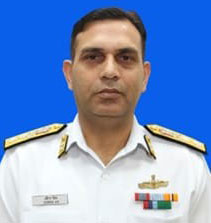 NEW DELHI, July 14: India's military justice system, long regarded as a cornerstone of discipline within the Armed Forces, is facing renewed calls for reform amid concerns over procedural shortcomings, judicial delays and the need for greater transparency in court martial proceedings.
 NEW DELHI: The growing instability in West Asia and the increasing weaponisation of maritime choke points have renewed calls for India to establish a National Maritime Commission (NMC) to strengthen maritime security, streamline governance and accelerate the country’s blue economy ambitions. Strategic analysts and maritime experts argue that recent geopolitical developments, including disruptions to oil and gas supply routes in the Indian Ocean Region (IOR), have exposed vulnerabilities in India’s maritime preparedness and highlighted the urgent need for an apex-level maritime body.

India-US | India-France | Entertainment | Sports | Photo Gallery | Tourism | Link Partners | Contact Us
© Noyanika International, 2003-2024. All rights reserved.