


United Nations
|
India flags safety of United Nations peacekeepers
India's Permanent Representative Syed Akbaruddin Tuesday raised the issue of safety of troops deployed in UN operations and said that careful planning and consultations between the Security Council and the troop-contributing countries while formulating the mandates "will go a long way in promoting safety and security of our peacekeepers". Speaking before the Special Committee for Peacekeeping Operations (PKO), he said India wanted to "strongly emphasise" that all the countries where peacekeepers are deployed "must ensure that in cases of attacks on the peacekeepers there is an effective process to prosecute, punish and penalise the perpetrators". Atul Khare, the UN under-secretary general for field operations, also called for bringing those who kill peacekeepers to justice. Akbaruddin reiterated the demand for the Council to consult troop-contributors, as required by the Charter, and also suggested broadening it. "All the member states have a stake in the peace process whether or not they contribute directly to these PKOs," he said. "In an inter-connected world, it is very easy for member states to be at the receiving end or at times suffer collateral damage if they are in the vicinity of areas which are unstable and prone to conflicts." The landscape of peacekeeping operations has changed drastically and peacekeepers are facing new challenges like terrorism and intra-ethnic conflicts, Akbaruddin said. He said India supported the recommendation made by a high level panel last year against the deploying peacekeepers in counter-terrorism operations. "However," he added, "we understand that these issues need to be viewed with flexibility in response to emerging challenges." "As a country which has participated in 48 UN peacekeeping operations, we have contributed our share to the maintenance of international peace and security with high standards of professionalism that are troops are known for," he said. More than 180,000 Indian personnel have participated in UN peacekeeping operations so far and currently 7,798 are wearing the UN's blue helmet. Protecting civilians in areas of conflict has emerged as one of the newer mandates of peacekeeping operations in an environment of massive disruptions of civilian life and refugee crises. Akbaruddin said that even before the adoption of the concept, "our troops have been the leadering peacekeepers protecting civilians". In the 1960s in Congo, Capain Gurbachan Singh Salaria displayed "great courage" in protecting civilians and has been honored with a Param Vir Chakra, India's highest gallantry award, for making the supreme sacrifice, Akbaruddin recalled. And last May, Indian peacekeepers in South Sudan protected internal refugees in Melut "against major odds", he said. Lieutenant Colonel Krovvidi Dinakar was wounded at that time when the refugee camp Indian peacekeepers were protecting came under fire from a faction in the civil war there. Recently, the UN has faced a crisis of sexual exploitation and abuse (SEA) by peacekeepers. Akbaruddin said: "We have a zero tolerance policy on SEA cases and would like that there is zero tolerance on such issues across the UN too." He added, India "is appalled by the recent cases of sexual exploitation and abuse which have surfaced in some of the UNPKOs. My delegation strongly condemns these unpardonable acts when the protector becomes the perpetrator." UNSC represents a bygone era: India
"It is ironical that the Security Council is working towards the establishment of democracy and Rule of Law in various parts of the world when its own house is not in order," India's Ambassador to the UN Syed Akbaruddin said. "The current structure and methods of work of the Security Council are divorced from reality and represent a bygone era," he told the UNSC yesterday. Akbaruddin said that to regain "its legitimacy there is no option but for the Security Council to reform." The terse remarks were made by Akbaruddin during an open debate 'Respect to the Principles and Purposes of the Charter of the United Nations as Key Element for the Maintenance of International Peace and Security' at the UN Security Council. "We hope it does not require a cataclysmic crisis to foster this fundamental change. There has never been a greater need for reform of the Council which is a sine qua non for the optimal efficiency of the Council and would be the real form of tribute to the purposes and principles of the Charter of the United Nations," he said. Akbaruddin said while terrorism remains a cardinal threat to the maintenance of international peace and security, the efforts of the United Nations and the Security Council in taking decisive action to combat terrorism leaves much to be desired. It has been noticed that even brazen public violations of the sanctions regime by listed individuals and entities, far from attracting punitive measures, do not even elicit the mildest censure, Akbaruddin said. "Yet, we the general membership of the UN are expected to comply with the decisions of the Council's Sanctions Committees decisions or lack thereof," he said. Observing that the Council has taken the lead in referring to the purposes and principles of the Charter while attempting to maintain international peace and security, he said, however, its own actions have not always been in the spirit of the Charter. The UNSC is composed of 15 members, five of them permanent and 10 non-permanent elected for two-year terms by the General Assembly. The five permanent members include: China, France, Russia, the United Kingdom, and the United States. Addressing the Security Council, UN Secretary-General Ban Ki-moon said for the millions living amidst war and extreme poverty, and for the countless others whose rights are violated or neglected in other ways, the ideals and values of the United Nations Charter remain elusive. Bringing the promise of the Charter to the most vulnerable must continue to be the main goal, Ban said. |
|
||||||
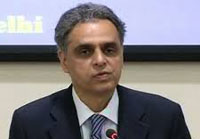 UNITED NATIONS, Feb 17: India has called for ensuring the safety of peacekeepers deployed in UN missions in a changed and more dangerous landscape and punishing those attacking them.
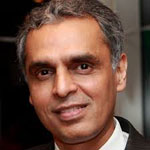 UNITED NATIONS, Feb 16: India has hit out at the UN Security Council over its current structure and methods of work, saying the 15-membered powerful world body is "divorced from reality" and represents a bygone era warranting reform.

Aviation
| Business | Defence | Foreign
Affairs | Communication | Health
| India | United Nations
India-US
| India-France | Entertainment
| Sports | Photo Gallery |
Tourism | Advertise with Us
| Contact Us
© Noyanika International, 2003-2009. All rights reserved.