


United Nations
|
UN chief calls Mandela 'global citizen' on birthdayNEW YORK, July 18: Wishing Nelson Mandela on his 91st birthday, UN Secretary General Ban Ki-moon has called the founding president of post-apartheid South Africa and Nobel Peace Prize laureate an "exemplary global citizen". "He inspired people across the world, and across the generations," Ban said at an event to commemorate Mandela Day in New York, paying tribute to his contributions to a "democratic, multi-racial South Africa" and his continued tireless efforts to promote peace and human dignity worldwide. "Indeed, Nelson Mandela is a living embodiment of the highest values of the United Nations," Ban said. The secretary-general spoke highly of Mandela's ability to inspire, saying that "many people, facing tribulations of their own, have found both solace and fortitude in his example. Above all, he has shown the difference one person can make in the face of injustice, conflict, poverty and disease". At Saturday's celebration, also attended by schoolchildren from South Africa and New York, Ban recalled a meeting with Mandela earlier this year. "I took the opportunity to thank him for everything he has done for his fellow South Africans and for all of us," Ban said. "But he didn't want to hear my praise. He insisted that everything he had accomplished had been done not by him, but by countless others, many of whom he had never met." Mandela's humility is a reflection of "leadership of the highest order", Ban said. "May we all continue to benefit from his wisdom, his good works and good humor for many years to come," he added. FAO warns of global hunger crisisNEW DELHI, June 21: The number of hungry people in the world may cross one billion in 2009 due to the shocks of the global economic crisis combined with high food prices in a few countries, the Food and Agriculture Organisation (FAO) said. “The number of hungry people is expected to grow overall by about 11 per cent this year,” the U.N. agency projected drawing on analysis by the U.S. Department of Agriculture. “The most recent increase in hunger is not the consequence of poor global harvests but is caused by the world economic crisis, which has resulted in lower incomes and increased unemployment. This has reduced the poor’s access to food,” it said. The silent hunger crisis affecting one-sixth of all of humanity posed a serious risk for world peace and security, it said. “We urgently need to forge a broad consensus on the total and rapid eradication of hunger in the world and to take the necessary actions,” said FAO Director-General Jacques Diouf on its website. “Poor countries must be given the development, economic and policy tools required to boost their agricultural production and productivity. Investment in agriculture must be increased because for the majority of poor countries a healthy agricultural sector is essential to overcome poverty...,” he stressed. Pointing out that the economic crisis also came close on the heels of the food and fuel crisis of 2006-08, it said that it should be noted that while the purchasing power of poor consumers declined, international food commodity prices were still 24 per cent higher than in 2006 and 33 per cent above those of 2005. The 2009 hunger report will be presented in October, the FAO added. Pak should conduct 'full probe' into Mumbai attacks: BanISLAMABAD, Feb 4: Pakistan should conduct a "full investigation" into the Mumbai attacks and cooperate with India in bringing the perpetrators of the terrorist incident to justice, UN Secretary General Ban Ki-Moon said on Wednesday. Addressing a news conference with Prime Minister Yousuf Raza Gilani, Moon said he had told the premier "that the Pakistani government should have a full investigation into this issue and fully cooperate with the Indian government". Moon was replying to a question on whether he was satisfied with Pakistan's compliance of resolutions adopted by the UN Security Council after the Mumbai attacks. The resolutions outlawed the Jamaat-ud-Dawah, a front for the Lashker-e-Taiba terror group, and placed four LeT leaders on a list of entities and individuals facing sanctions for terrorist links. In his opening statement Moon called for resumption of the peace process between India and Pakistan, which was suspended by New Delhi in the wake of the Mumbai incident. Noting the "complexities of regional relations particularly in the aftermath of the Mumbai attacks", Moon said he had stressed to Gilani and "other interlocutors the importance of maintaining rapprochement between India and Pakistan that has taken its own momentum in the last several years". "In the long run, this is a critical aspect of regional relations and one that can pave the way for a new era of cooperation, peaceful co-existence and socio-economic transformation in South Asia," Ban said. Replying to a question, Moon said cooperative and friendly relations between India and Pakistan would be beneficial for the two countries and "very desirable for peace and stability in this subcontinent". Though bilateral ties had been hit by the Mumbai attacks, India and Pakistan should resume the composite dialogue process. "This is what the UN and international community wants," Moon said. Moon commended Gilani's recent statement that his government would enact a new law, if necessary, to punish Pakistanis who commit crimes outside the country's boundaries. He said such a step would be "very helpful" in the fight against terrorism. Gilani clarified that interior ministry chief Rehman Malik had informed him that Pakistan's laws are adequate for dealing with crimes committed outside the country. Gilani said new laws could still be enacted if necessary. "Our resolve and intention is that we will never ever allow Pakistani soil to be used for terrorist activities," he added. Gilani also sought to bring up the UN's role in resolving the Kashmir issue. UN Security Council fails to agree on Gaza ceasefireNEW YORK, Jan 8: The UN Security Council ended Wednesday's closed-door discussion on seeking a ceasefire in the conflict in Gaza Strip without an agreement on how to move forward. The 15-member council was unable to decide whether to issue a statement or take a vote on a more formal Arab-backed draft resolution. The discussion will continue as differences divide the two sides, on one side the United States, France and Britain, which are the council's three permanent members with veto power, versus Arab governments represented by the Arab League. "We have two texts now in the council," said French Ambassador Jean-Maurice Ripert, the council president. "There is no unanimity today on either of those texts because we want to go further for a common approach. We have decided to continue our talks and negotiations." The draft resolution from the Arabs condemns only Israel in the conflict and has been rejected by the United States in particular. The draft statement backed by the US, France and Britain emphasizes a "durable ceasefire" that would require arrangements and guarantees for its implementation, including the prevention of the illegal weapons trade and the reopening of crossing points into Gaza. It calls for immediate and full humanitarian access by the Palestinians to food, fuel and medical treatment and insists that there is "no military solution to the Israeli-Palestinian conflict." The draft resolution submitted by the Arab League seeks an "immediate and permanent ceasefire in Gaza Strip with a cessation of all military and violence ... and the immediate withdrawal of Israeli forces" from Gaza. It calls on Israel to lift the blockade of Gaza and calls for the sustained opening of crossings, including the Rafah crossing. It also calls for the deployment of an international observer force to monitor the implementation of the ceasefire and ensure the protection and safety of Palestinian civilians. While the Arab states were negotiating with the Western powers on the council Wednesday, a UN official said the search for a sustainable Israel-Hamas ceasefire in the Gaza Strip was emerging as countries engaged in resolving the conflict were reaching a consensus. "It seems that the elements for a way out of this crisis are emerging, but more work needs to be done quickly to flesh out a package and secure a buy-in of the crucial players," Robert Serry, the UN coordinator for the Middle East peace process said at UN headquarters in New York. UN Secretary General Ban Ki-moon was hoping for a ceasefire to be declared before he begins a trip to several Middle East nations on Monday, Serry said. Ban announced that he will visit Israel, the Palestinian territories and several Arab capitals. The week-long trip will help him gain first-hand information on the Gaza crisis. Serry said the elements of the ceasefire include a "viable mechanism" for monitoring the reopening of crossings into Gaza and strong support for international monitors, a "massive" humanitarian plan to reconstruct Gaza and a new dialogue to reach a political settlement. "Bandage solutions" for the Israeli-Palestinian conflict are unacceptable, the UN official said, reiterating that governments have been demanding that the Palestinian Authority, under President Mahmoud Abbas, regains control of Gaza and that Gaza be reunified with the West Bank. The Jordanian mission to the UN said its foreign minister, Salaheddin al-Bashir, and other Arab foreign ministers met with Rice, Kouchner and British Foreign Minister David Milliband to go over their different approaches to the Israel-Hamas conflict. The mission said the Arab foreign ministers met with Rice to stress the importance of a non-military solution to the conflict. The mission said al-Bashir and other Arab ministers did not accept the statement and pressed ahead for a UN Security Council resolution that enforces an immediate ceasefire. For the draft statement, or presidential statement, to be issued all 15 council members must agree on its contents. The Arab draft resolution was sponsored by Libya, which is one of the 15 council members and refuses to back down. The council may decide to adopt it with a majority of nine votes unless one of the five permanent members vetoes it. Use non-violence as a foundation of resolving conflicts: UNBy Deepak Arora UNITED NATIONS, Oct 2: Paying tribute to Mahatma Gandhi on his 139th birth anniversary, UN General Assembly has asked its members to use the philosophy of non-violence as a foundation of resolving conflicts. Placing a bust of the Mahatma by his side, President of UNGA Miguel d'Escoto Brockmann urged the member states to help world adopt the "Satyagraha" in all languages to begin a gradual and profound process of reflection into its meaning. "If we do so we would have entered into the process of liberating humankind from its dependence on violence as a means to resolve differences," he said. Brockmann, a great admirer of Gandhi, said there is nothing passive or timid about this "love force" or "truth force". On the contrary, "Satyagraha is a bold, brave, assertive and risk-taking method of struggle." The former foreign minister of Nicaragua called on the UN members to choose, "personally and collectively," step-by-step experiments in the "infinite power" of truth, saying," truth, in the final analysis, is synonym of love." Commending Gandhi's message, he said that Martin Luther King Jr's application of his methods to the struggle in the United States for civil rights, economic justice and end of Vietnam War revealed the "power of growing non-violent movement to begin to transform the course of even the most powerful nation in history." "Echoing Gandhi, King proclaimed to that nation and the world that we must choose non-violence or non-existence," he recalled. Here is the text of UN General Assembly President Miguel d’Escoto Brockmann speech: I want to thank each of you for being here this morning to participate, in person, in this short but significant ceremony. Today we celebrate the Second International Day of Nonviolent Struggle. It is a most important day, the principal purpose of which is to invite us all to reflect on the method of struggle used by one of the greatest human beings in all of history, Mahatma Gandhi, to obtain the liberation of India. “They were actively pitting their lives against injustice. It was a strategy for the strong. They were filled with love and compassion for their adversaries -- not with the anger and hate expressed in many “passive resistance” campaigns. They were returning good for the evil done to them and were aiming to convert and not humble their adversaries. They were not employing brute force but were using soul force. Gandhi sensed that what they were doing was in many ways a new principle of action. The term “passive resistance” did not adequately convey this new principle”. Gandhi showed us the way to turn from the edge of self-destruction toward a just, disarmed and sustainable global community, if we would only choose, personally and collectively, step-by-step experiments in the infinite power of truth. Truth is, in the final analysis, a synonym of love. As Richard Falk, UN Special Rapporteur on Human Rights in the Occupied Palestinian Territories noted, it is now a question of whether the courage and commitment of the Free Gaza Movement “can awaken the conscience of humanity to an unfolding tragedy”. In one of my several declarations during the General Debate of world leaders in the General Assembly that has just ended, I said something like “We either love one another or die”. Today--my dear brothers and sisters--I say what amounts to the same thing: nonviolence or nonexistence. India against increase in only non-permanent UNSC seatsNEW YORK, June 18: India, backed by a large number of UN member states, has firmly rejected the suggestion that the 15-strong Security Council be expanded only in the non-permanent category with a provision for review after ten years, seeking increase in membership in both segments. The member states made known their strong opposition to the proposal contained in the report of the task force comprising representatives of Bangladesh, Chile, Djibouti and Portugal during a debate on the document in the Open Ended Working Group (OEWG). The task force was appointed by UN General Assembly President Srgjan Kerim. Describing it just a tactic to scuttle real reform of the Council, they asked what would change in ten years that would make taking a decision easier then. The interests of the states are not likely to change much during next ten years, they asserted and called for confronting the issue right now rather than deferring the decision. Rebutting the argument that the draft being prepared by some 30 nations including India would hinder the reforms, Indian UN Ambassador Nirupam Sen warned that if a decision taken to start inter-governmental negotiations cannot be implemented by consensus, then clearly it would have to be implemented by alternative means. Sen did not amplify what the alternative means could be but diplomats says it could mean bringing a resolution in the General Assembly for expansion of the Security Council in both permanent and non-permanent categories. Replying to a question as to how the draft would play out, a spokesman of the General Assembly President told reporters yesterday he was aware of the move and if the member states preparing it feel they have two-thirds majority, they could move it in the 192-member Assembly. UN fears food shortage in MyanmarBANGKOK, June 5: Cyclone Nargis has prevented many farmers in Myanmar's rice-growing region from planting their new crop, raising fears of food shortages this year, UN agriculture officials said Wednesday. Rice stocks and paddies were pummelled when the deadly storm hit, and the UN Food and Agriculture Organisation (FAO) has stressed that the new planting season must begin in early June to stave off further tragedy. But early June has crept around, and still farmers are languishing without aid supplies more than one month after the cyclone hit and left more than 133,000 people dead or missing. "Many areas are still empty and farmers haven't yet come back because of the lack of shelter and lack of food," the FAO's deputy regional representative Hiroyuki Konuma told reporters in Bangkok. "We have to complete sowing by the end of July latest otherwise it will create tremendous damage to productivity and affect income and eventually will affect the national security of Myanmar itself." The FAO estimates that 16 percent of the 1.3 million hectares (3.2 million acres) of agricultural land in the Irrawaddy Delta region have been seriously damaged after the cyclone caused flooding, while sea water has poisoned the soil. "It's likely that the harvest will not be able to take place for another year," said Paul Risley of the UN's World Food Programme. "Due to the coincidence of (the cyclone) hitting as the monsoon was just beginning, it's a very catastrophic disaster from that point of view." Much of the rice seed which would have been used for the monsoon harvest -- which accounts for 80 per cent of Myanmar's annual rice yield -- was lost or damaged by the cyclone, Konuma said. "If production is affected during monsoon season, then there might be a very serious shortage of rice and Myanmar will have to depend on imported rice from abroad," he told reporters. Global rice prices have surged in the past year, and analysts have said that if a previously self-sustaining country like Myanmar begins importing, it could push prices of the staple grain even higher. The FAO is trying to procure more rice seed within Myanmar and wants to sow special high-yield quick-growth varieties which will enable farmers to catch up for lost time as the sowing season nears its end in late July. The cyclone also affected areas that once housed nearly half of all the pigs and poultry for meat production in Myanmar, but 20 percent of that livestock was lost to Cyclone Nargis. Fisheries, on which 800,000 people depended, have also been severely affected, the FAO reports. "These affected areas are the real national food box," said Konuma. In the weeks after the May 2-3 cyclone, Myanmar's military junta blocked entry to overseas aid workers trying to reach some 2.4 million survivors. The generals have opened access a crack after a visit by UN Secretary General Ban Ki-moon, but more than one million cyclone victims remain without foreign aid. UN sees up to 2.5 million Myanmar cyclone victimsUNITED NATIONS, May 14: The United Nations on Wednesday raised its estimate for the number of victims in need of aid in cyclone-ravaged Myanmar and again urged the government to remove all restrictions on getting aid to them. U.N. humanitarian affairs chief John Holmes told reporters that there were now between 1.6-2.5 million people who were "severely affected" by Cyclone Nargis and urgently needed aid, up from a previous estimate of at least 1.5 million people. The cyclone swept through Myanmar's heavily populated Irrawaddy delta rice bowl in early May, leaving 100,000 people or more dead or missing, and many of the survivors homeless and hungry, according to the United Nations. Holmes said that there had been slight improvements in access for foreign aid workers with expertise that the authorities of Myanmar, formerly know as Burma, lacked. "We have seen one or two small signs of progress in some areas," he said, but added that it was "by no means adequate to the task." International aid has amounted to little more than a trickle as Myanmar's generals resist international efforts to open the floodgates to foreign workers and their operations and equipment. Holmes was asked if the United Nations might have to consider air drops to get food and other aid to cyclone victims who have not been helped. He said it was not an ideal form of distributing aid but might become an option. "It is something that could be contemplated," he said, adding that if barriers to aid workers were not lifted "one might have to look at it." He also warned that epidemics of diseases like cholera, malaria and measles "can break out at anytime now." US, EU responsible for 'explosive' food prices: UN officialNEW YORK, April 29: The US and the European Union have taken a "criminal path" by encouraging use of food crops to produce bio-fuels and thus contributing to an "explosive rise" in global food prices, the UN Special Reporter on the right to food has said. Jean Ziegler held fuel policies pursued by the US and the EU to be main causes for the current worldwide food crisis. Last year the US used a third of its corn crop to create bio-fuels, while the European Union is planning to have 10 per cent of its need supplied by bio-fuels, he said and called for a for a five-year moratorium on the production of bio-fuels. Ziegler also said that speculation on international markets was behind 30 per cent increase in food prices. Besides, hedge funds are also making huge profits from raw materials markets and called for new financial regulations to prevent such speculation. The Special Reporter, in a press conference, warned of worsening food riots and a "horrifying" increase in deaths by starvation. Meanwhile, speaking in Rome, a nutritionist with the UN World Food Programme (WFP), said that "global price rises mean that food is literally being taken out of the mouths of hungry children whose parents can no longer afford to feed them." Andrew Thorne-Lyman said that even temporarily depriving children of the nutrients can leave permanent scars in terms of stunting their physical growth and intellectual potential. Families in the developing world are "finding their buying power has been slashed by food price rises, meaning that they can buy less food or food which isn't as nutritious," he added. UN official for exemption for India, China on carbon emissionsNEW YORK, April 14: India and China should not be bound by the same restrictions on carbon emissions as those imposed on the United States and other developed nations, a top UN official has said. As US President George W Bush is expected to call on American Congress to pass a law combating global warming, Yvo de Boer, executive secretary of the UN climate treaty secretariat, said India and China should not be bound by the same restrictions that will have to be imposed on the US and other developed countries. "I don't think that's realistic," de Boer told, making the point that developing nations are still at the "beginning" of development and the developed world have a "historical responsibility" for greenhouse gas emissions. "Developing countries say, rightly I believe, 'You rich countries have been pumping greenhouse gases into the atmosphere since the industrial revolution,'" he said. The top UN climate negotiator has compared China and India to new tenants in an apartment building that has fallen into disrepair and is told upon renting a unit that they will have to pay for capital improvements. "The tenants need to decide among themselves but meanwhile, nobody's maintaining the building while the tenants fight," he added. The Bush administration has said that while the US is prepared to seriously talk about climate change any final agreement will have to include countries like India and China. Ajay Chhibber joins UNDP as Director of Bureau for Asia and the PacificBy Deepak Arora
Chhibber replaces Hafiz Pasha, who finished his assignment in December 2007. Chhibber will lead the Regional Bureau for Asia and the Pacific, a region which is now by far the most rapidly growing region in the world. Yet, while there is impressive progress towards the Millennium Development Goals, there remain significant problems of poverty, environmental constraints and equity. The Bureau concentrates its efforts on supporting the Governments of the region in facing these challenges and consolidating the progress made. Chhibber has had a very diverse career at the World Bank for over 25 years covering both research and policy issues, and has worked across Asia. Currently he is the Country Director for Vietnam, where he manages over $ 1 billion in lending. He has previously been Director of the Independent Evaluation Group and a manager in the Eastern European and Asian Departments of the World Bank. He was Staff Director on the World Development Report in 1997 and has served as a Senior Economist at the World Bank. He has published widely on development and policy issues. Before joining the World Bank, Chhibber was a consultant researcher for FAO and the International Food Policy Research Institute. Prior to that he worked at the Indian Planning Commission and was also a lecturer in economics at the University of Delhi. He holds a PhD from Stanford University and an MA from the Delhi School of Economics. UNDP is the UN's global network to help people meet their development needs and build a better life. It is on the ground in 166 countries, working as a trusted partner with Governments, civil society and the private sector to help them build their own solutions to global and national development challenges. UNSC introduces sanctions against IranNEW YORK, Feb 22: Britain and France have formally introduced a resolution for the UN Security Council to consider that calls for a third round of sanctions against Iran over its continuing failure to suspend uranium enrichment. The United States pushed hardest for the sanctions, but China and Russia, as the remaining permanent members of the 15-nation council - along with Germany have been in general agreement on them. The six nations circulated a draft earlier calling for bans on travel and equipment that can be used in civilian and nuclear programs, more monitoring of Iran's financial institutions and inspection of air and sea cargo heading to or from Iran. Iran says it will only deal with the UN's International Atomic Energy Agency, which found last November that Tehran was generally truthful about aspects of its nuclear history. But the new resolution, elaborating on the earlier draft, encourages European Union foreign policy chief Javier Solana to continue talks with Iran toward finding "a negotiated solution including relevant proposals by China, France, Germany, the Russian Federation, the United Kingdom and the United States with a view to create necessary conditions for resuming talks" on its nuclear programme. The latest revision also makes some minor changes and, in one section, adds language to ensure that the council is authorized to create a committee to gather information, report every three months to the council and decide on some requests to add individuals and entities or to issue exemptions. India wants clarity in command structures of UN peace opsNEW DELHI: India, a key contributor to UN peacekeeping missions around the world, has favoured clarity in command structures and coherence in policy and strategy in such operations to make these more effective. New Delhi has also underlined the need for enhancing information gathering and assessment system of the peacekeeping missions for success of military operations and safety of the personnel involved. "The safety and security of UN peacekeepers is of vital concern to troop contributors who place their soldiers at risk so that the UN can undertake peacekeeping," Sanjiv Arora, Joint Secretary (UN-Political) in the Ministry of External Affairs said. India looked forward to the mid-term review this year to make UN peacekeeping more integrated, effective and professional, he said. Citing killings of UN peacekeepers, Arora stressed on the need for reliable operational and tactical intelligence for successful conduct of military operations and pre-empt potential threats to the security and safety of personnel. "The personnel at Headquarters must actively and continuously engage field missions and positively respond to resolving their problems," he said at the UN Department of Peacekeeping Operations' Senior Mission Leaders' Course at New Delhi. He also sought early involvement of Troop Contributing Countries (TCC) in all aspects and stages of mission planning, including incorporating their views in mission mandates. "There is a need for more effective utilisation of the experience and expertise of TCCs," Arora said. Arora, said the draft Doctrine of the Department of Peacekeeping Operations (DPKO) should focus on planning, deployment, operational and logistical issues. "India would emphasise that DPKO should take into account the views of member states before publication of the Doctrine. We look forward to continuing our constructive engagement in the process," he said. India has been participating in the UN peacekeeping missions since 1950 and has contributed more than one lakh troops, military observers and civilian police officers to 43 out of the total 63 operations. As many as 126 Indian peacekeepers have lost their lives while serving in UN missions. More than 50 participants including senior military, police and diplomatic officials from various countries and representatives of the UN are attending the Senior Mission Leaders' Course being held here, a first in Asia. UN chief lays out challenging agenda for 2008
Addressing staff in a meeting held at the UN Headquarters, Ban called all UN colleagues to remember the great expectations the world placed on the organization. "The world recognizes the indispensable nature of the United Nations. Let us take heart from the fact that multilateralism is alive and well and in greater demand than ever," Ban said. He said he would strengthen the Office of the UN High Commissioner for Human Rights in 2008 in order to "deliver more results on the ground." To be specific, the UN chief said he would create a task force on the global scourge of violence against women. In peace and security, he cited the establishment of the hybrid UN-African Union Mission in Darfur which will be the Organization's largest peacekeeping operation when it reaches its mandated level of some 26,000 troops and police in an effort to bring peace to that war-torn region of western Sudan. "Our task now is to strengthen our capacity for preventive diplomacy, and instil a more integrated and effective UN approach in responding to conflict and supporting sustainable peace processes," he added. He noted the need to continue reforming the Department of Political Affairs and enhancing the peace building system to prevent countries emerging from conflict from slipping back into bloodshed. Ban named Africa as UN's priority in its efforts to slash a host of social ills such as extreme hunger and poverty, infant and maternal mortality, and lack of access to health and education. He also called the poorest countries as those most vulnerable to the impact of climate change. "So we must act on the mutually reinforcing relationship between climate goals and development goals," he added. All these needs will require revamping the UN's internal workings, and Ban cited the streamlining of the world body's contracts system and a continued focus on better governance, performance, accountability and transparency. Terrorism is never justifiable: Ban ki-MoonUNITED NATIOINS, Dec 19: Terrorist strikes like the December 11 twin bombing in the Algerian capital, which killed 17 United Nations staff, will never deter the world body in its vital work around the world, Secretary General Ban ki-moon has said. UN staff around the world on Monday observed a minute of silence to honour the victims of Algiers attacks which claimed 20 more lives other than their 17 colleagues. The bombings sparked widespread outrage, including from Ban, who condemned the attacks in the strongest terms and dispatched his top aides to Algiers to visit the injured and the families of those who died. "The Algiers attack will never deter us in our vital work around the world, regardless of threats to our staff," Ban said on Monday in Paris, where he attended a donors meeting for the Palestinian Authority that began with a minute of silence. "Our communal efforts to help those who suffer (and) to help peace must be redoubled." The Secretary-General added that terrorism in never justifiable and those who target innocent civilians in this way commit a terrible crime. "It hurts all nations -- large and small, rich and poor - and takes it toll on all human beings of every age and income, culture and religion." Along with the staff, the Security Council members also observed a minute of silence on Monday. Doomsday not far, predicts UN climate panelVALENCIA (SPAIN), Nov 17: The world’s top scientific authority on climate change has given its report on our planet’s health. And it’s scary: the world is facing its worst time in the past 6,50,000 years. Greenhouse gas emissions are melting glaciers faster, raising the sea levels and making summers hotter and winters colder. “These scenes are as frightening as a science fiction movie… But they are even more terrifying, because they are real,” said UN Secretary General Ban Ki-moon, releasing the report of the Intergovernmental Panel on Climate Change (IPCC) in Valencia, Spain, on Saturday. He urged governments to jointly fight global warming before it is too late. He singled out China and the US, the biggest carbon emitters as key role players in the global effort. He urged them to play a more ‘constructive’ role in reducing emissions at the global negotiations starting in Bali from next month. IPCC chairperson R.K. Pachauri said: “Now that the report is out, it is for the governments to act.” He said “truly global efforts” were needed in the fight. India is the 6th largest carbon emitter and is projected to be the third largest by 2015. The government has prepared a draft strategy paper on climate change for the Bali conference, but doesn’t want a mandatory target to reduce emissions. The IPCC report said there is “agreement” that there is economic potential to reduce emission levels but it will require huge investments for cleaner technologies. For this, governments require clear climate-change policies having regulations and new tax structures. Mitigation measures can, however, impact GDPs of developed nations and emerging economies like India, the report added. UN declares 15th Sept as 'International Day of Democracy'UNITED NATIONS, Nov 11: Stressing upon the need to promote democratisation, development and respect for human rights and fundamental freedoms, the United Nations General Assembly has declared September 15 as the International Day of Democracy. In a resolution adopted by consensus and without vote, the 192-member body affirmed that while democracies share common features, there is no single model of democracy and that it does not belong to any country or region. Democracy, it said, is "a universal value based on the freely-expressed will of people to determine their own political, economic, social and cultural systems, and their full participation in all aspects of life." The Assembly also invited all member states, organizations of the UN system, regional and intergovernmental organizations, non-governmental organizations (NGOs) and individuals to commemorate the Day "in an appropriate manner that contributes to raising public awareness." UN human rights envoy in MyanmarYANGON, Nov 11: United Nation's Special Rapporteur on Human Rights in Myanmar Paulo Sergio Pinheiro arrived here Sunday on a five-day visit to look into the human rights situation in the military-ruled country. Pinheiro is visiting Myanmar after four years since he last visited the country in Nov 2003. The visit has been scheduled following an urgent appeal by the 47-nation Human Rights Council to carry out an immediate investigation of the rights situation in Myanmar and the ruling militanry junta's subsequent agreement for it. Pinheiro's trip came a week ahead of a summit of the Association of Southeast Asian Nations (ASEAN) scheduled for Nov 17 in Singapore and three days after a second visit to the country by UN special envoy Ibrahim Gambari, who is UN Secretary General Ban Ki-moon's Special Adviser on Myanmar. The Myanmar government's permission for Pinheiro's re-visit shows another positive sign in the country's UN-promoted national reconciliation efforts, observers here said. The Myanmar government has promised it will continue to carry out democratic reforms under its seven-step roadmap and strive for national reconsolidation in co-operation with the UN. At the same time, detained political leader Aung San Suu Kyi, the general secretary of the National League for Democracy (NLD), has pledged readiness to co-operate with the military government in order make the process of dialogue a success in the interest of the nation. On Friday, a day after Gambari concluded his six-day second mission to Myanmar, Myanmar Liaison Minister U Aung Kyi met twice with Suu Kyi at the State Guest House in Yangon for a second round of talks since the first on Oct 25. More meetings between Suu Kyi and three of her NLD Central Executive Committee members and a party spokesman have been allowed to take place at the same guest house on the same day. After Pinheiro's five-day visit, Gambari is expected to make a come-back for the third time in the next few weeks at the invitation of the government to help initiate a substantive dialogue and promote national reconciliation, the UN Information Centre said. Meanwhile, according to official sources, Myanmar and the UN have also reached an agreement to mandate a person as an acting resident representative of UN agencies. India should do more to get UN SC seat: NambiarBy Deepak Arora
"India is not doing enough to become a Permanent Member of UNSC. Instead of demanding for it, India should play a more participatory role in world affairs," said Nambiar. However, the Indian Government has strongly rejected Nambiar's remarks. Sources said that though New Delhi respects Nambiar, he is toeing UN Secretary General Ban Ki Moon's line. Sources said that India was already doing a lot to contribute to UN Peace keeping and other missions. Moreover, India has already committed financial and human capital to the UN. Nambiar said "India has to take an active part around the world. It should not be interested only in its own immediate national interests. It should be willing to workout a larger commitment for serving global interests." He said it was not for the UN to have expectations from its members states. Rather India has to live up to its own image of being a progressive nation. The Chief of Staff acknowledged India's contribution in the UN's peace keeping efforts by sending large contingent of troops. However, he said “India's role has to go beyond providing peace keepers. It has to see a broader role for itself by being actively involved in discussions and settlement of major economic and political concerns including human rights and environment related issues." Nambiar said “at the Stockholm Conference in 1972, Indira Gandhi had spurred a whole new dimension to deliberations on the environment when she spoke of poverty as the greatest polluter and set the tone for a global challenge of competing ideas and options on the preservation of our planet." This competition has survived the changes of time. Equally important, it infused a scientific and technical debate with an economic and political urgency that is no less than the one relevant to human rights, he said. "We have not seen a similar action on India's part in approaching the climate change debate today," he said. Nambiar, has been previously Special Advisor to former UN Secretary General Kofi Annan at the rank of Under-Secretary General and India's Permanent Representative to UN (May 2002-June 2004). Earlier as Ambassador of India, he served successively in Pakistan (2000-01), China (1996-2000), Malaysia (1993-96) and Afghanistan (1990-92). Nambiar said "having been privileged to be associated with the courage of India's initiatives in bilateral relationships, particularly with China and Pakistan, I would argue for a bolder, less risk-averse approach at the multilateral level as well." "India cannot afford to forget the real leadership role it has called upon to assume at the UN, both by virtue of being a founder member even before Independence and for 25 years, being the major Asian presence in the absence of China, which had yet to be admitted," he added. UN chief urges 'decisive action' to fight climate change
'We cannot continue with business as usual,' Ban said, addressing an informal debate of the UN General Assembly Tuesday. 'The time has come for decisive action on a global scale.' He said the effects of climate change are already grave, and that they are growing. 'We cannot go on this way for long.' 'I am convinced that this challenge, and what we do about it, will define us, our era, and ultimately, our global legacy. It is time for new thinking. We all need to shoulder this responsibility, not just for ourselves, but for our children and their children.' Ban said climate change 'is just the kind of global challenge that the UN is best suited to address', and a comprehensive agreement is needed to tackle climate change on all fronts, including adaptation, mitigation, clean technologies, deforestation and resource mobilization. He said a high-level meeting on climate change would be convened in New York at the start of the new General Assembly session next September. Ban said he has launched a 'Greening the UN' initiative, inviting all heads of agencies and other UN bodies to work on a comprehensive plan covering UN premises and operations worldwide. 'Together, we can - and must - take decisive measures this year to address the climate change threat head-on,' Ban said. Tuesday's General Assembly debate featured two interactive panel discussions: 'Climate Change: the Science, the Impact and the Adaptation Imperative,' and 'Mitigation Strategies in the context of Sustainable Development'. The discussion, in its next session, will be open to all member states, with a focus on national strategies and international commitments to address climate change. Sheikh Haya Rashed, president of the General Assembly, said the debate was 'a testimony to the political and moral importance of addressing climate change'. 'How we protect our environment, manage climate change, secure our planet and safeguard our future, for our children and generations to come, is one of the greatest international challenges of our time,' she said. She said greater investment in climate-friendly energy production and energy efficiency must be made, and technology transfers must be actively pursued to help ensure that all the millennium development goals were met. 'In an interdependent world, we must recognise and champion a multilateral solution to the problems we face,' she said. 'I believe it is not just more urgent than ever before, but also more possible than before to build a global consensus for tackling environmental change.' The panelists at Tuesday's debate included Sunita Narain, director of India's Centre for Science and Environment. UN, N Korea agree on nuclear monitoringPYONGYANG (North Korea), June 30: North Korea moved a step closer to fulfilling a promise to shutter its main nuclear reactor after agreeing with international monitors Friday on how to verify a shutdown. International Atomic Energy Agency Deputy Director Olli Heinonen announced the tentative deal after wrapping up a visit this week to the North, which included the U.N. nuclear watchdog's first trip to the Yongbyon reactor since inspectors were expelled from the country in 2002. "We have concluded this understanding, what our monitoring and verification activities are in principle," Heinonen said in APTN footage from the capital Pyongyang. He did not give details of the agreement. Heinonen said Saturday upon arriving in Beijing that North Korea and the five other countries involved in talks on dismantling Pyongyang's nuclear programs should meet to discuss technical details of the shut down and related deliveries of economic aid. "The next logical step is that they talk with each other and agree on technical arrangements," Heinonen said. "The IAEA doesn't have any role in that." North Korean state media had no immediate comment. The news was the latest positive sign in the past several weeks that the North is taking seriously a pledge it made in February to shut down and disable the 5-megawatt reactor, which can produce enough plutonium to churn out one nuclear bomb a year. The country received a promise of economic aid and political concessions from the U.S., China, Japan, Russia and South Korea, its partners in the so-called six-party forum created in 2003. The accord's initial phase calls for North Korea to shut the Yongbyon reactor and receive 50,000 tons of heavy fuel oil. Efforts to halt the communist country's nuclear program took on added urgency after North Korea carried out its first atomic test explosion last October. Implementation of the February accord, however, was delayed amid a financial dispute over North Korean funds frozen in a Macau bank due to U.S. allegations of money laundering and other wrongdoing. Difficulties in resolving the issue led the North to ignore an April deadline to close the reactor. But after progress toward a solution, the North invited the inspectors back on June 16. A visit to the North last week by Assistant Secretary of State Christopher Hill — Washington's point man in the nuclear talks — inspired confidence. The financial dispute was declared resolved Monday, and the four-member IAEA group arrived in Pyongyang on Tuesday to discuss how the agency would monitor and verify a shutdown. In Washington, the State Department on Friday welcomed reports on the IAEA visit and said it was awaiting a briefing from U.N. officials. "We look forward to the early shutdown and seal of the Yongbyon nuclear facility and to implementing all other commitments under the February 13 initial action agreement," said spokeswoman Janelle Hironimus. An official at the IAEA's Vienna headquarters, speaking on condition of anonymity because he was not authorized to comment to media, said a board meeting would likely take place July 9 with the 35 member nations expected to approve sending the first inspection team to the North as quickly as possible. Heinonen, who emphasized all week that the trip was not a formal inspection, was upbeat Friday after returning to Pyongyang from an overnight stay at Yongbyon, about 60 miles northeast of the capital. "We visited all the places which we are planning to visit, and cooperation was excellent," Heinonen said in earlier APTN footage. He said the facilities remain operational. Along with the 5-megawatt facility at the Yongbyon Nuclear Center, the officials also saw an unfinished 50-megawatt reactor, the fuel fabrication plant and a reprocessing plant, Heinonen said. He said he thought five facilities at the complex would likely be closed. Experts said the North was sending the right signals, while not appearing weak. "North Korea is offering positive signs that it is willing to cooperate once the actual monitoring begins," said Koh Yu-hwan, a North Korea expert at Seoul's Dongguk University. Paik Hak-soon, a North Korea analyst at the Sejong Institute outside Seoul, said allowing Heinonen's team to travel to Yongbyon was a "well calculated" move. "The North demonstrated to the international community its will to keep the promise to carry out the shutdown and sealing" of the reactor, he said. But at the same time it was also a "warning to the United States," he added, that the reactor is still running and the country could produce more plutonium unless Washington keeps its promise to provide economic and political concessions. UN declares Oct 2 as 'International Day of Non-Violence'By Deepak Arora
The resolution, piloted by India with the co-sponsorship of 142 countries, was adopted without a vote. Addressing at the UN General Assembly [UNGA] Plenary, the Minister of State for External Affairs, Mr Anand Sharma, thanked all the UN Member States for their support to the resolution. This important decision, Mr Sharma said, reflected the respect that Mahatma Gandhi commanded universally and the enduring relevance of his humane philosophy. The adoption of the resolution, he added, highlights the holistic nature and the continued relevance of the Mahatma’s message for our times, indeed for all times to come.
The idea of promoting such a resolution originated from the Declaration adopted at the international conference on "Peace, Non-Violence and Empowerment – Gandhian Philosophy in the 21st Century" convened in New Delhi in January this year to commemorate the centenary of the Satyagraha Movement launched by Mahatma Gandhi in South Africa. Attended by 91 countries and 122 organisations besides many eminent personalities, including philosophers and Nobel laureates, the participants in that Conference solemnly vowed to nurture the values espoused by Mahatma Gandhi and articulated the collective yearning for a new way forward to address the problems of hunger and dehumanising poverty, which continue to plague humanity, to build a just and equitable world where people live with dignity and in peace and harmony with each other in diverse and pluralistic societies. Through this resolution, all Member States, the UN system, regional and non-governmental organisations have been invited to commemorate this day in an appropriate manner and disseminate the message of non-violence, including through education and public awareness. It also requests the UN Secretary-General to recommend ways to assist Member States in organising activities to commemorate the Day, to take necessary measures to observe the Day by the UN system and to keep the 63rd session of the UNGA informed about the implementation within the UN system of the present resolution as regards the observance of the International Day of Non-Violence. While introducing the resolution, Mr Sharma quoting Gandhi said Non-violence "has no room for cowardice or even weakness" and added that it also "necessitates complete abstention from exploitation in any form". The resolution, he said, highlighted the "holistic nature and the continued relevance of the Mahatma`s message for our times, indeed for all times to come." Promoting the principle of non-violence in such a focussed manner, he said, would significantly contribute to the realisation of the goals set out in the 1999 UN Declaration and Programme of Action on a Culture of Peace. The Minister said the declaration would also advance the implementation of the goals of the international decade for culture of peace and non-violence for the children of the world being observed from 2001 to 2010. Mr Sharma recalled that Mahatma`s "novel mode of mass mobilisation and non-violent action" brought down colonialism, strengthened the roots of popular sovereignty, of civil, political and economic rights, and greatly influenced many a freedom struggle, inspiring leaders like Badshah Khan, Nelson Mandela, Martin Luther King Jr and many others. UNSC imposes sanctions on IranNEW YORK, March 25: The United Nations Security Council (UNSC) has unanimously voted to impose sanctions on Iran for Tehran's refusal to abandon its uranium enrichment programme. The United States and its allies suspect that Iran's uranium programme is geared towards making nuclear weapons, while Tehran insists that its nuclear progamme is for peaceful purposes including the production of power. The 15 members of Security Council adopted Resolution 1747, co-sponsored by Britain, France and Germany, that broadens further the UN sanctions imposed on Iran in December last. UN panel issues dire warning on climatePARIS, Feb 3:The UN climate panel issued its strongest warning yet yesterday that human activities are heating the planet, adding pressure on governments to do more to combat accelerating global warming. The International Panel on Climate Change, an authoritative group on warming of 2,500 scientists from more than 130 nations, predicted more severe rains, melting glaciers, heatwaves and rising sea levels, especially if Antarctica or Greenland thaw. The final text said it was "very likely" -- or a probability of more than 90 percent -- that human activities led by burning fossil fuels explained most of the warming in the past 50 years. That is a tougher stance than in the group's last report, in 2001, when the IPCC said the link was "likely," or 66 percent probable. Signs of change range from drought in Australia to record high temperatures in Europe last month. "February 2, 2007, may be rem-embered as the day the question mark was removed from whether [people] are to blame for climate change," Achim Steiner, the head of the UN Environment Program, told a news conference. He urged governments to inject more momentum into stalled talks on long-term cuts in emissions. Greenhouse gas levels in the atmosphere have not been higher in 650,000 years. "We are in a sense doing things that have not happened in 650,000 years, based on the scientific evidence," Rajendra Pachauri, the head of the IPCC, told a news conference. A senior US government scientist, Susan Solomon, said of the report's release, "There can be no question that the increase in greenhouse gases are dominated by human activities." A 21-page summary of scientific findings for policy makers outlines wrenching changes such as a possible melting of Arctic sea ice in summers by 2100 and says it is "more likely than not" that greenhouse gases have made tropical cyclones more intense. The report predicts a "best estimate" that temperatures would rise by between 1.8oC and 4oC in the 21st century, within a likely range from 1.1oC to 6.4oC. Temperatures rose 0.7oC in the 20th century and the 10 hottest years since records began in the 1850s have occured since 1994. UN officials hope the report will prompt governments -- led by the US, the top emitter -- and companies to do more to cut greenhouse gases, released mainly by burning fossil fuels in power plants, factories and cars. Many backers of the UN's Kyoto Protocol, a plan binding 35 industrial nations to cut emissions of greenhouse gases by 2012, want outsiders to get more involved. The US and China are not bound by Kyoto targets. The head of the US delegation said that President George W. Bush's policies, braking the rise of emissions rather than cutting them, were working. "The President has put in place a comprehensive set of policies to address what he has called the `serious challenge' of climate change," said Sharon Hays, Associate Director of the White House Office of Science & Technology Policy. Bush pulled out of Kyoto in 2001, saying caps would harm the economy. He focuses instead on big investments in technologies such as hydrogen and biofuels. The President of Kiribati, a group of 33 Pacific coral atolls threatened by rising seas, said time was running out. "The question is, what can we do now?" President Anote Tong said. The report projects a rise in sea levels of between 18cm and 59cm in the 21st century -- and said that bigger gains could not be ruled out if ice sheets in Antarctica and Greenland thaw. UN appeals to Iraq on two executionsUnited Nations, Jan 4: Iraq should refrain from carrying out the execution of two associates of former leader Saddam Hussein, who was hanged on December 30, said Louise Arbour, the United Nations high commissioner for human rights. Barzan Ibrahim al-Tikriti, Hussein's half-brother, and Awad Hamed al-Bandar, the former head of Iraq's Revolutionary Court, were scheduled to be executed at dawn today in Baghdad, Al Arabiya television reported yesterday. The executions have been postponed until Jan. 7, Agence France-Presse reported today, citing a Shiite lawmaker and an unidentified official in Prime Minister Nuri al-Maliki's office. ``The concerns that I expressed just days ago with respect to the fairness and impartiality of Saddam Hussein's trial apply also to these two defendants,'' Arbour said yesterday in a statement, adding she appealed to Iraq's President Jalal Talabani to prevent the death sentences being carried out. The executions Hussein, 69, was sentenced to hang for his role in the 1982 massacre of 148 Shiite Muslims in the northern Iraqi village of Dujail. His execution provoked international criticism after the release of a video showing him being taunted by guards and falling to his death on the gallows in mid-prayer. The videotape sparked demonstrations by Hussein's Sunni Muslim supporters in Iraq and inflamed sectarian tensions. The Iraqi government yesterday arrested a guard who was present at the execution as part of an investigation into how the hanging was filmed on a mobile phone camera, Talabani's Patriotic Union of Kurdistan party said in a statement on its Arabic-language Web site. The Iraqi government, under its international obligations, is bound to afford al-Tikriti and al-Bandar the opportunity to ``seek commutation or pardon of the sentence,'' Arbour said in her statement. ``International law, as it currently stands, only allows the imposition of the death penalty as an exceptional measure within rigorous legal constraints.'' The two were sentenced to death after being convicted over the 1982 Dujail massacre. Al-Tikriti was Iraq's intelligence chief at the time. The U.S. would have carried out the execution of Hussein ``differently'' and didn't play a role in the proceedings, Major General William Caldwell said yesterday at a news conference televised from Baghdad. The way Hussein was put to death was ``a government of Iraq decision,'' he said. A U.S. military team only transported Hussein to the site of his execution and the Iraqi government maintained custody of the former leader throughout, Caldwell said. U.S. military personnel had nothing to do with ``the facility where the execution took place,'' and the security procedures that allowed a mobile phone to slip through checks, he said. The U.S. raised questions with the Iraqi government ``related to procedure and timing'' of the execution, State Department spokesman Sean McCormack said yesterday in Washington. Ban takes over as UN Chief
He will travel there when necessary, he has said, and has cautioned that the reclusive communist nation must be talked to — not just punished with sanctions for its nuclear weapons program. The United States is certain to press Ban to expand management reforms at the United Nations, which outgoing Secretary-General Kofi Annan began. The 192-member General Assembly, which controls the U.N. budget and oversees its management, has been reluctant to institute changes that Annan and many experts say are essential to modernize the 61-year-old world body. In a speech after taking his oath of office December 14, Ban said he will work to build "a more peaceful, more prosperous and more just world for succeeding generations." His first priority, he said, will be to restore trust in the United Nations, whose reputation has been battered by the oil-for-food scandal in Iraq, corruption in the UN's purchasing operations and sexual abuse by U.N. peacekeepers. "I will seek to act as a harmonizer and bridge-builder," Ban said. "And I hope to become known ... as a secretary-general who is accessible, hardworking, and prepared to listen attentively." Ban officially became secretary-general at the stroke of midnight, but no official ceremony was scheduled. He won't get to move into his official residence — an 85-year-old neo-Georgian town house on New York's fashionable Sutton Place — due to renovations, the first since 1950. The General Assembly recently approved $4.9 million to modernize the residence's heating, air conditioning, plumbing, kitchen and security. The work is expected to take about nine months. Ban defeated six other candidates for U.N. chief and won final approval from the General Assembly in October. Since then, he has been meeting with a wide range of people inside and outside the U.N. to prepare for the job. On Sunday, Ban announced his first two appointments. He named veteran Indian diplomat Vijay Nambiar as his chief of staff, and award-winning Haitian journalist Michele Montas as his spokeswoman. Ban said in a statement Sunday that he will make more appointments in the coming days. The most important will be his choice for deputy secretary-general — widely expected to be a woman from a developing country. The new secretary-general's first day at U.N. headquarters will be Tuesday, when he plans to meet with U.N. staff after an official welcome and sit for his official portrait. Ban will be the first Asian to lead the organization in 35 years. It also willmark a milestone for Ban pledges 'continuity with change,' names Vijay Nambiar as Chef de CabinetBy Deepak Arora
Ambassador Vijay Nambiar, who took office on the first day of the New Year, brings years of experience in diplomacy – both within and outside the UN – to the job. Most recently, he served as Special Advisor to Secretary-General Kofi Annan, who completes his term on December 31.
“Today's appointments will serve as a solid basis for establishing my team and pursuing a program of reform of the Secretariat to provide continuity along with change,” said Mr Ban in a statement, promising to name more members of his team in the coming days. Reacting to it, Mr Nambiar said it is a great responsibility. "I feel honoured that the Secretary-General has put his trust in me." Nambiar, who held several senior positions during his career with the Indian Foreign Service and has intimate knowledge of working of UN, will be among the closest advisers of Ban and have a major influence in the selection of incumbents for other senior positions as also in the policy making. Mr Nambiar undertook a number of sensitive assignments during his tenure with Mr. Annan, including traveling to the Middle East following the war between Israel and Hizbollah. Before joining Mr Annan's team in March, Mr Nambiar was Deputy National Security Advisor to the Government of India and Head of the National Security Council Secretariat. He previously served as India's Permanent Representative to the UN in New York, from May 2002 to June 2004. Earlier as Ambassador of India, he served successively in Pakistan (2000-2001), China (1996-2000), Malaysia (1993-1996), and Afghanistan (1990-1992). He was also Ambassador of India in Algeria from 1985 to 1988. During the course of his professional career in the Indian Foreign Service, the 63-year old diplomat had served in numerous bilateral and multilateral appointments in Beijing, Belgrade and New York during the 1970s and 1980s. Mr Nambiar joined the Indian Foreign Service in 1967 and spent his early years in the diplomatic service specializing in the Chinese language serving in Hong Kong and Beijing. He also served during the mid-1970s in Belgrade, Yugoslavia. In making the announcement, the new Secretary-General said, “I have known Mr Nambiar for a long time and we share deep confidence and respect for each other.” Michelle Montas, an-award-winning journalist from Haiti and the current head of the French unit of UN Radio, served as previously as Spokesperson for the General Assembly President in 2003. At the time, the Assembly was headed by Julian Robert Hunte, the Foreign Minister of St. Lucia, and Ms Montas was called upon to field press questions on a number of sensitive issues, including a proposed treaty banning on human cloning and the Assembly's emergency special session on a ruling of the International Court of Justice (ICJ) concerning Israel's construction of a separation barrier. Five new non-permanent members join UNSCUNITED NATIONS, Jan 1: South Africa, Indonesia, Italy, Belgium and Panama have joined the UN Security Council as non-permanent members for a two year term. The new members replaced Tanzania, Japan, Denmark, Greece and Argentina, which completed their two-year term on Sunday. The composition of the Council for 2007 is the United States, Britain, Russia, France, China (permanent members), Peru, Congo, Qatar, Ghana and Slovakia, South Korea, Indonesia, Italy, Belgium and Panama (non-permanent members). Peru, Congo, Qatar, Ghana and Slovakia will complete their term this year end. South Korea, Indonesia, Italy, Belgium and Panama will remain on the council until the end of 2008. The Council comprises 15 members including five permanent and ten non-permanent members. Five of the non-permanent members retire each year. The non-permanent members are elected on regional basis by the 192-member General Assembly. Panama was the compromise candidate from Latin American and Caribbean group following failure of the group to decide between Guatemala and Venezuela. UN
warns of pre-poll violence in Bangladesh UNITED NATIONS, Dec 18: The United Nations has warned of pre-poll violence in Bangladesh unless the political parties reach a compromise and the Election Commission ensures a "level playing field". Outgoing UN Secretary-General Kofi Annan, in a statement released by his spokesman, said he "hopes that all parties will make the necessary compromises to ensure a peaceful and transparent electoral environment". Annan, urged the caretaker government "to ensure a level playing field, particularly through the restoration of confidence in the Bangladesh Election Commission". The statement also called on the army to continue to play a neutral role, "thereby creating an environment conductive to peaceful elections". Clashes between supporters of rival political parties in recent weeks have left more than 60 people killed and hundreds more injured. The 14-party alliance led by Sheikh Hasina Wajed's Awali League was set to stage a rally today where sources said she would outline the next course of action and conditions for "level playing field" for contesting the voting. The alliance has thrown out attempts by advisors, who succeeded the four who resigned, to restart negotiations, saying they were "anti-people." Ban Ki-moon sworn in as UN Secy-Gen UNITED NATIONS, Dec 15: South Korea's Ban Ki-moon took the oath of office as the new secretary-general of the United Nations on Thursday. He promised to restore the world body's tarnished reputation and push for peace in the Middle East and conflict-wracked Darfur. In his comments afterwards, he said Iran's call for Israel's destruction and its dismissal of the Nazi Holocaust were "unacceptable," and expressed concern at the regional and global implications of Tehran's nuclear programme. Calling himself "a harmoniser and bridge-builder," Ban said his first priority when he takes the reins of the UN on January 1 will be "to restore trust" in the United Nations which has been criticised for corruption and mismanagement as well as trust among member states who have been deeply divided over UN reforms. At a ceremony in the General Assembly chamber, packed with diplomats from the world body's 192-member nations, representatives of all regions first paid tribute to Kofi Annan who steps down as the UN chief on December 31, after 10 years. The assembly approved a resolution by acclamation lauding Annan's "many bold initiatives" to reduce poverty, promote peace and security, protect the environment and launch the reform process and then rose to give him a standing ovation. Ban was then escorted to the podium where General Assembly president Sheikha Haya Rashed Al Khalifa administered the oath of office as he stood with his right hand raised and his left hand on the UN charter -- a special request he made. When the 62-year-old career diplomat becomes secretary-general, he will be the first Asian to lead the organization in 35 years. It will also mark a milestone for South Korea which only joined the United Nations in 1991 and still has UN troops on the tense border with North Korea. Ban defeated six other candidates vying to be the UN chief and won final approval from the General Assembly in October. Over the last month, he has been meeting with a wide range of people inside and outside the UN to prepare for the job. He also said that he preferred a woman to be deputy secretary-general and was looking at several names -- which he did not disclose. He indicated that other senior appointments would not take place until next year. Ban will oversee an organisation with some 92,000 peacekeepers around the world and a US$5 billion (euro4 billion) annual budget whose reputation has been battered by scandals in the oil-for-food program in Iraq and in peacekeeping procurement, and whose outdated practices need reform to meet the challenges of the 21st century. In a brief address after being sworn in, Ban pledged "to set the highest ethical standard" and "work to enhance morale, professionalism and accountability among staff members, which in turn will help us serve member states better, and restore trust in the organization." As South Korea's foreign minister, Ban was deeply involved in the six-party effort aimed at disarming North Korea's nuclear weapons programme. He said he will be watching the talks which resume December 18 in Beijing, and will "try to facilitate the six-party process" and think about initiatives he can undertake as secretary-general. Ban said Iran's nuclear programme has much greater regional and international implications, and therefore he urged the Iranians to negotiate with the Europeans, the US, Russia and China to resolve all issues peacefully through dialogue. Kofi Annan criticises Bush polices in farewell speech INDEPENDENCE (Missouri), Dec 12: The UN Secretary-General, Kofi Annan, in his farewell address, urged the United States not to abandon its democratic ideals as it fights terrorism. In remarks Monday at the Truman Presidential Museum and Library, Annan also said the Security Council should be expanded. "Human
rights and the rule of law are vital to global security and prosperity,"
Annan told a packed crowd that included international media. When
the U.S. "appears to abandon its own ideals and objectives,
its friends abroad are naturally troubled and confused,"
he said. Annan, who leaves the United Nations on Dec. 31 after 10 years as secretary-general, has become an increasingly vocal critic of the war in Iraq. But Annan disputed media reports, based on a released text of his remarks, that he was criticizing the United States, saying "nothing could be further from the truth." "What
I am saying here is that when the U.S. works with other countries
in a multilateral system we do extremely well," he said.
"Our world is in a sorry state, we have lots of problems
around the world, we require that natural leadership role that
the U.S. has played in the past and can play today. To appeal
for cooperation and leadership should never be seen as an attack." In
response to a question from U.S. Rep. Emanuel Cleaver about the
recently released Iraq Study Group report, Annan said the report
was useful and clarified many issues. But he said the world first
needs to find a way to get the Iraqis to reconcile with one another.
"We
need to be as active on the political front as we are on the military
front," he said. "We need to find a way to get the Iraqis
to come together and settle their differences and renew their
constitution." Annan
said it was also important to get nearby countries, including
Iran and Syria, involved in finding a solution to regional problems.
He said that the United States has a special responsibility to
the world because it continues to have extraordinary power. Annan
summed up five principles that he considers essential: collective
responsibility, global solidarity, rule of law, mutual accountability
and multilateralism. He
chose the Truman museum for his final major speech in part because
it is dedicated to a president who was instrumental in the founding
of the United Nations. The museum was under tight security, including
sharpshooters on the roof and a strong police presence. Only a
handful of protesters appeared outside the museum. His speech
repeatedly praised the Truman administration but never mentioned
Presdient George W. Bush by name. "As President Truman said, "The responsibility of the great states is to serve and not dominate the peoples of the world," Annan said. "He believed strongly that henceforth security must be collective and indivisible. That was why, for instance, that he insisted when faced with aggression by North Korea against the South in 1950, on bringing the issue to the United Nations," Annan said. "Against
such threats as these, no nation can make itself secure by seeking
supremacy over all others." Annan also called for a reform
of the Security Council, saying its membership "still reflects
the reality of 1945." He suggested adding new members to
represent parts of the world with less of a voice. He
said the permanent members, the world powers, "must accept
the special responsibility that comes with their privilege." "The Security Council is not just another stage on which to act out national interests,'' he said in another jab at Bush. Annan has had a strained relationship with the administration and with outgoing U.S. Ambassador John Bolton. He
was criticized by some in the administration and in Iraq after
saying earlier this month that the level of violence in Iraq is
much worse than that of Lebanon's civil war and that some Iraqis
believe their lives were better under Saddam Hussein. He
also has urged the international community to help rebuild Iraq,
saying he was not sure Iraq could accomplish it alone. Bolton
also is leaving this month. He resigned in the wake of the November
elections, which gave Democrats control over the next Congress,
making his Senate confirmation unlikely. Annan says Iraq in grip of civil war
In Washington, outgoing Defense Secretary Donald Rumsfeld was revealed to have acknowledged in a memo just before he lost his job that U.S. strategy was not working and it might be better to reduce troop numbers. President
George W. Bush has repeatedly rejected recent assertions in the
mainstream media that Iraq is now embroiled in a civil war. Annan's
remarks, to the BBC, might add to pressure for a swift change
of policy. "When we had the strife in Lebanon and other places,
we called that a civil war -- this is much worse," Annan
said. He
agreed with Iraqis who said life was worse now than it was under
deposed president Saddam Hussein. "If I were an average Iraqi
obviously I would make the same comparison -- that they had a
dictator who was brutal but they had their streets, they could
go out, their kids could go to school and come back home without
a mother or father worrying, 'Am I going to see my child again?"
Annan said. "And the Iraqi government has not been able to
bring the violence under control," he added. The
Rumsfeld memo, written a day before voter dismay over Iraq cost
the Republicans control of Congress, said: "It is time for
a major adjustment. Clearly, what U.S. forces are currently doing
in Iraq is not working well enough or fast enough." Rumsfeld, a leading planner of the Iraq war, outlined several options but endorsed none. Among them were reductions in U.S. forces and bases and a recasting of the U.S. goals there. He suggested cutting U.S. bases to just five from 55 by mid-2007. The presence of 140,000 U.S. troops and the loss of more than 2,800 American lives in the past 3-1/2 years has failed to end bloodshed in Iraq. Sectarian violence between Saddam's once-dominant Sunni minority and the newly empowered Shi'ite Muslim majority claimed a record 3,700 lives in October, the United Nations estimated, and the latest Iraqi data suggested civilian deaths rose by more than another 40 percent last month alone. Fifty-one
people were killed at a Baghdad market on Saturday by a triple
car bomb attack, 10 days after the worst attack of the conflict
killed over 200 people in the capital. The
Rumsfeld memo adds to a debate expected to gather steam when the
bipartisan Iraq Study Group gives its recommendations on Wednesday.
The group, co-chaired by former Secretary of State James Baker,
a long-time Bush family adviser, is widely expected to inform
a possible shift in U.S. strategy. UN:
Iraqi civilian deaths at new high BAGHDAD, Nov 23: The United Nations said Wednesday that 3,709 Iraqi civilians were killed in October, the highest monthly toll since the March 2003 U.S. invasion and another sign of the severity of Iraq's sectarian bloodbath. The
report on civilian casualties, handed out at a U.N. news conference
in Baghdad, said the influence of militias was growing and torture
continued to be rampant, despite the Iraqi government's vow to
address human rights abuses. "Hundreds
of bodies continued to appear in different areas of Baghdad handcuffed,
blindfolded and bearing signs of torture and execution-style killing,"
the U.N. Assistance Mission for Iraq report said. "Many witnesses
reported that perpetrators wear militia attire and even police
or army uniforms." The
report painted a grim picture across the board, from attacks on
journalists, judges and lawyers and the worsening situation of
women to displacement, violence against religious minorities and
the targeting of schools. Based
on figures from the Iraqi Health Ministry, the country's hospitals
and the Medico-Legal Institute in Baghdad, the report said October's
figure was higher than July's previously unprecedented civilian
death toll of 3,590. "I
think the type of violence is different in the past few months,"
Gianni Magazzeni, the UNAMI chief in Baghdad, told the news conference.
"There was a great increase in sectarian violence in activities
by terrorists and insurgents, but also by militias and criminal
gangs." He said "this phenomenon" has been typical
since Sunni-Arab insurgents bombed a major Shiite shrine on Feb.
22 in Samarra, north of Baghdad. UNAMI's
Human Rights Office continued to receive reports that Iraqi police
and security forces are either infiltrated or act in collusion
with militias, the report said. It
said that while sectarian violence is the main cause of the civilian
killings, Iraqis also continue to be the victims of terrorist
acts, roadside bombs, drive-by shootings, cross fire between rival
gangs, or between police and insurgents, kidnappings, military
operations, crime and police abuse. Asked
about the U.N. report, Iraqi government spokesman Ali al-Dabbagh
called it "inaccurate and exaggerated" because "it
is not based on official government reports." When asked
if there is a government report, al-Dabbagh said that one "is
not available yet but it will be published later." Access
to the U.N. news conference in the heavily fortified Green Zone
in Baghdad was blocked for many because the main entrance was
closed as U.S. forces were checking for unexploded ordinance in
the area, a U.S. military official said on condition of anonymity
because he was not authorized to release the information. The world has failed on N-tech transfer: Rahul Gandhi
"Developing countries must have the policy space to address their energy needs in light of their individual circumstances," Gandhi said, participating in a UN committee debate on Sustainable Development on Wednesday. All significant energy sources - whether conventional or advanced fossil fuels based, or renewable, or civilian nuclear power - must remain in policy reckoning to address energy needs for sustainable development, he said, "In particular, there needs to be a fresh assessment of nuclear energy, as a clean and safe source of energy."
"Energy is critical to development. In developing countries, a rapid increase in energy use per capita is imperative to realising national development goals and Millennium Development Goals," he said. Noting that at the Johannesburg Summit, the international community had collectively agreed to significantly reduce the current loss of biological diversity by 2010, Gandhi stressed the importance of an international regime to protect and safeguard the equitable sharing of benefits arising from the use of genetic resources and traditional knowledge.
"We need to revisit the IPRs regime to ensure that technologies necessary for pursuing the global imperative of sustainable development are placed in the limited public domain and made accessible to developing countries," Gandhi said asserting that these regimes must represent the tradeoffs between innovator incentives and wider human societal imperatives. The international community should also explore the possibility of establishing a Clean Technology Acquisition Fund to enable developing countries to access critical technologies, he said as it would encourage the use of clean technologies, and significantly impact the realisation of sustainable development goals.
However, these countries need that autonomy and flexibility to evolve policies and strategies for economic growth and sustainable development, which is so critical to eradicating poverty and achieving Millennium Development Goals, he said. Expressing concern at the current impasse in the Doha round of trade negotiations, Gandhi noted that when agriculture was brought into multilateral trade negotiations, developing countries had clearly been given to understand that trade distorting agriculture subsidies would be phased out in a definite timeframe. However, gains expected from agricultural reform by developed countries continue to elude developing countries, he said. "Minimizing the vulnerability of poor farmers must be our collective priority. Reducing agricultural tariffs and subsidies is not enough: there must be exceptions to allow developing countries more space to pursue their pro-development strategies and policies aimed at protecting their poor," Gandhi said. Special and differential treatment for developing countries, to enable them to meet food security, livelihood security and rural development needs, remains a categorical imperative, he said. Key UN powers unveil Iran sanctions draft UNITED
NATIONS, Oct 26: In the ongoing effort to stop the Iran controversial
nuclear aimbition, key Western UN powers have unveiled proposed
sanctions that would target Tehran's nuclear and missile programmes
over its failure to halt sensitive nuclear fuel work. As
per the dioplomats, a Security Council resolution drafted by envoys
of Britain, France and Germany in consultations with the United
States, has been presented to the Russian and Chinese ambassadors
late Wednesday. According
to the draft, a copy of which was obtained by the news agency
, the Security Council would invoke Article 41 of Chapter Seven
of the UN Charter which calls for sanctions not involving the
use of force. The
text proposes that UN member states "take necessary measures
to prevent the supply, sale or transfer directly or indirectly
from their territories or by their nationals ... of all items,
materials, equipment, goods and technology which could contribute
to Iran's nuclear and ballistic missile programmes." The
states are also urged "to take the necessary measures to
prevent the provision to Iran of technical assistance or training,
financial assistance, investment brokering or other services and
the transfer of financial resources or services related to Iran's
nuclear or ballistic missile programmes." The draft warns that the council would "consider further measures" if Iran still refuses to comply with a demand that it freeze uranium enrichment, a process used to produce fuel for nuclear reactors but which, if extended, can also provide the raw material for bombs. UN Council imposes harsh sanctions on N Korea UNITED NATIONS, Oct 16: Punishing the reclusive communist nation for its nuke weapon test, the UNSC voted unanimously to impose financial and arms sanctions on N Korea thus sending a strong and clear message to Pyongyang and other would-be proliferators. The US-drafted resolution allows nations to stop cargo going to and from North Korea to check for weapons of mass destruction or related supplies. It requires all countries to prevent the sale or transfer of materials related to Pyongyang's unconventional weapons programs. And the resolution demands nations freeze funds overseas of people or businesses connected with North Korea's nuclear and ballistic missile programs. ''Today we are sending a strong and clear message to North Korea and other would-be proliferators that there will be serious repercussions in continuing to pursue weapons of mass destruction,'' US Ambassador John Bolton told the council. In
a concession to China, the resolution specifically
excludes the use of force, but allows economic sanctions
and a restriction on naval and air transport. But
the document still puts an international imprimatur
on the U.S.-led Proliferation Security Initiative.
This was launched in May 2003 and encourages countries
to interdict weapons from North Korea, Iran and other
states of concern. Wang
Guangya, China's UN ambassador, told the council Beijing
still opposed interdiction and urged nations not to
take ''provocative steps.'' In
2002, the United States and the Spanish navy had to
release a seized vessel that was carrying 15 Scud
missiles from North Korea to Yemen, because there
was no provision under international law prohibiting
it. The resolution also drops a ban on all arms going to North Korea, but it puts an embargo on all large-sized conventional arms. Russia has changed some of the list of banned items in an annex to the resolution, leaving chemical and biological weapons materials to a council sanctions committee, a procedure that delayed adoption by several hours, diplomats said. General Assembly elects Moon as next UN Secretary General UNITED NATIONS, Oct 16: The 192-member United Nations General Assembly has elected by acclamation and without vote South Korean Foreign Minister Moon as the eighth Secretary General for a term of five years beginning 1st January. Ban, 62, a seasoned diplomat whose first foreign posting was in New Delhi, will succeed Kofi Annan who retires after two five-year terms on 31st December. Immediately after the election, Assembly President Sheikha Haya Al Khalifa of Bahrain, Secretary General Kofi Annan and chairmen of regional groups congratulated Ban, who was present in the chamber, on his election. Earlier, Security Council President Kenzo Oshima informed the Assembly about the Council's decision to recommend Ban for the post. UN close to sanctions for North Korea UNITED
NATIONS, Oct 13: Key UN Security Council members moved
closer to agreement late Thursday on a US-proposed
resolution that would impose sanctions but no military
measures against North
Korea because of its claimed nuclear test. Tougher
earlier drafts by the United States met opposition
from Russia and China who wanted a more moderate response
to Pyongyang's nuclear brinkmanship to try to persuade
the reclusive communist nation to return to six-party
talks on its nuclear program. Both countries wanted
to focus on reining in the North's weapons programs
and China wanted to ensure that nothing in the draft
could trigger military action. The
new U.S. draft circulated Thursday night tries to
satisfy both the United States and China on the scope
of sanctions. It also eliminates a blanket arms embargo
in the previous draft, instead targeting specific
equipment for sanctions including missiles, tanks,
warships and combat aircraft. The
United States reported significant progress in bridging
differences with Russia and China after more than
two hours of closed-door negotiations among ambassadors
from the five permanent council nations - the U.S.,
Russia, China, Britain and France - and Japan's ambassador
who is the current council president. The U.S. said
it hoped a vote could be held on Friday though close
ally Japan said Saturday was more likely. "We
have made very substantial progress," U.S. Ambassador
John Bolton told reporters after the meeting. "I
don't want to say we've reached agreement yet, but
many, many of the significant differences have been
closed, very much to our satisfaction." A
new draft of the resolution was sent to capitals Thursday
night so ministers can examine the latest changes.
Bolton said the full Security Council is meeting Friday
morning. China's
U.N. Ambassador Wang Guangya agreed that "good
progress has been made" in improving the text.
Russia's U.N. Ambassador Vitaly Churkin said there
had been "a number of improvements" and,
importantly, council unity "is in good shape." "We
should act with a cool head and moderation and also
do everything to achieve a political, diplomatic outcome
of this problem - and this is the spirit we had in
those discussions," Churkin said. "It's
not assured we're going to get there, but the mood
is good and the effort is good, too." North
Korea warned it would have a firm response to sanctions,
Japan's Kyodo News Agency reported from Pyongyang.
"We will take strong countermeasures," Kyodo
quoted Song Il Ho, North Korea's ambassador in charge
of diplomatic normalization talks with Japan, as saying. The
new U.S. draft expresses "profound concern"
at the increased tension generated by North Korea's
claim to have tested a nuclear device and therefore
determines there is "a clear threat to international
peace and security." The
major compromise, which appears to have satisfied
both China and the United States, was on sanctions.
The United States insisted the resolution must be
under Chapter 7 of the U.N. Charter - which authorizes
punishments ranging from breaking diplomatic ties
and imposing economic sanctions to naval blockades
and military actions - because of the gravity of North
Korea's action. China
opposed a blanket reference to Chapter 7 and only
wanted measures under one of its articles - Article
41 which authorizes non-military sanctions such as
economic penalties, breaking diplomatic relations
and banning air travel. The
new draft states that the Security Council would act
under Chapter 7 of the U.N. Charter and only take
measures under Article 41. It also underlines that
the Security Council would have to adopt a new resolution
"should additional measures be necessary"
against North Korea. The
U.S. proposal eliminates the blanket arms embargo
and would instead impose sanctions on specific equipment
including tanks, combat aircraft, warships and missiles.
It
keeps the requirement that all countries prevent the
sale or transfer of luxury goods and material and
technology which could contribute to North Korea's
nuclear, ballistic missile or other weapons of mass
destruction-related programs. Like
the previous draft, the new draft would condemn the
nuclear test, demand that North Korea immediately
return to six-party talks without preconditions, and
impose sanctions for Pyongyang's "flagrant disregard"
of the council's appeal not to detonate a device.
It would also demand that North Korea "not conduct
any further nuclear test or launch of a ballistic
missile." Beijing
and Moscow objected to the wide scope of financial
sanctions and a provision authorizing the inspection
of cargo going in and out of North Korea, council
diplomats said, speaking on condition of anonymity
because talks are private. There is concern among
some diplomats that boarding North Korean ships could
lead to a military response from the North. The
latest draft keeps the financial freeze on individuals
and entities with any connection to North Korea's
weapons or missile programs as well as a travel ban
on those associated with the programs. But it changes
the focus of the provision on inspections. In the previous draft, all countries were authorized to inspect cargo to and from North Korea, "as necessary," to ensure compliance with the sanctions and to prevent illicit trafficking. In the new draft, all countries are authorized to take "cooperative action including through inspection of cargo ... in particular to prevent illicit trafficking in nuclear, chemical or biological weapons, their means of delivery and related materials." UNSC
chooses Ban Ki-Moon as next UN chief
Ban had earlier told reporters that South Korea supports an emergency Security Council meeting following North Korea's nuclear test. "My government fully supports the immediate convening of a Security Council meeting tomorrow New York time," Ban said in a meeting with US ambassador Alexander Vershbow. "We will very closely cooperate with the international community." Ban's remarks came as the United States called for immediate action by the Council after North Korea's announcement that it detonated its first nuclear device on Monday. The Seoul government vowed to "sternly deal with" Pyongyang's act, saying it would not tolerate a nuclear-armed North Korea. "Our government has issued a very strong statement expressing our deepest concern," Ban told the US envoy. "All the consequences should be borne by North Koreans." Ban said he had had emergency telephone conferences with his US and Japanese counterparts. the 192-member General Assembly is expected to formally elect Ban later this month. Ban would take office next January to replace Kofi Annan, a Ghanaian who steps down after having completed two five-year terms. Ban would be the first Asian to run the UN in more than 30 years. Security Council to meet to endorse Ban as next UN leader
Japan's
UN Ambassador Kenzo Oshima, the council President
for October, made the announcement as his Jordanian
counterpart, Prince Zeid al-Hussein, informed him
that he was pulling out of the race to succeed Kofi
Annan as UN chief. Prince
Zeid, 42, extended his "warmest congratulations"
to Ban, who Monday secured crucial backing from the
council's five veto-wielding permanent members while
decisively winning his fourth informal straw poll
in a row. "I
wish Foreign Minister Ban the very best of success
as he now prepares himself to meet the many challenges
of tomorrow," the Jordanian envoy said in a letter
to Oshima made available to reporters in UN. On
Monday, UN undersecretary general for communications
and public information Shashi Tharoor of India, who
placed second in the poll, conceded defeat and threw
his support behind Ban, who is now virtually assured
of becoming the eighth UN secretary general once Annan
steps down in late December after 10 years in office. Under the UN Charter, the secretary general is elected by the 192-member General Assembly on the recommendation of the Security Council. After its formal vote next Monday, the Security Council is widely expected to recommend that the General Assembly endorse Ban as Annan's successor. Iran
has no plans to develop nuclear bomb: Ahmadinejad
UNITED NATIONS, Sept 22: Asserting that Iran has no plans to develop a nuclear bomb, Iranian President Mahmoud Ahmadinejad yesterday said the debate on its nuclear enrichment has been politicised. Asked about his views on the Indian position that New Delhi does not want another nuclear power in the region, he briefly replied he supports that as Iran does not "seek nuclear weapons." Questioned about his country's controversial nuclear programme, he said "the bottomline is we do not need a bomb, not like what others think...we are not seeking a nuclear bomb, let me make that very clear." He said the whole debate on its nuclear enrichment plans had been politicised. He said this without naming anyone as to why the United States supports some countries who are acquiring nuclear weapons. Stating
that the Iranian nuclear programme is very transparent,
he said anyone could visit the nuclear facilities
and that the United Nations inspectors have never
given any adverse report against it. He
did not reply directly to the question regarding at
what stage in the negotiations with the European Union
would Iran suspend its nuclear enrichment programme
but said Tehran was seeking a mechanism which will
guarantee that the agreement arrived at is implemented.
In
this context, Ahmadinejad told reporters that earlier
nuclear agreements had been reneged by the US and
some European nations unilaterally and Iran wants
to guard against that. Not only that, his country
was denied even spare parts for its passenger planes,
he added. He
said this on the final day of a three day visit to
New York to speak at the UN General Assembly where
he also defended his nation's uranium enrichment programme
and attacked US policy. Iran ignored a UNSC demand
that it suspend uranium enrichment by August 31. Asked
whether he was still seeking destruction of Israel,
Ahmedinejad said Iran was against anyone who commits
murders, causes destruction, forced displacement of
people and occupies others' lands. Asked
whether Iran would stop arming Hizbollah in Lebanon,
he asserted that Tehran does not interfere in the
internal affairs of anyone but does give spiritual
support to those fighting oppression and occupation.
During
the 45-minute press conference, Ahmedinejad, as expected,
sharply criticized the United States and other western
powers who, he said, still believed that victors of
the Second World War should run the world as they
desire. Annan
paints grim picture to assembly
As the annual General Assembly ministerial meeting got under way, the 192 U.N. member states faced an ambitious agenda including trying to promote Mideast peace, curb Iran's nuclear ambitions, get U.N. peacekeepers into conflict-wracked Darfur, and promote democracy. In a new blow to global stability, Thailand's military launched a coup against Prime Minister Thaksin Shinawatra even as Annan spoke. The Thai prime minister, who was in New York, switched speaking slots with Montenegro so he could address the General Assembly on Tuesday evening, a day earlier than planned. Annan,
whose second five-year term ends on Dec. 31, said the
past decade had seen progress in development, security
and the rule of law - the three great challenges he
said humanity faced in his first address to the General
Assembly in 1997. But
the secretary-general said too many people are still
exposed to brutal conflict, and the fear of terrorism
has increased a clash of civilizations and religions.
Terrorism is being used as a pretext to limit or abolish
human rights, and globalization risks driving richer
and poorer peoples apart, he said. "The
events of the last 10 years have not resolved, but sharpened,
the three great challenges I spoke of - an unjust world
economy, world disorder, and widespread contempt for
human rights and the rule of law," Annan said.
"As a result, we face a world whose divisions threaten
the very notion of an international community, upon
which this institution stands." "I remain convinced that the only answer to this divided world must be a truly United Nations," he said. In
his annual report, Annan touched on some of the most
difficult issues confronting the leaders from countries
large and small assembled in front of him. He said the
Arab-Israeli conflict is the most potent and emotionally
charged conflict in the world today. "As
long as the Palestinians live under occupation, exposed
to daily frustration and humiliation, and as long as
Israelis are blown up in buses or in dance halls, so
long will passions everywhere be inflamed," Annan
said. The secretary-general warned that as long as the U.N. Security Council is unable to end the conflict and Israel's 40-year occupation by bringing both sides to accept and implement its resolutions "so long will respect for the United Nations continue to decline." "So long, too, will our impartiality be questioned," he said. "So long will our best efforts to resolve other conflicts be resisted, including those in Iraq and Afghanistan, whose peoples need our help just as badly, and are entitled to it," he said. Annan also decried the continuing conflict in Sudan's western Darfur region, "where the continued spectacle of men, women and children driven from their homes by murder, rape and the burning of their villages makes a mockery of our claim, as an international community, to shield people from the worst abuses." As he neared the end of his speech, Annan's voice rose with emotion, describing his "difficult and challenging but at times also thrillingly rewarding" job. "Together we have pushed some big rocks to the top of the mountain, even if others have slipped from our grasp and rolled back. But this mountain with its bracing winds and global views is the best place on earth to be," Annan said. He said he would "miss the mountain" and "when all is said and done, the world's most exalting job." "I yield my place to others with an obstinate feeling - a real obstinate feeling - of hope for our common future," Annan said, again visibly moved. The presidents, prime ministers, foreign ministers, ambassadors and other diplomats in the chamber then burst into loud applause and rose to give Annan a sustained standing ovation. Bush
appeals to Muslims in UN speech
But his speech to the United Nations General Assembly was less confrontational and aimed at building bridges with people in the Middle East angry with the United States. "My
country desires peace," Bush told world leaders
in the cavernous main hall at the U.N. "Extremists
in your midst spread propaganda claiming that the West
is engaged in a war against Islam. This propaganda is
false and its purpose is to confuse you and justify
acts of terror. We respect Islam." Bush's
speech was the last in a series on the war on terror,
timed to surround last week's fifth anniversary of the
Sept. 11 attacks and to set the tone for the final weeks
of the U.S. midterm elections. Bush's
challenge is to build support among skeptical foreign
leaders to confront multiple problems in the region:
the Iranian nuclear issue, a stalled Israeli-Palestinian
peace process, armed Hezbollah militants in Lebanon
and unabated violence in Iraq. He
then appealed to other foreigners: o
He told Afghans that the United States would help defend
democratic gains and fight extremists who want to bring
down their democratic government. o He told the Lebanese that the world will help them rebuild the country after it was battered in this summer's fighting between Israel and Hezbollah. o
He told Syrians that their leaders have allowed the
country to become a "crossroad for terrorism"
and their government must end support for terror so
they can live in peace. Speaking
to Iranians, Bush said their country's future has been
clouded because "your rulers have chosen to deny
you liberty and to use your nation's resources to fund
terrorism and fuel extremism and pursue nuclear weapons." Bush
declared that Iran "must abandon its nuclear weapons
ambitions." Iranian President Mahmoud Ahmadinejad
was scheduled to speak to the body later Tuesday, but
he was not at the country's table in the hall when Bush
spoke. On
the crisis in Sudan's violence-wracked region of Darfur,
Bush delivered strong warnings to both the United Nations
and the Sudanese government, saying that both must act
now to avert a further humanitarian crisis. Bush said that if the Sudanese government does not withdraw its rejection of a U.N. peacekeeping force for Darfur, the world body should act over the government's objections. The U.N.
Security Council last month passed a resolution that
would give the U.N. control over the peacekeeping mission
in Darfur, now run mostly ineffectively by the African
Union. But Sudan has refused to give its consent. "The
regime in Khartoum is stopping the deployment of this
force," Bush said. "If the Sudanese government
does not approve this peacekeeping force quickly, the
United Nations must act." Annan: 5,000 peacekeepers on ground by end of week TEL AVIV, Aug 30: UN Secretary-General Kofi Annan arrived here Tuesday night and, after meeting with Defense Minister Amir Peretz, said Israel was responsible for most of the cease-fire violations in Lebanon. He said that in parallel with the current diplomatic and political efforts, it was necessary to strengthen the cease-fire and ensure that it continued. Some 100 Israeli violations of the cease-fire, most of them violations of airspace, have been reported to the UN Security Council, as opposed to four Hizbullah violations. Annan, who will be in the country for less than a day as part of a whirlwind tour of the Middle East, also said that by the end of the week the current 2,500-man UNIFIL force would be doubled. The first thing Annan did upon arriving in Jerusalem was meet with the families of the kidnapped Israeli soldiers. After that, he met with Peretz. Israeli officials said the purpose of the visit was to deal with the details of implementing UN Security Council Resolution 1701. Annan, whose tour will also take him to Syria and Iran, is scheduled to meet Prime Minister Ehud Olmert, Foreign Minister Tzipi Livni and Vice Premier Shimon Peres on Wednesday, before going to Ramallah for a meeting with Palestinian Authority President Mahmoud Abbas. Following the meeting with Peretz, Annan - alluding to an issue that is sure to dominate his talks here - called on Israel to lift its sea and air blockade of Lebanon to enable that country to rebuild its economy. Israel has said that this would be possible once the arms embargo called for in 1701 was implemented. "We hope a way could be found to implement the embargo on weapons," Peretz said. "We discussed the coordination that has until today been working well." At
a high-level strategic assessment at the Defense Ministry
earlier in the day, Peretz told senior defense officials
that the blockade would continue until there was effective
supervision of land, air and sea crossings into Lebanon
to ensure that weapons were not being smuggled in. "We need to resolve the issue of the abducted soldiers very quickly," Annan said during his visit to Nakoura in south Lebanon. "We need to deal with the lifting of the embargo - sea, land and air - which for the Lebanese is a humiliation and an infringement on their sovereignty." Tharoor spells out plans to deal with UN problems
The single greatest problem facing the United Nations is that there is no single greatest problem. Instead, there are a dozen different ones each day clamouring for attention, he said in an article in the September 4 issue of Newsweek International. But the key to all of them is strengthening the capacities of both the United Nations and its members, said Tharoor, offering his four-point plan - make democracy a priority; bolster the ranks; prioritise and streamline; and heal wounds. The new secretary-general must also urgently combat a great danger of the East-West divide of the cold war being replaced by a North-South divide at the United Nations, as developing countries resist what they see as a rich-country agenda, he said. If elected, he would focus on building issue-based coalitions to deal with specific practical problems - things like management inefficiencies, procurement policies, information technology, outsourcing - that have little to do with ideological politics, said Tharoor, who is currently under-secretary-general of the United Nations. "At the same time, let us never forget that the United Nations will only succeed as a recourse for all and not the instrument of a few. It must amplify the voices of those who would otherwise not be heard, and serve as a canopy beneath which all can feel secure," he said. Of the problems facing the UN, some, like the crisis in Lebanon, the Palestinian situation and the nuclear programme in Iran and North Korea, are obvious and trying, Tharoor said. Others could be called "problems without passports" - issues that cross all frontiers uninvited, like climate change, drug trafficking, human rights, terrorism, epidemic diseases, and refugee movements. Their solutions, too, can recognise no frontiers because no one country or group of countries, however rich or powerful, can tackle them alone. The key to all of them is strengthening the capacities of both the United Nations and its members, he said suggesting his four-point plan. The
United Nations must make a greater effort to promote
democracy and good governance as key ingredients of
development, Tharoor said. A Democracy Fund to help
UN do that is now financed not just by the rich West
but by countries like India, he noted. To
that end the United Nations must also stand up for human
rights everywhere, ensuring that the new Human Rights
Council fulfils its responsibilities more effectively
than the over-politicised Human Rights Commission it
replaced. And
UN must not let conflicts re-ignite when peacekeepers
have left. It must strengthen the newly created Peace-building
Commission to ensure that conflict gives way to development
and the creation of democratic institutions so that
peace is truly sustainable. As
head of the United Nations, he would strengthen the
international civil service, eliminating the nepotism
and cronyism for which we have sometimes justifiably
been blamed, Tharoor said. The
United Nations is a 20th-century organisation facing
a 21st-century challenge - an institution with impressive
achievements but also haunting failures, one that mirrors
not just the world's hopes but its inequalities and
disagreements, and most important, one that has changed
but needs to change further, Tharoor said. This
is the pre-eminent task that will confront the next
UN secretary-general, he said, noting that reform is
needed not because the United Nations has failed, but
because it has succeeded enough over the years to be
worth investing in. Mahatma
Gandhi once said, "You must be the change you wish
to see in the world." The United Nations, where
I have worked for the last 28 years, is no exception.
If we want to change the world, we must change too,
Tharoor recalled. Annan to meet Iranian leaders next week UNITED NATIONS, Aug 24: A United Nations spokesman has parried questions whether Secretary-General, Kofi Annan, would raise with Iranian leaders the country's denial of the Holocaust and non recognition of Israel when he meets them sometime next week. Chief spokesman, Stephane Dujarric, only repeated Annan's known positions that anyone who denies the truth of Holocaust or makes false claims about it is a bigot and condemns all forms of anti-Semitism. But he declined to be drawn into whether Annan would raise the issue in his efforts to bring peace to the region. While he would not pre-judge any of the issues to be discussed, Annan has already made his views clear and has brought up the matter during previous discussions with Iranian officials, the spokesman said. He also said that the Secretary-General, as he did during the row earlier this year over the Danish cartoons on Prophet Mohammad, affirms the universal right to free expression while insisting it must be used responsibly, and not as an incitement to hatred against anyone or any group. Asked about Iranian President Mahmoud Ahmadinejad's reported threats to wipe out Israel, Dujarric noted that Annan has spoken out against them before and his position has not changed. Last December, Annan issued a statement expressing shock following media reports that Ahmadinejad had cast doubt on the truth of the Holocaust, in which the Nazi regime in Germany murdered one third of the world's Jewish people during World War II, along with countless members of other minorities. Israeli raid in Lebanon violated UN resolution: Annan By Deepak Arora UNITED NATIONS, Aug 20: The UN Secretary General, Kofi Annan, has rejected Israel's contention that a raid conducted by its commandos in a Lebanese village was a defensive act and termed it a violation of the ceasefire resolution approved by the UN Security Council earlier this week. In a statement here, Annan said he was "deeply concerned" about yesterday's raid on a village in eastern Lebanon which undermined the authority of the government. Warning that such incidents could endanger the "fragile calm reached after much negotiation," the UN chief asked all parties to "respect strictly" the arms embargo, exercise maximum restraint, avoid proactive action and display responsibility in implementing the resolution. Even as the Lebanese government condemned the raid, the UN mission reported several violations by Israeli military planes. Israel says that its action was aimed at disrupting the supply of arms to Hezbollah from Iran via Syria. Under the resolution, all imports of arms and ammunition into the country are banned except those authorised by the government. Annan
also spoke to Lebanese Prime Minister Fuad Siniora who
condemned the attack as a violation of the UN resolution.
He has sought daily reports from both parties to the
Security Council on their commitment to the cessation
of hostilities in the region. UN asks for 3-day truce to let in aid into Lebanon UNITED NATIONS, July 29: With almost 20 per cent people in Lebanon displaced, the UN has appealed for three days truce to allow children, the wounded and the elderly to escape and that food, medicines and other essential supplies reach the needy. "We need at least 72 hours of tranquilities for the sake of the children of Lebanon and northern Israel who, I believe, we all agree are innocent victims of this escalating conflict," Under-Secretary-General for Humanitarian Affairs and Emergency Relief coordinator Jan Egeland told 15-member Council in his briefing yesterday. Egeland has just returned to UN headquarters in New York from a six-day visit to Lebanon, North Israel and Gaza Strip. "Civilians must be protected at any cost. If there are many more dead children in a conflict than armed men, there is something fundamentally wrong, not only with how the armed men behave and where they hide, but also with the way the response is being conducted," he said. Acknowledging that "aid in itself is not the solution," he repeated Secretary-General Kofi Annan's call for an immediate cessation of hostilities, followed by a ceasefire agreement, deployment of a security force and a political settlement. Egeland quoted Health Ministry which put the civilian death toll as over 600 which including a majority of women and children dead. Two more aid convoys organised in cooperation between the world body and the NGO Medecins Sans Frontiers, were sent to Sidon and Jezzine, carrying food, blankets and shelter materials, the UN spokesman said. |
|
|||
 UNITED NATIONS, April 7: UN Secretary-General Ban Ki-moon has appointed Ajay Chhibber of India as Assistant Secretary-General, Assistant Administrator of the United Nations Development Programme and Director of UNDP's Regional Bureau for Asia and the Pacific.
  NEW YORK, Jan 5: UN Secretary-General Ban Ki-moon on Friday put peacekeeping, pre-emptive diplomacy, climate change, improving the lot of poor countries and internal reform on top of the body's priorities in 2008.
  NEW DELHI, Aug 6: Vijay Nambiar, seasoned career diplomat and Chief of Staff to UN Secretary General, has criticised India for not trying "hard enough" to get a permanent seat in the UN Security Council.
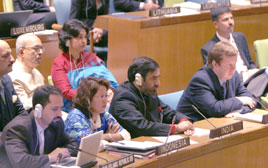 UNITED NATIONS, June 15: In a tribute to Mahatma Gandhi`s philosophy of brotherhood and peace, the UN General Assembly has unanimously declared October 2, his birth anniversary, as the "International Day of Non-Violence".
  The Minister also pointed out that it encompassed the rejection of violence against oneself, against others, against other groups, against other societies and against nature.
 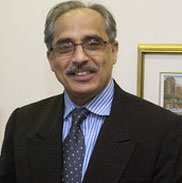 UNITED NATIONS, Jan 1: The new UN Secretary-General, Ban Ki-moon, has appointed veteran Indian diplomat, Vijay Nambiar, as his Chef de Cabinet and an award-winning journalist from Haiti, Michele Montas, as spokesperson while pledging “continuity along with change.”
  Michelle Montas similarly has experience both at the UN and beyond, having worked as an award-winning journalist in Haiti and, more recently, heading up the world body's French radio service.
 BAGHDAD,
Dec 4: UN Secretary-General Kofi Annan has said Iraq was in the
grip of a civil war as US and Iraqi forces attacked insurgent
bases in a bid to shore up the authority of a government itself
riven by factional rivalries.
BAGHDAD,
Dec 4: UN Secretary-General Kofi Annan has said Iraq was in the
grip of a civil war as US and Iraqi forces attacked insurgent
bases in a bid to shore up the authority of a government itself
riven by factional rivalries. UNITED
NATIONS, Oct 26: India seeks a fresh assessment of nuclear energy
as a clean and safe source of energy to give developing countries
the freedom to choose policies that best suit their energy needs,
Indian delegate Rahul Gandhi said here.
UNITED
NATIONS, Oct 26: India seeks a fresh assessment of nuclear energy
as a clean and safe source of energy to give developing countries
the freedom to choose policies that best suit their energy needs,
Indian delegate Rahul Gandhi said here.  Many
developing countries, including India, still rely on traditional
sources of energy for a significant part of their energy needs.
However, traditional technologies are inefficient, insufficiently
versatile and have major health, gender, and environmental impacts,
Gandhi said.
Many
developing countries, including India, still rely on traditional
sources of energy for a significant part of their energy needs.
However, traditional technologies are inefficient, insufficiently
versatile and have major health, gender, and environmental impacts,
Gandhi said. 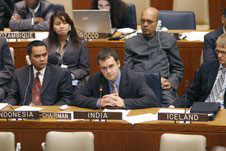 The
international community has not lived up to its commitments for
technology transfer he said putting critical technologies beyond
the reach of developing countries because of prohibitive costs
under the existing Intellectual Property Rights (IPRs) regime.
The
international community has not lived up to its commitments for
technology transfer he said putting critical technologies beyond
the reach of developing countries because of prohibitive costs
under the existing Intellectual Property Rights (IPRs) regime.
 As
a result of globalisation, external factors contribute to the
success or failure of developing countries to a greater extent
than before, Gandhi said noting that developing countries are
caught between intellectual property rights and trade regimes,
as well as the conditionalities imposed by the World Bank and
IMF, all of which erode their autonomy and flexibility.
As
a result of globalisation, external factors contribute to the
success or failure of developing countries to a greater extent
than before, Gandhi said noting that developing countries are
caught between intellectual property rights and trade regimes,
as well as the conditionalities imposed by the World Bank and
IMF, all of which erode their autonomy and flexibility.  UNITED
NATIONS, Sept 19: Addressing world leaders for the
last time as secretary-general, Kofi Annan painted
a grim picture Tuesday of an unjust world economy,
global disorder and widespread contempt for human
rights, and appealed for nations and peoples to truly
unite.
UNITED
NATIONS, Sept 19: Addressing world leaders for the
last time as secretary-general, Kofi Annan painted
a grim picture Tuesday of an unjust world economy,
global disorder and widespread contempt for human
rights, and appealed for nations and peoples to truly
unite. UNITED
NATIONS, Sept 19: US President George Bush tried to
quell anti-Americanism in the Middle East on Tuesday
by assuring Muslims that he is not waging war against
Islam, regardless of what "propaganda and conspiracy
theories" they hear. Bush
also pressed Iran to return at once to international
talks on its nuclear program and threatened consequences
if the Iranians do not.
UNITED
NATIONS, Sept 19: US President George Bush tried to
quell anti-Americanism in the Middle East on Tuesday
by assuring Muslims that he is not waging war against
Islam, regardless of what "propaganda and conspiracy
theories" they hear. Bush
also pressed Iran to return at once to international
talks on its nuclear program and threatened consequences
if the Iranians do not. WASHINGTON,
Aug 28: Shashi Tharoor, India's nominee and a leading
contender for the post of the next UN secretary-general,
has suggested a four point plan to tackle the "problems
without frontiers" facing the world body.
WASHINGTON,
Aug 28: Shashi Tharoor, India's nominee and a leading
contender for the post of the next UN secretary-general,
has suggested a four point plan to tackle the "problems
without frontiers" facing the world body.

Aviation
| Business | Defence | Foreign
Affairs | Communication | Health
| India | United Nations
India-US
| India-France | Entertainment
| Sports | Photo Gallery |
Tourism | Advertise with Us
| Contact Us
© Noyanika International, 2003-2009. All rights reserved.