


Foreign Affairs
|
PM seeks Joint mechanism with China on Chinese dams on BrahmaputraNEW DELHI, March 28: Notwithstanding pledges to take the bilateral relationship to a new level, Prime Minister Manmohan Singh in his first meeting with new Chinese President Xi Jinping has sought a joint mechanism to assess the construction work on dams on Brahmaputra river in Tibet. "I took the opportunity to raise the issue of trans-border river systems. I requested the Chinese government to provide a joint mechanism to enable us to assess the type of construction activity that is going on in the Tibetan Autonomous Region (TAR)," he told reporters accompanying him on his return today from a four-day visit to Durban in South Africa. He was asked about the discussion on the water issue he had with Xi in Durban last night on the margins of the BRICS summit in the first-high level face-to-face contact between the two countries after the change of power in China. President Xi assured him that China was quite conscious of their responsibilities and the interest of the lower riparian countries, the Prime Minister said. As regards the specific mechanism that he had asked, the Chinese President told him that they would further look into it. The Prime Minister taking up the construction work in the Tibetan region assumes signficance in the context of the Chinese proposal to build three dams on Brahmaputra which has raised concerns in India. Officials have earlier talked about a joint mechanism but this may probably the first time the Prime Minister has spoken about it and that too at the highest level. "But as of now, our assessment is that whatever activity that is taking place on the Brahmaputra region in Tibet, it is essentially a run-of-the-river projects and therefore there is no cause of worry on our part," Singh said. On his meeting with Xi, the Prime Minister said it was the first meeting between them and both agreed that they would continue to maintain the strong tradition of frequent high-level exchanges between the two countries to strengthen the ties. We also agreed that high-level visits will be exchanged this year between India and China. I look forward to the opportunity of an early meeting with the Premier of China as well," he said. Asked about his assessment of the new Chinese leadership, Singh said even before the formal meeting yesterday he had had "productive exchange" of views with Xi on the sidelines of the BRICS Summit. He said both of them agreed to continue the exchanges that the type of intimate exchanges that used to take place when President Hu Jintao and Premier Wen Jiabao were holding their positions. "Both of us agreed that we should aim to maintain similar relationship under the new leadership of China." He said the two leaders last night reviewed the entire gamut of the bilateral relations and discussed the opportunities for exchange of views in cooperation and coordination in regional and international fore. Asked about five proposals made by President Xi last week to strengthen bilateral ties with India, Singh said this was his first meeting and both of them were keen to get acquainted. "While we reviewed a whole gamut of relationship, we didn't get to specifics. I got a distinct impression that the new Chinese leadership is serious as the former leadership to promote good neibhourly relations and to find practical and pragmatic solutions to outstanding issues between our two countries," he said. BRICS is a new grouping, young with a lot of promise: ManmohanDURBAN, March 25: Hailing the BRICS as a young grouping with a lot of promise, Indian Prime Minister Manmohan Singh arrived in Durban on a four-day visit to attend the Durban Summit which could decide to launch a development bank and discuss ways to reform governance in international financial institutions. The Prime Minister was given a red carpet welcome at the King Shaka International Airport in Durban.
He was received by Minister for Justice and Constitutional Development Jeffrey Thamsanqa Radebe. Xi Jinping visit strengthens bonds with RussiaBy Ambassador Ashok Sajjanhar
The choice of the countries to be visited is full of symbolism but equally, if not more importantly, laden with geo-political and economic significance. The immediate underpinning of the visit has been provided by the fifth BRICS Summit which takes place in Durban, South Africa on March 26 and 27, 2013. As is usually the case, the Chinese Government is utilising this opportunity to arrange visits by the President to a string of close partners and send out strong signals about its interests and aspirations in the rapidly evolving and changing international scenario. In addition to Russia which is the first stopover for President Xi, the other countries to be visited include Tanzania, South Africa - both to participate in the BRICS Summit as well as on a bilateral visit - and the Republic of Congo, in that order. Before the commencement of the visit, it was being speculated that Xi will also visit Turkmenistan to send a message to Russia that it should not consider Central Asia as its backyard and state emphatically that China has considerable interests and political and economic influence in this Region. However, none of the Central Asian countries features in the list of countries to be visited on this tour. It can however be expected with reasonable certainty that President Xi will make a stopover or pay a full fledged visit to this region in not too distant a future. For an energy starved China, the Central Asian States present an important source of gas, oil and uranium which it is exploiting to the optimum and is keen to further enhance and expand this engagement in the coming years. The choice of Russia as the first port of call is extremely significant both as a signal to Washington as also as a recognition of the rapidly expanding and normalising ties between the two countries in political and economic spheres. China is also conscious of the fact that most of the oil and gas being produced by Russia finds its way to Europe to the West. China needs this energy to start flowing eastwards to meet its increasing requirements in the Xinjiang Region as well as further East. A beginning was made a few years ago when 5-10 million tonnes oil started flowing from the Russian south-western city of Omsk through the Atasu-Alashankou oil pipeline through Kazakhstan to the western region of China. This is, however, an insignificant amount in the total crude oil demand of the Chinese economy. Bilateral trade between Russia and China has been growing at an impressive pace having reached a significant level of USD 88 billion last year. Both countries also share similar positions on several international flash points and issues of discord including Syria, Iran and North Korea. China is convinced that Barack Obama's "pivot" to Asia is an euphemism for containment of China. It also looks upon the growing bonds of cooperation between India and USA with distrust and unease. China is confident that in President Putin it has a leader who will maintain its distance from USA. The proposed missile shield in Europe and NATO's gnawing expansion pushing relentlessly against the borders of Russia has been a source of much disquiet and opposition in Russia against the US expansionist policies. Both Russia and China are strongly opposed to the presence of US and NATO-ISAF forces in Afghanistan so close to their borders. This notwithstanding both these countries are also unhappy that US and NATO troops will leave in 2014. Both these countries and several other regional players have benefitted enormously by the US-NATO action to keep the terrorist forces contained within Afghanistan. However these countries also realise that the departure of US-NATO troops without "finishing the job" will transfer the responsibility of maintaining peace and ensuring that Afghanistan does not once again descend into becoming a safe haven for terrorists upon them. China realises that Russia is but a pale shadow of its predecessor the Soviet Union but it finds it a useful partner in its growing competition and fight for influence and power with USA that is bound to get sharper and more abrasive in the coming years. Significant discussions between Gazprom and Sinopec have been held and considerable progress recorded on laying a gas pipeline between the Russian fields to the energy hungry Chinese cities and industries. So far pricing of the commodity was the biggest bottle neck in the two countries reaching an Agreement but it has been reported that the matter might be inching closer to resolution. The visit to Moscow will provide an opportunity to the two leaders to get to know each other before they get to spend the time together in Durban later this month. Africa has assumed increasing importance and significance in China's matrix of calculations, not only because of the presence of large mineral wealth there but also on account of the vast tracts of arable land that China has contracted for growing wheat and other agricultural products for meeting the insatiable demand of its millions. A decision was taken at the 4th Summit in New Delhi last year to establish a BRICS Bank. Finance Ministers of the BRICS countries have been meeting each other in the interregnum and trying to sort out some seemingly intractable problems. Discussions on the evolving scenario in Afghanistan post 2014 as well as Syria and Iran are also likely to be held. These will help to throw light on how these intricate issues could be handled and hopefully resolved in the coming months. @ Ashok Sajjanhar is former Ambassador of India to Kazakhstan, Sweden and Latvia Xi wants strong military ties with Russia
Xi Jinping said his visit to the Defense Ministry on Saturday was intended to show that China and Russia will strengthen their military and political relations and improve cooperation between their armed forces. Russia's state media stressed that Xi was the first foreign leader ever to be allowed inside the Russian armed forces' Operational Command Center. He began his trip to Russia - his first outside of China since becoming president last week - by holding talks in the Kremlin on Friday with Russian President Vladimir Putin. Xi pointedly told Putin that he expected Russia and China to "resolutely back each other's efforts to protect sovereignty, security and developmental interests." Xi repeated the message in a speech Saturday to Russian and Chinese students. "Strong high-level Chinese-Russian ties not only meet our interests, but serve as an important, reliable guarantee of international strategic balance and peace," Xi said in his speech before a full auditorium at the prestigious Moscow State Institute for International Relations. Chinese students studying at other Moscow universities were among those in the audience. Under the leadership of Xi, who became Communist Party chief in November, China has stepped up its feud with Japan over a set of disputed islands believed to sit atop petroleum reserves. Xi told the students on Saturday that China rejects an arms race and is not making any threats of war. "The development and growth of China brings to other countries not threats but opportunities," he said. "The fulfillment of the Chinese dream will be good for China and for the whole world." The Chinese president spoke of a need for Beijing and Moscow to stand together to "uphold the principles of the U.N. charter," seemingly referring to their steadfast opposition to U.N. sanctions against Syrian President Bashar Assad's regime. After the Kremlin talks, Russian and Chinese officials signed agreements on deliveries of Russian oil and gas to China, which has been eager to secure greater supplies from the world's biggest energy producer. China also has shown renewed interest in buying Russian weapons after its own attempts to build up its arms industry fell short of expectations. Russia's defense minister, Sergei Shoigu, who met with Xi on Saturday, said he would hold talks on Sunday with his Chinese counterpart. Xi told Russian Prime Minister Dmitry Medvedev during their meeting on Saturday that he had achieved his goals in visiting Russia and the results had far exceeded his expectations. India, Egypt must find new ways to further strengthen ties: PranabNEW DELHI, March 20: Noting that historic Tahrir Square protests had evoked feelings of "admiration and respect" among Indians, President Pranab Mukherjee has said youths hold the key to progress of India and Egypt which must explore new ways of engagement towards nation building. "It has been now more than two years since the historic events at Tahrir Square. We, in India, watched with admiration and respect as the young crowds in Cairo chanted Selmiyya Selmiyya (peacefully, peacefully) and echoed the words of the father of our nation, Mahatma Gandhi...," Mukherjee said during a banquet for Egypt's President Mohamed Morsi at Rashtrapati Bhavan on Tuesday. Li Keqiang says China wants to take Sino-India ties to new stageBEIJING, March 18: New Chinese PM Li Keqiang has said that China wants to take Sino-India ties to new stage as PM Manmohan Singh and Li said telephonically on Saturday that enhanced bilateral cooperation will contribute to enlarging the two countries' space for development and common interests. China's legislature concluded its annual session on Sunday completing the once-in-a-decade long leadership transition with newly elected President Xi Jinping calling on the ruling Communist Party and people to rise up to realise the "Chinese Dream". State run News agency quoted Li saying that China will attach great importance to its ties with India, and would like to work with it to promote their relations of strategic cooperation and partnership to a new stage. Dr Mammohan Singh said, India is willing to work with the new Chinese leadership to explore the potential for mutually beneficial cooperation and make even greater achievement in bilateral ties so that the two countries could set an example for state-to-state relations in the 21st century. Dr Singh said, bilateral ties over the past few years have seen a comprehensive development and continuous progress in cooperation and exchanges in various fields. Meanwhile, China's long standing Foreign Minister Yang Jiechi was yesterday appointed as country's chief negotiator of India-China boundary dispute. Yang replaced Dai Bingguo, the veteran Chinese chief negotiator of India-China boundary dispute for a decade. The 3000-member National People's Conference also approved four new Vice Premiers, five State Councillors, who are ranked higher than Cabinet Ministers as well as 25 Ministers. China's legislature concluded its annual session today completing the once-in-a-decade long leadership transition with newly elected President Xi Jinping calling on the ruling Communist Party and people to rise up to realise the "Chinese Dream". Xi said at the closing meeting of the National People's Congress, China's legislature that to achieve this, we must make persistent efforts, press ahead with strong will and continue to push forward the great cause of socialism with Chinese characteristics. His address concluded the leadership transition from a decade long administration headed by Hu Jintao and Wen Jiabao paving the way for new team led by Xi and Premier Li Keqiang, who were expected to steer China for the next decade. "In face of the mighty trend of the times and earnest expectations of the people for a better life, we cannot have the slightest complacency, or get the slightest slack at work," Xi said at the closing meeting of the National People's Congress, China's legislature. Argentine Jorge Mario Bergoglio elected as 266th Pope, takes the name Francis IROME, March 13: Argentine Jorge Bergoglio was elected Pope and chose the papal name Francis, becoming first pontiff from the Americas and the first from outside Europe in more than a millennium. A stunned-looking Bergoglio shyly waved to the crowd of tens of thousands of people who gathered in St. Peter’s Square, marveling that the cardinals had had to look to "the end of the earth" to find a bishop of Rome. He asked for prayers for himself, and for retired Pope Benedict XVI, whose stunning resignation paved the way for the tumultuous conclave that brought the first Jesuit to the papacy. The cardinal electors overcame deep divisions to select the 266th pontiff in a remarkably fast conclave. Bergoglio had reportedly finished second in the 2005 conclave that produced Benedict — who last month became the first pope to resign in 600 years. After announcing ‘’Habemus Papum" — ‘’We have a pope!" — a cardinal standing on the balcony of St. Peter’s Basilica on Wednesday revealed the identity of the new pontiff, using his Latin name. The 76-year-old archbishop of Buenos Aires has spent nearly his entire career at home in Argentina, overseeing churches and shoe-leather priests. Tens of thousands of people who braved cold rain to watch the smokestack atop the Sistine Chapel jumped in joy when white smoke poured out a few minutes past 7 p.m., many shouting "Habemus Papam!" or "We have a pope!" — as the bells of St. Peter’s Basilica and churches across Rome pealed. Chants of ‘’Long live the pope!" arose from the throngs of faithful, many with tears in their eyes. Crowds went wild as the Vatican and Italian military bands marched through the square and up the steps of the basilica, followed by Swiss Guards in silver helmets and full regalia. They played the introduction to the Vatican and Italian anthems and the crowd, which numbered at least 50,000, joined in, waving flags from countries around the world. "I can’t explain how happy I am right down," said Ben Canete, a 32-year-old Filipino, jumping up and down in excitement. Elected on the fifth ballot, Francis was chosen in one of the fastest conclaves in years, remarkable given there was no clear front-runner going into the vote and that the church had been in turmoil following the upheaval unleashed by Pope Benedict XVI’s surprise resignation. A winner must receive 77 votes, or two-thirds of the 115, to be named pope. For comparison’s sake, Benedict was elected on the fourth ballot in 2005 — but he was the clear front-runner going into the vote. Pope John Paul II was elected on the eighth ballot in 1978 to become the first non-Italian pope in 455 years. Patrizia Rizzo ran down the main boulevard to the piazza with her two children as soon as she heard the news on the car radio. "I parked the car … and dashed to the square, she said. "It’s so exciting, as Romans we had to come." |

| |||||||
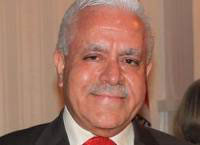 NEW DELHI, March 23: The Chinese President Xi Jinping has left the shores of his country on a four nation foreign tour within less than a week of assuming charge of the top portfolio of President of China on March 17.
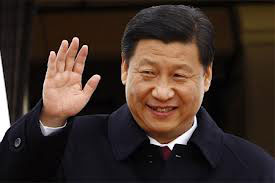 MOSCOW, March 24: The new Chinese president met with Russia's military leaders to reinforce the main message of his trip that the two countries must work together more closely if they want to counter rising US influence in Asia.
Aviation
| Business | Defence | Foreign
Affairs | Communication | Health
| India | United Nations
India-US
| India-France | Entertainment
| Sports | Photo Gallery |
Tourism | Advertise with Us
| Contact Us
© Noyanika International, 2003-2009. All rights reserved.