


Foreign Affairs
| UK riots: PM vows to fight back as unrest spreads beyond LondonLONDON, Aug 11: As Britain simmered under one of its worst riots that left three Asian-origin men dead, Premier David Cameron has said a "fightback is underway" and empowered his forces to use water cannons to crush the violent unrest that spread to central and northern cities from London. Vowing not to allow "a culture of fear" to take over the streets, Cameron said water cannons -- never used in mainland UK -- would now be made available to police, apart from plastic bullets, to deal with violence after four nights of rioting and looting by hooded youths who ransacked stores and torched vehicles. His comments came as 16,000 police officers flooded the streets of London, where clam returned, as Asian and other vigilante groups sprouted to protect their stricken neighbourhoods from roving gangs, who had also burnt down and raided houses and shopping complexes. Outside a gurdwara in Southall in west London, Sikhs vowed to protect their place of worship from the rioters. "The continued violence is unacceptable," Cameron announced after chairing the government's emergency response committee, which took stock of raging violence. "It will be stopped," the British Prime Minister said as he ridiculed the rioters as "sick". The police and the law enforcement agencies would not be short of resources and would have the full backing of the state behind them, he said, announcing that a "fightback is underway." Though a massive police presence ensured that London remained calm now, the copycat riots spread to cities of Manchester, Salford, Liverpool, Wolverhampton, Nottingham, Leicester and Birmingham. More than 1,000 people have been arrested during four nights of rioting and Cameron said Britain will set up extra courts to quickly prosecute "thugs" who indulged in looting and rioting. Three young men of Asian-origin -- two brothers Shahzad and Harry Hussain, and their friend Musaver Ali -- were knocked down by a speeding car as they were trying to guard their communities in Birmingham. Police said they were treating the deaths as murder. Cameron said the "appalling" violence that continued overnight had claimed three lives in Birmingham where police were trying to get to the bottom of the incident. "This continued violence is simply not acceptable, and it will be stopped. We will not allow a culture of fear to exist on our streets. We needed a fightback and a fightback is underway," he told reporters outside 10, Downing Street. The authorities, Cameron said, would have no hesitation in "naming and shaming" the culprits and rejected that concerns over human rights might hold back law enforcement agencies from publication of photographs of those indulging in hooliganism and violence. "There are parts of our society that are not just broken but frankly sick. When we see children of 12 or 13 looting it's clear there are things that are badly wrong in our society." Gang violence raged in other major cities of Britain after spreading there from London, where it had erupted following the death of 29-year-old Mark Duggan in police firing on Thursday. Cameron said he would make a statement in Parliament on Thursday as it meets for a day-long session to discuss the conflagration that has blighted Britain's image and raised questions over the security for next year's Olympics. In London where increased police presence brought back calm, a Downing Street spokesperson said the higher police numbers and tough police tactics last night had clearly worked. "There's a will to continue with that level of policing for as long as is needed." The strength of police in London was increased from 6,000 to 16,000 with orders to deal with any incidence of rioting and violence in a tough manner. London wore a deserted look last evening with offices and shops closed earlier than usual. There were indications that the government will reverse its decision to cut police budget that would have meant lower number of officers on the streets of London. London mayor Boris Johnson said: "This is not a time to think about making substantial cuts in police numbers." Riots spread to cities across EnglandLONDON, Aug 10: More than 470 people have been arrested after a fourth night of rioting spread from London to some of England's biggest cities, including Birmingham, Manchester, Nottingham, Bristol and Leicester. The Metropolitan police arrested 81 people on a much quieter night with 16,000 police officers from forces around the country deployed in the capital. Manchester, Birmingham and Nottingham bore the brunt of the rioting and looting overnight, with trouble also erupting in Liverpool, Salford, West Bromwich, Wolverhampton, Bristol and Gloucester. David Cameron, the prime minister, is to chair another meeting of the government's emergency Cobra committee on Wednesday to discuss the continuing unrest. Central Manchester and Salford saw serious looting and disorder as gangs waged running battles with police, ransacking dozens of shops. In Manchester groups of young people repeatedly evaded police from the late afternoon onwards, breaking into upmarket shops and setting a branch of the Miss Selfridge clothing chain on fire. As evening fell up to 200 youths raided an off-licence and other shops in the main shopping precinct of Salford, a couple of miles to the west. The violence ebbed in Manchester city centre around midnight and police regained control. Assistant Chief Constable Garry Shewan of Greater Manchester police said Manchester and Salford had been badly damaged. "These are pure and simple criminals running wild tonight," Shewan said. "They have nothing to protest against. There has been no spark. This has been senseless on a scale I have never witnessed before in my career." Greater Manchester police said they had arrested 108 people overnight, while West Midlands police arrested 109 people following scenes of disorder in Birmingham, Wolverhampton and West Bromwich. Shops including a branch of Marks & Spencer and a hi-fi store were again targeted in Birmingham with reports of a gun being fired, while there were reports of large groups of people in West Bromwich town centre and vehicles being set on fire. Police in Wolverhampton responded to reports of a large group of people in the city centre after shops were damaged. In Nottingham a police station and college were firebombed with more than 90 people arrested, while in Leicester officers arrested 13 people following disturbances in the city centre. Thames Valley police made 15 arrests linked to trouble overnight, including five people who were held in Milton Keynes for alleged criminal damage and public order offences. The Metropolitan police said 81 arrests were made across the capital overnight, including 20 men who were detained in Harlesden. Scotland Yard confirmed a fire involving a number of vehicles broke out on an industrial estate in Tottenham and its cause was being treated as unexplained. The force said a 21-year-old man had been arrested in connection with a large fire that destroyed a furniture store in Croydon on Monday. Some Londoners took to the streets to defend their homes and stores yesterday, with a number of people standing guard outside a Sikh temple in Southall. Another group marched through Enfield, in north London, aiming to deter looters. Businesses and shops across London had shut down early in a bid to avoid attack from the gangs of youths who ransacked buildings across the city over the previous days. There was also trouble in the south-west of England with police coming under attack from gangs of youths. Mounted officers were sent to combat groups of youths attacking shop windows, some with their faces covered, in Gloucester city centre overnight, while a significant fire broke out in the Brunswick area. Gloucestershire police said nine arrests were made. In Bristol police arrested 19 people following a second night of trouble. There were small outbreaks of disorder reported by Thames Valley police in Reading, Oxford and Milton Keynes, while 200 missile-throwing youths gathered in the south Liverpool area of Toxteth, causing disorder and damage, according to Merseyside police. The force said 35 arrests were made. More than 1,100 people have been arrested since the violence erupted in London on Saturday night — 768 of them in the capital alone. Parliament will be recalled for a day on Thursday to discuss the situation. David Cameron has pledged to speed up court procedures to deal with the "many more" arrests expected as police scour hundreds of hours of CCTV for evidence about those responsible for the violence. He warned the young people involved in the riots: "You will feel the full force of the law. And if you are old enough to commit these crimes, you are old enough to face the punishment." The violence first erupted in Tottenham, north London, on Saturday night after a peaceful protest over the fatal police shooting of Mark Duggan, 29, the previous Thursday. The Independent Police Complaints Commission (IPCC) confirmed that there was no evidence that Duggan fired at officers before he was shot in the chest. Duggan's family have said they are "deeply distressed" by the disorder across the country that has followed his death. Libya: Nato Bomb 'Kills Dozens Of Children' TRIPOLI, Aug 10: A Nato airstrike near Tripoli has killed 85 people, including dozens of women and children, Libyan officials have claimed. Among the dead were 33 children, 32 women and 20 men, he added. However, Nato has said the airstrike hit a legitimate military target. Reporters have been taken to the scene, where they were told by Moussa Ibrahim: "This is a crime beyond imagination. Everything about this place is civilian." Footage was provided that apparently showed people searching through the rubble to retrieve human remains, including the bodies of two children. A Reuters journalist has reported counting 20 body bags at the hospital in Zlitan, some stacked on top of each other - and the Gaddafi regime claims this is where the victims were taken. Although most of the dead at the hospital appeared to be men, some were children. One bag contained the body of a child aged about two. There was condemnation of Nato at a burial in Majar attended by hundreds of people. Abdulkader al-Hawali, a medical student at Zlitan hospital, said: "They [Nato] do not differentiate between soldiers, children and old people." But a Nato military spokesman has said the airstrike hit a "legitimate target" and has "reduced the pro-Gaddafi forces' ability to threaten and attack civilians". Colonel Roland Lavoie added: "We do not have evidence of civilian casualties at this stage, although casualties among military personnel, including mercenaries, are very likely due to the nature of the target." Nato forces have been carrying out regular attacks, from both air and sea, on targets around Zlitan, where it says pro- Gaddafi forces are killing civilians trying to end his 41-year rule. Gaddafi has denied those claims and insists the bombing campaign is an act of colonial aggression aimed at stealing Libya's oil. Riots spread through UK citiesLONDON, Aug 9: A wave of violence and looting raged across London and spread to three other major British cities on Tuesday, as authorities struggled to contain the country’s worst unrest since race riots set the capital ablaze in the 1980s. In London, groups of young people rampaged for a third straight night, setting buildings, vehicles and garbage dumps alight, looting stores and pelting police officers with bottles and fireworks. The spreading disorder was an unwelcome view of London’s volatility for leaders organizing the 2012 Summer Olympics in less than a year. Police called in hundreds of reinforcements -- and made a rare decision to deploy armored vehicles in some of the worst-hit districts -- but still struggled to keep pace with the chaos unfolding at flashpoints across London, in the central city of Birmingham, the western city of Bristol and the northwestern city of Liverpool. The riots appeared to have little unifying cause -- though some involved in the violence claimed to oppose sharp government spending cuts, which will slash welfare payments and cut tens of thousands of public sector jobs through 2015. Others appeared attracted simply by the opportunity for violence. “Come join the fun,” shouted one youth, racing along a street in the east London suburb of Hackney, where shops were attacked and cars torched. Prime Minister David Cameron reversed an earlier decision and cut short his summer vacation in Italy, heading home for a meeting of the national crisis committee on Tuesday morning. The crisis will be a major test of Cameron’s coalition government, which includes members who had long suspected its program of tough budget restraints could provoke popular dissent. Mr. Cameron was expected to seek to toughen the response in meetings with ministers and police chiefs on Tuesday. Some communities complain that stretched police were simply unable to reach some of the fast-spreading unrest. Rioters were left virtually unchallenged in several neighborhoods and able to plunder from stores at will or attempt to invade homes. Restaurants and stores closed early across London, fearful of looting. Disorder flared throughout the night, from gritty suburbs along the capital’s fringes to central London’s famously posh Notting Hill neighborhood. London’s Ambulance Service said it had treated 16 patients, of whom 15 were hospitalized. Police said 334 people had been arrested and 69 people charged with offenses. Three people were arrested on suspicion of the attempted murder of a police officer left hospitalized after he was struck by a car in the early hours of Tuesday. The officer, who is in a stable condition, had stopped a number of cars in Brent, north London, following looting at a nearby electrical store. Police said one car drove away, striking the officer and a colleague, who suffered minor injuries. The vehicle was later stopped again and three people arrested on suspicion of attempted murder. Violence first broke out late Saturday in the low-income, multiethnic district of Tottenham in north London, where outraged protesters demonstrated against the fatal police shooting of Mark Duggan, a 29-year-old father of four who was gunned down in disputed circumstances Thursday. A brief inquest hearing into Duggan’s death will take Tuesday, though it will likely be several months before a full hearing is convened. Duggan’s death stirred old animosities and racial tensions similar to those that prompted massive riots in the 1980s, despite efforts by London police to build better relations with the city’s ethnic communities after high-profile cases of racism in recent decades. But, as the unrest spread, some pointed to rising social tensions in Britain as the government slashes 80 billion pounds ($130 billion) from public spending by 2015 to reduce the huge deficit, swollen after the country spent billions bailing out its foundering banks. In the south London district of Croydon, police said a 26-year-old man was shot and seriously injured Monday but were unable to say immediately whether the incident was linked to rioting there. A massive blaze ravaged a 100-year-old family run furniture store in Croydon and sent thick plumes of smoke into the air, forcing nearby homes to be evacuated. In the Clapham Junction area of south London, a mob stole masks from a fancy dress store to disguise their identities and then set the building on fire. Sony Corp. said a major blaze had broken out at its distribution center near Enfield, north London, damaging stocks of DVDs and other products. So many fires were being fought in the capital that Thames Water, which supplies most of London, warned that some of its customers could see their water pressure drop. Dozens of people attacked shops in Birmingham’s main retail district, and clashed with police in Liverpool and Bristol {hbox}” spreading the chaos beyond London for the first time. In Hackney, hundreds of youths left a trail of burning trash and shattered glass. Looters ransacked a small convenience store, filling plastic shopping bags with alcohol, cigarettes, candy and toilet paper. “This is the uprising of the working class. We’re redistributing the wealth,” said Bryn Phillips, a 28-year-old self-described anarchist, as young people emerged from the store with chocolate bars and ice cream cones. Phillips claimed rioters were motivated by distrust of the police, and drew a link between the rage on London’s street and insurgent right-wing politics in the United States. “In America you have the tea party, in England you’ve got this,” he said. Police acknowledged Tuesday that major new bouts of violence had flared in at least five locations, badly stretching their resources. “The violence we have seen is simply inexcusable. Ordinary people have had their lives turned upside down by this mindless thuggery,” police commander Christine Jones said. Though the unrest escalated through Sunday as disorder spread among neighboring areas, the crisis worsened Monday -- with violence touching areas in the east and south of London previously untroubled by the chaos. Some residents called for police to deploy water cannons to disperse rioters, or call on the military for support and questioned the strength of leadership within London’s police department -- particularly after a wave of resignations prompted by the country’s phone-hacking scandal. “I have never seen such a disregard for human life. I hope they rot in hell. The grief they have caused people, the fear they have put in people’s hearts, decent people who have done nothing to anyone,” said Alan McCabe, a resident in Croydon watching the violence unfold. About 100 young people clashed early Tuesday with police in the Camden and Chalk Farm areas of north London, smashing their way into a bicycle store and mobile phone shop. The small groups of youths -- most with their heads and faces covered --used SMS messages, instant messaging on BlackBerry smartphones and social media platforms such as Twitter to coordinate their attacks and stay ahead of the police. Once the preserve of businesspeople, BlackBerry handsets are popular with teenagers, thanks to their free, fast instant messaging system. Blackberry’s manufacturer, Research in Motion, said in a statement that it was assisting authorities in their investigation and “feel for those impacted by the riots in London.” Police were also monitoring Twitter, and warned that those who posted messages inciting the violence could face arrest. In the Peckham district of south London, where a building was set ablaze along with a bus -- which was not carrying passengers -- onlookers said the scene resembled a conflict zone. Cars were torched in nearby Lewisham, and in west London’s Ealing suburb the windows of each store along entire streets had been smashed. “There’s been tension for a long time. The kids aren’t happy. They hate the police,” said Matthew Yeoland, a 43-year-old teacher watching the unrest in Peckham. “It’s like a war zone and the police weren’t doing anything. There were too many people and not enough police.” Police said Duggan was shot dead last week when police from Operation Trident {hbox}” the unit that investigates gun crime in the black community -- stopped a cab he was riding in. The Independent Police Complaints Commission, which is investigating the shooting, said a “non-police firearm” was recovered at the scene, and media reports said a bullet had been found in an officer’s radio. However, the Guardian newspaper reported that the bullet in the radio was police-issue, indicating Duggan may not have fired at the officer. Duggan’s partner, Semone Wilson, insisted Monday that her fiance was not connected to gang violence and urged police to offer more information about his death. But she rejected suggestions that the escalating riots were linked to protests over his death. “It got out of hand. It’s not connected to this anymore. This is out of control,” she said. “It’s nothing to do with the man who was shot, is it?” said 37-year-old Marcia Simmons, who has lived in Tottenham, an ethnically diverse north London neighborhood, all her life. “A lot of youths ... heard there was a protest and joined in. Others used it as an opportunity to kit themselves out, didn’t they, with shoes and T—shirts and everything.” The past year has seen mass protests against the tripling of student tuition fees and cuts to public sector pensions. In November, December and March, small groups broke away from large marches in London to loot. In the most notorious episode, rioters attacked a Rolls-Royce carrying Prince Charles and his wife Camilla to a charity concert. However, the full impact of spending cuts has yet to be felt and the unemployment rate is stable -- although it remains highest among youth, especially in areas like Tottenham, Hackney and Croydon. Some people caught up in the unrest insisted that joblessness was not to blame. “It’s just an excuse for the young ones to come and rob shops,” said Brixton resident Marilyn Moseley, 49. Police urged communities to help clear the streets of people, and called on families to contact their children and ensure that they were not involved in the chaos. An 11-year-old boy was charged with burglary by police, and at least 100 of those arrested were aged 21 or younger. About 35 police officers had been injured in the violence, police said. Home Secretary Theresa May, the Cabinet minister responsible for policing, and London Mayor Boris Johnson also cut short summer vacations in an attempt to deal with the crisis. Police in the city of Birmingham, 120 miles (195 kilometers) north of London, confirmed that officers had arrested 35 people amid disorder across the city center, where shops were being vandalized. In Bristol, police urged residents to avoid the city center after 150 rioters went on the rampage. In the south London neighborhood of Brixton {hbox}” the scene of riots in the 1980s and 1990s -- youths smashed windows, attacked a police car, set fire to garbage bins and stole video games, sportswear and other goods from stores on Sunday night. Tottenham and Brixton are impoverished areas with ethnically diverse populations, large black communities and histories of unrest. Tottenham was the site of the 1985 Broadwater Farm riots, a series of clashes that led to the fatal stabbing of a police officer and the wounding of nearly 60 others -- and underscored tensions between London police and the capital’s black community. On Saturday, two police cars and a double-decker bus were set alight, stores were looted and several buildings along Tottenham’s main street -- five miles (eight kilometers) from the site of the 2012 Olympics -- were reduced to smoldering shells. West Ham, a football team in east London, confirmed it had canceled a match planned for Tuesday as a precaution. However, the national Football Association insisted that a scheduled international friendly match between England and the Netherlands would go ahead at Wembley Stadium on Wednesday. The International Olympic Committee insisted it had confidence in British authorities. “Security at the Olympic Games is a top priority for the IOC,” spokesman Mark Adams said. UK riots: India, England cricketers confined to hotel roomsLONDON, Aug 9: With the fast-spreading London riots raising massive security concerns, Indian and English cricketers have been asked to confine themselves to their hotel rooms ahead of the third Test starting on Wednesday. Over 200 people have been arrested so far as the police continued to grapple with trouble spreading to newer areas in London. The violence started after a person was killed allegedly in police firing. The unrest has since spread to Birmingham as well and the Indian and English cricketers have been reportedly asked to stay indoors to avoid trouble, a media report said. Indian batsman Suresh Raina tweeted, “Good nite, every thing safe here miss you mom can't wait to see u”, while England batsman Kevin Pietersen wrote, “They have just locked our hotel in Birmingham. Riots just started here. Insane!” England bowler Tim Bresnan said on his Twitter account: “Just seen the rioters in Birmingham fleeing down the main street followed by a load of police in the full get up. What's going on?” India inks defence cooperation pact with Mongolia
India and Mongolia also inked two pacts on media exchanges and cooperation between their planning commissions in the presence of President Pratibha Patil, who is in Ulaanbaatar, Mongolia on a three-day visit. Patil is the first Indian President to visit Mongolia in 23 years. After her half-an-hour restricted talks with this country's leadership, Patil said her parleys with President Tsakhia Elbegdorj were held in a warm, friendly and cordial atmosphere. "My visit seeks to strengthen our relationship, building upon the momentum generated by the visit of President Elbegdorj to India in September 2009, when our ties were expanded to a comprehensive partnership," she said.
A bilateral defence cooperation agreement was also signed, she said. "...India is willing and ready to expand collaboration in this sphere." Besides, she said that New Delhi will extend a Line of Credit of USD 20 million for the 'IndiaMongolia Joint Information Technology, Education and Outsourcing Centre' to be established in Ulaanbaatar. The two countries also discussed ways to further cooperation in the peaceful use of radioactive minerals and nuclear energy. "We also agreed to explore the possibilities of improving air connectivity between our two countries so as to enhance contacts between our peoples, including through tourism," Patil said. With an MoU on media exchanges signed between the two governments, "we can now hope to see more media persons from Mongolia in India. We will also send more Indian journalists here," she said. The agreements were signed in a grand hall at the National Assembly. Patil, who arrived in Ulaanbaatar on Wednesday following her three-day visit to South Korea, visited the historic Sukhbaatar square on Thursday and offered floral tributes to a statue of Mahatma Gandhi in Ulaanbaatar. Members of the Indian community sang a song in praise of the Father of the Nation. The President was given a ceremonial welcome by the Mongolian security services personnel at the Sukhbaatar square, which has a grand statue of Genghis Khan. She took salute from the force during the grand ceremony and said 'thank you' in Mongolian language, which was applauded by a number of people present at the event, including politicians and officials. Mongolia is celebrating the "Year of Anniversaries", including the 805th anniversary of the establishment of the Great Mongolian State under the leadership of the legendary Genghis Khan and 90th anniversary of the Mongolian Independence and Sovereignty. Patil stressed on reviving Mongolia's contacts with Nalanda University, which is being rejuvenated as a regional seat of learning and excellence, in particular of Buddhist studies. "It is encouraging that we also share other values such as democracy, rule of law and upholding the rights of the individual. This forms the bedrock of our bilateral cooperation," Patil said. "My discussions with President Elbegdorj today were wide-ranging and covered the entire gamut of our bilateral relations as well regional and global issues of mutual interest," she said. India will also upgrade and modernise the Rajiv Gandhi Art and Production School as well as the Atal Bihari Vajpayee Centre of Excellence in Information and Communication Technology in Ulaanbaatar. "We will complete this work soon. Further, we have agreed to work together on a joint IndiaMongolia School," Patil said. Mongolia is spread in an area of 1.565 million square km and has a population of about 2.7 million. About 92 per cent of its population follows Buddhism and the country shares its border with China and Russia. India exports pharma products, veterinary medicines, automobiles and their parts to this country and the bilateral trade has touched USD 16.9 million. India has also decided to increase the number of slots available to Mongolia under the Indian Technical Education Cooperation (ITEC) Programme to 150. "The number of Indian Council of Cultural Relations (ICCR) scholarships available to Mongolia will be increased to 50. India will assist in human resource development and capacity building efforts of Mongolia," Patil said. Extending her support to Mongolia "in any way," she thanked the country for backing India's bid for the permanent membership of an expanded United Nations Security Council. Hina: India for normalising ties with Pakistan
Without once denying the divergences that exist in views on various outstanding issues, Ms. Khar's counter to questions on India's refusal to meet Pakistan halfway on Kashmir was: “What would you prefer: Allowing these differences to widen or work together to build bridges.” Speaking to journalists on her arrival, the Minister said India was sending out positive feelers and “let us accept that the 2008 Mumbai terror attacks are a sensitive issue for Indians.” Addressing the Pakistani peeve over India making the dialogue process hostage to the Mumbai terror attacks, she said: “We have told them there is no intentional delay on the part of Pakistan in bringing the accused here to book and pointed out the delays in their processes also.” On the vexed water issue — something that analysts say has the potential to become as sore as Kashmir — Ms. Khar said both countries were one in wanting to maintain the sanctity of the Indus Waters Treaty (IWT). In fact, she added, it was extremely important for Pakistan by virtue of being a lower riparian State. Stating that sky was the limit as far as bilateral trade is concerned, Ms. Khar said both countries were well aware of the challenges in the relationship but were equally determined to have an honest dialogue to work through the problems in the hope of creating a friendly neighbourhood. New Delhi, Seoul sign civil nuclear agreement
After a restricted meeting between President Pratibha Patil and her South Korean counterpart Lee Myung-bak, followed by delegation-level discussions, the civil nuclear agreement was signed by Srikumar Banerjee, Atomic Energy Secretary, and Kim Sung-Hwan, South Korean Minister for Foreign Affairs and Trade. Officially it was stated this reflected the strategic partnership which already existed between the two countries. While two more agreements were signed on culture and sports and media exchanges as well as social security arrangements for Indian professionals working here, India did also explore the possibility of South Korea using Indian Space Research Organisation facilities for launching its satellites.
Ms. Patil had told the South Korean President that India's facilities in this sector were of high quality and available at competitive prices, Mr. Singh said. Defence cooperation also came up for discussion. India is planning to open a Defence Attache's office in Seoul. In the context of recent threats to shipping, it was felt that there was a possibility of increased naval and Coast Guard cooperation. The South Korean Defence Minister is expected to visit India later this year. Reviewing implementation of the Comprehensive Economic Partnership Agreement, both sides were satisfied that it had yielded the desired results. There was a view, however, that Indian pharma products and IT services could do better here. Seoul could help to enhance market access for these products. South Korean investment in India was over $2 billion and New Delhi would welcome more, especially if Korean companies made India their manufacturing base. With a view to ensuring better people-to-people contact, it was decided to ask civil aviation authorities of both countries to explore the possibility of operating more direct flights. Currently, about 1,00,000 Koreans visit India and half that number of Indians go to Korea. In the morning, Ms. Patil garlanded a bust of Rabindranath Tagore, installed at a busy road junction here earlier this year and unveiled in May by Lok Sabha Speaker Meira Kumar. A verse written by the poet about Koreans being lamp-bearers of Asia is fondly remembered here. The Republic of Korea is the 19th country visited by President Pratibha Devisingh Patil since she took the oath of office exactly four years ago on July 25 and coincidentally, both she and Korean President Lee Myung-bak celebrate their birthdays on December 19. It was on July 25 last year that the Rashtrapati Bhavan became the first urban habitat in the country to get ISO 14001 certification. Rashtrapati Bhavan officials travelling with her say the President has taken a keen interest in ensuring that the Rashtrapati Bhavan estate becomes a model of environment conservation. From water harvesting and boosting groundwater to conserving energy, the President has led the way. At least 87 killed in Norway twin attacks: policeOSLO, July 22: Twin shooting and bomb attacks in Oslo and a nearby island have killed at least 87 people, a Norwegian police spokesman said on Saturday. “We have confirmation that at least 80 people are dead. We do not exclude a higher toll," said Are Frykholm, speaking of the massacre at a youth camp on the island of Utoeya. Seven others died in a powerful bomb blast in central Oslo. Earlier reports said at least 10 people died in the island while seven perished in a bombing in central Oslo. The bombing in the heart of the capital, where the prime minister's office and several government buildings are located, also left nine people critically injured. The gunman has been identified as a 32-year-old Norwegian. According to the TV2 channel, he has links to right-wing extremists and possessed two weapons registered in his name. French FM: Gaddafi can stay, but to leave powerMADRID, July 22: Over four months now since the war broke on Libya, France says Libyan leader Muammar Gaddafi can stay in his country as long as he commits to relinquishing power. Alain Juppe, French Foreign Minister, said, "Gaddafi has to leave power. He has to clearly give up any civil and military responsibility. For us, that is a condition that could lead to a cease-fire and to resume a national dialogue. Whether he stays in Libya or not? That's for Libyans and nobody else to decide. Now, I am aware of the fact that the National Transition Council has its own views about it." Juppe made the remarks after a meeting with his Spanish counterpart, Trinidad Jimenez, in the Spanish capital, Madrid. As the chief instigator of the intervention against Gaddafi, France has been keen to prevent NATO-led military action dragging on interminably. Juppe's latest stance echoes growing calls for a non-military solution to the conflict in Libya. Bangladesh's highest state honour for Indira Gandhi
"The cabinet has decided to confer Mrs Indira Gandhi with our highest state honour, 'Bangladesh Swadhinata Sanmanona'. So far she would be the lone recipient of the honour," Prime Minister Sheikh Hasinas press secretary Abul Kalam Azad told the news agency today. It decided to confer the highest state honour on the assassinated Indian prime minister for her "tremendous contribution" to the country's Liberation War. "The daughter-in-law of Mrs Gandhi and Indian Congress Party president Sonia Gandhi will receive the award from President Zillur Rahman on July 25 at Bangabhaban presidential palace at a special ceremony," Azad said. The Pakistan army conducted widespread atrocities against the civilian populations of East Pakistan, which later became Bangladesh. The late Indian premier traveled across the world to mobilise support for the people of East Pakistan amid a massive crackdown on civilians by the Pakistan Army. According to official figures, Pakistani troops, aided by local collaborators, killed an estimated 3 million people, raped about 200,000 women and forced millions more to leave their homes during the bloody nine-month guerrilla war. India had to face a huge refugee crisis as an estimated one crore people fled their homes to evade atrocities by the Pakistani troops. Earlier reports said that the government also plans to rechristen an important road in the memory of the former Indian prime minister. A separate monument would also be built to honour Indian defence personnel martyred in the 1971 war. Former Indian Foreign Minister Sardar Swaran Singh, who played a significant role, will be accorded special honour as well, according to sources. Azad said the cabinet also decided to acknowledge the contribution of 47 other "foreign friends" and five international organisations to the countrys independence movement. They would be conferred with awards under two categories, 'Muktijuddho Sanmanona' and 'Muktijuddho Maitree Sanmanona'. Hasinas press secretary did not name the recipients of the awards in second and third categories. But officials familiar with the process said the list had distinguished foreigners, including former heads of states and governments and organisations such as the International Red Cross. They would be honoured on December 16, 2011, coinciding with the countrys 40th Victory Day. Sonia will visit Dhaka on July 25 at the invitation of Hasina to open an international autistic conference. "Sonia Gandhi wears many hats. She is a family member of Indira Gandhi who was our great friend during our war for freedom, the President of Congress and the Chairperson of UPA. We are very much looking forward to the visit of Sonia Gandhi," Bangladesh Foreign Minister Dipu Moni told reporters earlier this month. Earlier, a high-level national committee had been set up to prepare a list 500 foreign friends to be honoured. It included 226 Indians and 40 Pakistanis. However, the government subsequently shortlisted 47 of them and five organisations to be honoured in December. Shahriar Kabir, the committee's member and Liberation War researcher, told the news agency that Bangladesh missions abroad would organise special functions in the near future to honour others on the list (of 500 people) in their home countries. On March 26, 1971, Bangladesh - then East Pakistan -declared its independence from West Pakistan. The Pakistan Army surrendered to the allied forces of the Indian army and the Mukti Bahini on 16 December 1971, which resulted in Bangladesh becoming an independent nation. ASEAN to resume direct talks with nuclear weapon states in AugustJAKARTA, July 18: The 10-member Association of Southeast Asian Nations will resume direct consultations with five nuclear-weapon states in the first week of August in Geneva, ending a nearly decade-long suspension of the talks. The decision was made at the conclusion of an ASEAN Working Group meeting on the Southeast Asia Nuclear Weapon Free Zone Treaty, part of the ASEAN meeting and related talks from July 16-23. According to the officials, nuclear disarmament experts from ASEAN countries are expected to launch the new round of "direct informal consultation" with the five nuclear-weapon states to resolve outstanding issues that have barred the nuclear powers from ratifying the 1995 treaty. The five nuclear-weapon states, simply called P5, are Britain, China, France, Russia and the United States. "For the past 10 years, we did not reach yet a common position among the ASEAN parties to SEANWFZ in preparing the accession of the nuclear weapon states to the SEANWFZ treaty," I Gusti Ngurah Swajaya, Indonesian permanent representative in ASEAN, told a press conference yesterday. The achievement of a common position among the ASEAN nations is a major step, while talks initiated by the United States among it, Russia, the United Kingdom and France, would hopefully also yield progress, he added. China has openly said it is ready to sign the protocol of the treaty. The treaty binds the members not to develop, manufacture, acquire, possess or have control over nuclear weapons, nor to station or transport nuclear weapons by any means. Its protocol calls on the nuclear-weapon states to respect the status of the zone and not to use or threaten to use nuclear weapons against states party to the treaty. The protocol is open to signing by the five nuclear-weapon states, but none of them has so far signed. An ASEAN official expressed hope that the parties would be able to expedite the negotiations. "For ASEAN countries, we prefer not to amend the treaty as it will require a lengthy parliamentary process in each member states. We hope to be able to settle the issue with a political approach," the official said. The nuclear-weapon states, except China, earlier said they cannot sign the treaty in its present form, mainly because of the protocol's inclusion of continental shelves and exclusive economic zones stretching up to 200 nautical miles from the land of signatory states. Envoys say Gaddafi ready to go, says French FMPARIS, July 12: France's foreign minister said today Paris has had contact with emissaries from Muammar Gaddafi who say the embattled Libyan strongman is "prepared to leave." Alain Juppe said that while the contacts do not constitute proper negotiations, "everyone (involved in Libya's civil war) has contacts with everyone else. The Libyan regime sends its messengers all over, to Turkey, to New York, to Paris. "We receive emissaries who are saying, 'Gaddafi is prepared to leave. Let's discuss it.'" France was instrumental in launching the Nato-led operation of airstrikes against Gaddafi's forces, in a UN-mandated mission to protect civilians resisting his four-decade regime. French officials have insisted that Gaddafi's giving up power is key to ending the hostilities, which began in mid-March, and Juppe said that more and more countries are now in agreement on that point. "There is a consensus on how to end the crisis, which is that Gaddafi has to leave power," Juppe said. "That (consensus) was absolutely not a given two or three months ago. "The question is no longer whether Gaddafi is going to leave power, but when and how," he added. Parliament is due to vote later today on whether to continue French participation in the operations in Libya. French law requires parliamentary approval for all military campaigns lasting more than four months. The Libya operation has wide support among lawmakers from both the governing conservative party and among the opposition socialists, and the vote is expected to pass with a broad majority. India extends diplomatic recognition to South SudanNEW DELHI, July 9: India has become one of the first nations to accord diplomatic recognition to South Sudan, the world's youngest country which split away from Khartoum-ruled north after decades of brutal war that claimed nearly two million lives. The recognition was accorded through a letter by Prime Minister Manmohan Singh to South Sudan's new President General Salva Kiir Mayardit, shortly after he assumed power at the Independence Day function in Juba on Saturday. "On this historic occasion, the government of India extends formal recognition to the independent state of South Sudan," the Prime Minister's letter said. The letter was handed over to General Mayardit by India's ambassador to Sudan A K Pandey, Secretary (East) in the Ministry of External Affairs Sanjay Singh told reporters. Officials accompanying Vice President Hamid Ansari, who attended South Sudan's independence day function, said that India would soon be appointing its Ambassador in Juba. At present, India has a Consul General in Juba. A colourful ceremony, which marked the historic occasion -- the birth of a new nation, was attended among others by Sudanese President Omar Al-Bashir and UN chief Ban Ki-moon. South Sudan would hence be the 193rd country to be recognised by the UN and the 54th member state from Africa. Earlier on Friday, Sudan extended official recognition to South Sudan, calling it an independent state. Before attending the independence day celebration in Juba on Saturday, Ansari held wide-ranging talks with Ugandan President Yoweri Kaguta Museveni. They discussed piracy emanating from Somalia and agreed that the menace on the high seas should be dealt with in a multi-pronged manner The two leaders also discussed the situation in Libya and agreed with the view and efforts of the African Union that the conflict there should be resolved through dialogue, Singh said. The situation in India's neighbourhood, including Afghanistan, also figured prominently during the parleys. Besides, the two sides discussed issues relating to Indian investment in Uganda which is to the tune of over a billion dollar now, Indian High Commissioner to Uganda S Ray said. The Indian side conveyed to Kampala that Indian corporate sector was keen on investing in the region and last year itself people of Indian-origin in Uganda and other Indians had invested nearly USD 300 million. Issues relating to trade and investment in industry, technology, agriculture, including tea and dairy sectors, besides those in the fields of education, human resource development and capacity building also figured during the talks. Indian investment in oil sector in Uganda also came up for discussion during Ansari's talks with the Ugandan President on Friday, Ray said. Ansari to represent India at South Sudan independence functionNEW DELHI, July 7: Vice President Hamid Ansari will be among a host of foreign dignitaries to witness the celebrations to mark the birth of oil-rich South Sudan, the world's newest nation, on Saturday, reflecting India's deep commitment to strengthen ties and concretise the road map with Africa. Ansari, who leaves New Delhi on Friday to join the independence ceremony in Juba, the capital of the the world's 193rd country, will also hold a bilateral meeting with Ugandan President Yoweri Museveni in Kampala enroute to South Sudan. South Sudan had reached a comprehensive peace agreement with North Sudan in 2005, brokered by US Secretary of State Colin Powell under former President George W Bush, that stopped a two-decade-long civil war and paved the way for a referendum in January this year. Ansari, who will be in Kampala on Friday, will meet the Ugandan President to work towards further deepening and widening of bilateral relations between the two countries with a focus on regional and international issues. Yingluck Shinawatra to lead five-party coalition in Thailand
A day after The Pheu Thai party swept the national polls, it announced an accord with four other parties for a coalition. Yingluck, whose party has on itself won a majority of 265 seats in the 500-seat lower house of parliament, said the agreement would boost her coalition to a strength of 299 seats. The Democrat Party, which has led a coalition government for more than than three years, will now sit in the opposition. The other components in the coalition would be Chartthaipattana with 19 seats, Chart Thai Pattana Puea Pandin with and Palang Chon with seven each Mahachon with a single seat. The 299 MPs should be enough to ensure a solid majority, she said. Yingluck said the most urgent task for her administration would be to forge a national reconciliation in a politically-divided country that witnessed violent clashes last year resulting in the 90 deaths. Former premier Thakshin, meanwhile, said in Dubai where he lives on self-imposed exile, that he had no intention or desire to return to politics. "I've been with the party too long, and I really want to retire. Actually, I announced when I was in office that I planned to retire when I was 60... I'm 62. It's long overdue for me," he said. Thakshin replied in negative when asked if he wished to be prime minister again. "Going back (to Thailand) is not necessarily to be going back to politics," he said. Thakshin has described his younger sister Yingluck, a political novice, as his 'clone'. Yingluck also extended support to the Truth for Reconciliation Committee appointed by the Democrats-led government and said an independent working group would be set by the new government. She also said the new government would be required to restore the economy, rebuild morale and good governance of the bureaucracy, get rid of corruption and assure the public that all political parties are subject to scrutiny, the Bangkok Post said. Earlier, the outgoing Prime Minister Abhisit Vejjajiva resigned as leader of his Democrat Party today owning responsibility for the crushing defeat at the hands of the opposition. Yingluck, who led her Pheu Thai (For Thais) party to a resounding victory and is all set to be the country's first woman prime minister. "I have decided to resign because I could not lead my party to victory in the elections," the suave Oxford-educated Abhisit said. Democrat Party members will now meet to select a new leader. Abhisit, whose government was criticised heavily for a crackdown on pro-Thakshin Red Shirt protesters last year, had assumed office in 2008. Where is Jiang Zemin?BEIJING, July 6: Several days since he failed to show up at the Communist Party of China's 90th birthday party, the Chinese Internet is increasingly buzzing with rumors that former President Jiang Zemin is dying or dead. There's been no word on Jiang since his high-profile absence from the CCP's party on July 1 and China's rumor mill seems to be working overtime on speculation, based on what may well be nothing. The rumors underscore the secrecy under which China's top leaders still live. Jiang ruled the country for a decade following the Tiananmen Square crackdown and ensuing political disaster of 1989. In a frenzy of postings on Chinese websites, gossips are speculating that the former president is hospitalized, ill beyond hope, and possibly already dead. Jiang's health has been the subject of rumors and intrigue before. Previous rumors have held that Jiang suffers from Parkinson's disease, though there's never been official comment on the matter. Thailand to have first woman Prime Minister
Thai Prime Minister Abhisit Vejjajiva conceded that Yingluck had won the nation's election and congratulated her for being the first female Prime Minister. Yingluck, 44, the telegenic youngest sister of former premier and telecoms billionaire Thaksin Shinawatra, who is on a self imposed exile in Dubai and has been out of Thailand since the coup five years ago when he was ousted. Yingluck dubbed as Thaksin's political proxy will be the 28th prime minister of the country, which has a history of military coups and political instability. With over 90 per cent of votes counted, Puea Thai had won 260 seats out of 500. It is well ahead of the Democrats with 163, according to the Election Commission. "The outcome is clear -Puea Thai has won the election and the Democrats are defeated," Abhisit told supporters at the party's Bangkok headquarters. Exit polls had shown that Yingluck's party may take more than 300 of the 500 seats in the House of Representatives enabling the party to form its own government without looking for coalition partners. Exit polls showed that Yingluck's Pheu Thai party with a wide lead over Abhisit's Democratic Party. "Thank you to the people who came out to vote," the beaming businesswoman said after victory at the polls. The general elations were the first major electoral test for the elite-backed government since mass demonstrations by Thaksin's "Red Shirt" supporters last year paralysed Bangkok and unleashed the worst political violence in decades. Today's elections may bring to an end the last few years of unrest between supporters of Thaksin and the Democrats and Royal supporters. The Pheu Thai party is allied with Thaksin Shinawatra, who was ousted as prime minister the 2006 military coup. Tensions between the Democratic Party and the Pheu Thai party erupted last year, with protests against Abhisit's government leading to a military crackdown resulting in 90 deaths and hundreds injured. Abhisit became the prime minister after he was put in office in 2008 by a parliamentary vote after the court dissolved the previous pro-Thaksin ruling party. However, it is not yet clear what will be the status of Thaksin, who faces an arrest warrant. China sentences Filipina to death for drug smugglingMANILA, July 1: A Filipina teacher was sentenced to death for smuggling heroin into China, three months after three drug mules from the Philippines were executed, the foreign ministry in Manila said on Friday. The woman, who was not named, was sentenced last week the ministry said, quoting a report from the Philippine consulate in Guangzhou. "She was arrested for drug-smuggling in October 2010 at the international airport in Guangzhou, for carrying 1,996 grams (67 ounces) of heroin concealed in a foil packet," in her suitcase, the ministry said in a statement. Although the case will be brought to the Guangdong High People's Court for automatic review, the ministry warned that China was known for its "firm stance" in drug-smuggling cases. The woman, however, was given a two-year reprieve, according to the ministry. Such convicts in the past have been able to use the reprieve to get their death sentences commuted. In March, Chinese authorities executed three Filipino drug mules despite repeated pleas by the Philippine government for clemency. Earlier this year, the foreign ministry said more than 500 Filipinos -- men and women -- are currently languishing in foreign jails on drug-related cases. Saudi Arabia bans maids from Indonesia, PhilippinesRIYADH, July 1: Saudi Arabia has announced plans to stop issuing visas to women domestic workers from Indonesia and the Philippines after the countries put forward strict conditions on the recruitment of helpers. "The ministry of labour will stop issuing work visas to domestic workers from the Philippines and Indonesia as of July 2," Saudi ministry of labour spokesperson Hattab Bin Saleh Al-Anzi said. He said Saudi recruitment agencies would now seek domestic workers from other countries. Officials said plans are on to employ workers from Bangladesh, Ethiopia, India, Nepal, Eritrea, Sri Lanka, Mali and Kenya. Indonesia imposed a moratorium on export of labour to Saudi Arabia after an Indonesian migrant worker was executed by Saudi authorities after she was convicted of murdering her Saudi employer. Indonesia said the moratorium would come into effect on August 1 and remain in place until Saudi Arabia agreed to sign a memorandum of understanding to protect the rights of Indonesian workers. The decision to also suspend recruitment from the Philippines comes after Manila put forward several strict conditions on the recruitment of helpers. Albert Q. Valenciano, the labour attache at the Philippine embassy in Riyadh, said he was "saddened" and "amazed" at the Saudi statement. Valenciano said the embassy had sent a note to the Saudi foreign ministry for a joint meeting but had received no response. The Saudi government had sent a delegation in April to the Philippines to negotiate the labour dispute, but the talks broke down. The Philippine government said there are over 1.2 million Filipinos working in Saudi Arabia, of whom about 180,000 are domestic workers. More than one million Indonesian workers are said to be in Saudi Arabia. Philippines seeks to solve Saudi maids rowMANILA, July 1: The Philippines said it would hold talks with Saudi Arabia after the Kingdom slammed its doors on Filipinos looking to work as domestic helpers there following a wage dispute. Foreign Secretary Albert del Rosario said Saudi Arabia was one of the biggest host countries of foreign labour, with Manila estimating 1.3 million of nine million Filipinos working abroad were based there. “This is a problem for us. We do have a significant number of our overseas Filipino workers in Saudi Arabia,” del Rosario told a press forum. “This has to be dealt with by diplomatic means. I think the burden would rest on the department of labour.” A spokesman for President Benigno Aquino said on Thursday a labour department representative would soon be dispatched to Riyadh to seek clarifications over the ban. Saudi Arabia said on Wednesday it would stop granting work permits to Philippine and Indonesian maids after failing to agree on hiring conditions imposed by the Asian countries. Del Rosario said the conditions were set in Philippine law as well as treaties to protect Filipino workers, but conceded that some host countries may struggle to comply. Saudi Arabia had rejected Philippine demands for a base monthly pay of 400 dollars for domestic workers, he said. The Saudis also objected on privacy grounds to a Philippine requirement for the profiles of the Filipino workers’ ultimate employers as well as living conditions in their prospective places of work. Del Rosario expressed hope that the perceived competitive advantage of Filipino workers would help break the impasse. “Our people are very much in demand,” del Rosario said when asked if he believed the dispute would be resolved swiftly. “We are hardworking, speak English, we are quick to learn and we’re very loyal. I think those are traits valued by employers all over the world and I’m not speaking only of household service workers.” Strauss-Kahn case: ‘Maid’s credibility in question’
Investigators have come to believe that the woman lied about some of her activities in the hours around the alleged attack and about her own background, a law enforcement official told The Associated Press on Thursday. The official is familiar with the case but spoke on condition of anonymity to discuss matters not yet made public in court. Prosecutors think she lied about details on her application for asylum in the U.S., including saying she had been raped in her native Guinea, the official told the AP. “She actually recounted the entire story to prosecutors and later said it was false,” the official said. Prosecutors haven’t necessarily reached a new conclusion about the allegations themselves and have not decided whether to downgrade the charges, the official said. A court hearing is set Friday for the 62-year-old Strauss—Kahn, who is accused of crimes including attempted rape, has been under armed guard in a Manhattan town house after posting a total of $6 million in cash bail and bond. He denies the allegations. Another person familiar with the case but not authorised to speak publicly about it said Strauss-Kahn may get his bail and house arrest arrangement eased at Friday’s hearing but would not elaborate. Strauss-Kahn lawyer William W. Taylor would say only that the hearing was to review the bail plan. The Manhattan district attorney’s office declined to comment. A third person who spoke on condition of anonymity told the AP that prosecutors have raised issues about the accuser’s credibility in the case against Strauss-Kahn, but also would not elaborate. The New York Police Department, which investigated the case, declined to comment. The woman’s lawyer did not immediately return a telephone call seeking comment. “There will be serious issues raised by the district attorney’s office and us concerning the credibility of the complaining witness,” Benjamin Brafman, a lawyer for Strauss-Kahn, told The Wall Street Journal. The maid told police that Strauss-Kahn chased her down a hallway in his $3,000-a-night suite in New York’s Sofitel hotel, tried to pull down her pantyhose and forced her to perform oral sex before she broke free. If the case collapses, it could once again shake up the race for the French presidency. We share terror intelligence with India: John KeyMUMBAI, June 30: Expressing concern over the attack on the Inter-Continental hotel in Kabul, New Zealand Prime Minister John Key on Wednesday said his country had put in all efforts to tackle terrorism and was partnering with India on many fronts. “We do share information with India. New Zealand is working very hard to combat the global threat of terrorism. Obviously we are very concerned about the terrorist attack that India suffered in Mumbai very recently. We are working with the North Atlantic Treaty Organisation and other [bodies] and doing everything we can to make the world a safer place.” Mr. Key told journalists here. He was responding to a question, on intelligence sharing, on the sidelines of a visit to the indigenously built fast attack craft, ‘INS CANKARSO.' The island country was also collaborating with the Indian armed forces. “Yesterday [Tuesday], at a meeting with Prime Minister [Manmohan Singh], we announced the appointment of a Defence Adviser. Initially, they will be based in Wellington, but will be the focal point for collaborating with the Indian armed forces. We would be looking to increase the number of exercises that we do together and the information that we share together.” In education, Wellington would be “co-funding a number of scholarships and programmes for education opportunities in New Zealand.” Furthermore, there was a lot of progress made in free trade agreements with India. “We have hit five rounds of negotiations and we are likely to have another three or four rounds before we complete the process in 2012,” Mr. Key said. Visiting the sets of the movie, Players, in Mumbai's Film City, he spoke of strengthening ties between New Zealand and Bollywood in a bid to boost the tourism industry in the country. Part of Players has been shot in New Zealand, which has signed a film co-production agreement with India. “The visit of the Prime Minister will further strengthen India-New Zealand maritime cooperation,” a defence press note said. |

| |||||||
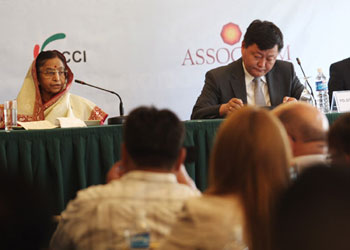 ULAANBAATAR, July 28: Giving a fillip to its ties with Mongolia, India on Thursday signed a defence cooperation agreement with the northeast Asian country and announced that it would extend a USD 20 million Line of Credit for a joint IT, education and outsourcing centre to be set up in Ulaanbaatar.
 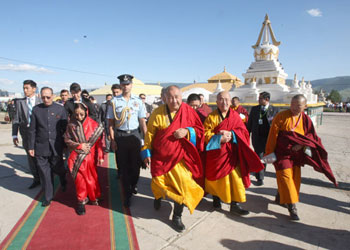 "We have signed an agreement of cooperation between the Planning Commission of India and its Mongolian counterpart. There is considerable expertise on plan formulation and implementation in India. We look forward to sharing our experience in this area with Mongolia," Patil said.
 ISLAMABAD, July 29: Pakistan Foreign Minister Hina Rabbani Khar returned from India on Thursday evening with the conviction that New Delhi is interested in a stable Pakistan and wants to normalise relations with Islamabad. Conscious of the deep-rooted sentiment in both countries, she sought space from the public in general and media in particular for allowing this turn in the relationship to stay its course.
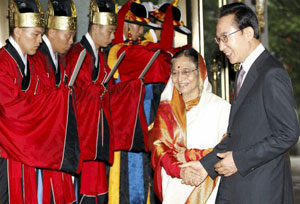 SEOUL, July 25: India and the Republic of Korea here on Monday inked an agreement for cooperation in the peaceful uses of nuclear energy, taking to completion the in-principle agreement announced in Hanoi last year on the sidelines of the Asean-India Summit.
 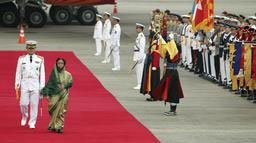 Sanjay Singh, Secretary (East), Ministry of External Affairs, told journalists that the two countries “discussed possibilities of cooperation in the peaceful uses of outer space. India looks forward to once again launching Korean satellites on Indian rockets.”
 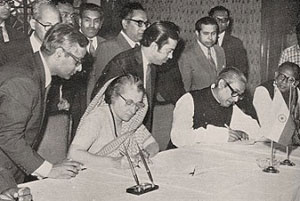 DHAKA, July 20: Bangladesh will honour former Indian Prime Minister Indira Gandhi with its highest state award for her outstanding contribution to the country's 1971 'Liberation War'.
  BANGKOK, July 5: Thailand's opposition party led by former premier Thakshin Shinawatra's 'clone' sister is set to lead a five-party coalition government, with Yingluck Shinawatra saying her priority would be to put the nation on a path of national reconciliation.
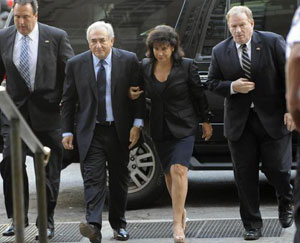 NEW YORK, July 2: Prosecutors have serious questions about the credibility of a hotel housekeeper who has accused former International Monetary Fund leader Dominique Strauss-Kahn of sexual assault and are taking the extraordinary step of seeking to substantially reduce his pricey bail, according to people familiar with the case.
 Aviation
| Business | Defence | Foreign
Affairs | Communication | Health
| India | United Nations
India-US
| India-France | Entertainment
| Sports | Photo Gallery |
Tourism | Advertise with Us
| Contact Us
© Noyanika International, 2003-2009. All rights reserved.